Germany's Gambling Paradox: Is the GlüStV 2021 Fueling the Black Market?
Wednesday 19 de August 2026 / 12:00
⏱ 4 min read
In this article, SoloAzar presents a comprehensive investigation into the German gambling market, evaluating the pros and cons of its current regulatory framework.
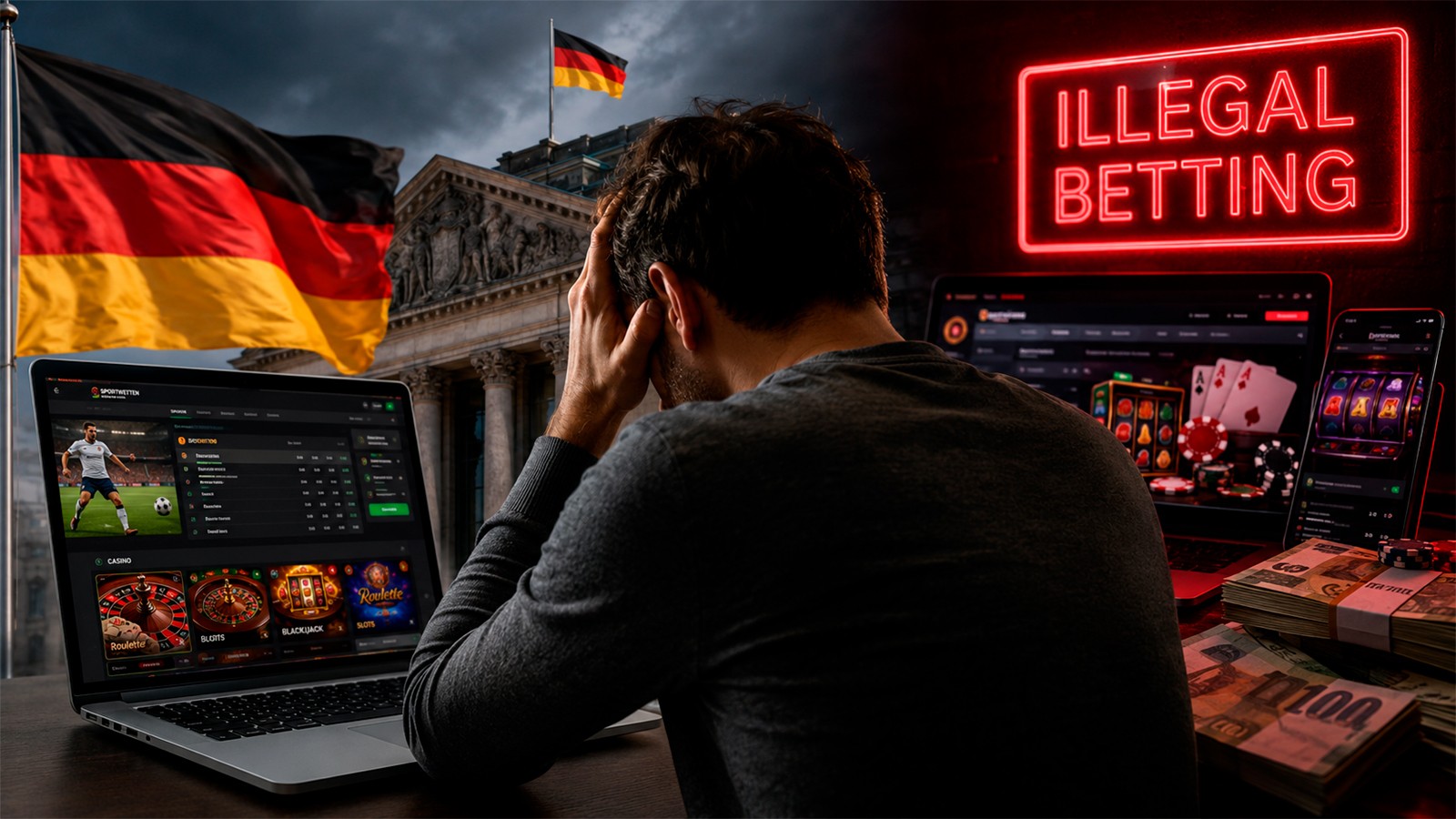
As the deadline for the review of the Interstate Treaty on Gambling (GlüStV 2021) approaches by the end of 2026, industry stakeholders are sounding the alarm over whether current restrictions are driving players toward illegal alternatives.
The German Gambling Treaty Under Review: A Critical Juncture for the Industry
Germany is not building a gambling regulation from scratch; rather, it is in the critical process of reviewing its Interstate Treaty on Gambling (GlüStV 2021). The central debate surrounding this review is the "war of numbers" regarding the channelization rate (Kanalisierungsquote)—the actual percentage of players who remain within the legally regulated market versus those migrating to unregulated offshore sites.
The War of Numbers: Legal Market vs. The Black Market
Estimates regarding the size of the illegal market vary drastically depending on the source, creating a complex landscape for the upcoming GlüStV 2021 evaluation:
- The Official Stance: The Joint Gaming Authority of the Federal States (GGL) maintained for years that the legal market captured the vast majority of players. However, they recently conceded that the black market accounts for at least 25% of the total market for online sports betting, virtual slots, and online poker.
- Independent Research: The influential Handelsblatt Research Institute published a late-2025 study concluding that the online black market now exceeds 50% of the total market share.
- The Online Casino Collapse: The same Handelsblatt study warns that in the specific sector of online casinos and virtual slots—the verticals most affected by strict deposit limits and spin-speed restrictions—the illegal market dominates an alarming 70% to 80% of the activity.
- Global Perspective: International consulting firm H2 Gambling Capital provides even more severe estimates, calculating that Germany's channelization rate might be as low as 36%, implying that the majority of users are actively resorting to illegal offshore sites.
The Accelerated Growth of Illegal Offerings
German industry associations are warning that strict regulations, compounded by a heavy 5.3% tax on deposits, are suffocating licensed operators and paving the way for a booming black market.
Expanding Shadows in the iGaming Sector
According to 2026 data presented by the German Sports Betting Association (DSWV), revenues for illegal operators surged by 17% between 2023 and 2024. Furthermore, the number of accessible illegal betting websites increased by 36% during the same period.
This regulatory suffocation is also reflected in the Gross Gaming Revenue (GGR). While the per capita GGR in the legal online market averages €98 across Europe, in Germany, it sits at a mere €23. For industry experts, this does not indicate that Germans are betting less, but rather that their liquidity is flowing directly into offshore platforms.
The 2026 World Cup Impact: Millions Escaping the Tax Net
The recent 2026 FIFA World Cup served as a massive stress test for the German regulatory framework, and the results highlighted the industry's deepest concerns.
To put the event into a global perspective, investment bank Macquarie estimated that worldwide betting for the 2026 World Cup would reach around $50 billion, a significant jump from the $35 billion generated by Qatar 2022.
The DSWV Projections
According to DSWV data, the total projected betting volume for the tournament within Germany reached nearly €1 billion. The breakdown of this figure is alarming:
- Regulated (Legal) Market: An estimated €600 to €700 million entered the system through officially licensed operators.
- Black (Illegal) Market: Between €300 and €400 million were captured by unlicensed sportsbooks and offshore platforms.
The fact that roughly 30% to 40% of the money wagered during a major tier-1 sporting event completely escaped the German tax system is one of the strongest arguments used by the industry to demand urgent reforms to the GlüStV 2021. While the black market continues its double-digit growth, the legal market remains stagnant, handcuffed by restrictions on local players.
Collateral Damage: Sports Sponsorship and Advertising
The regulated market has lost so much financial muscle that the local sports ecosystem is feeling the direct impact of the GlüStV 2021 restrictions.
The Financial Drain on the Sports Ecosystem
- Plunging Sponsorships: Sports sponsorship spending by legal operators has been nearly halved. It dropped from €84 million in the 2020/21 season (prior to the treaty's full implementation) to approximately €47-€55 million in recent seasons.
- Advertising Collapse: Advertising investment by licensed betting brands fell drastically from €276 million in 2021 to around €136 million in 2025.
The LUGAS Bottleneck: A Technical Catalyst for Black Market Migration
At the heart of the regulatory friction is LUGAS, the mandatory, centralized IT supervision system introduced by the GlüStV 2021. Designed to monitor player activity across all licensed platforms, LUGAS strictly enforces a €1,000 cross-provider monthly deposit limit and prevents parallel play by imposing a mandatory 5-minute cool-down period when a user switches between betting sites.
However, industry stakeholders argue that LUGAS has inadvertently become a primary driver of black market migration. High-value players are immediately alienated by the rigid, inflexible deposit caps, while everyday users grow frustrated by the technical delays and privacy concerns associated with centralized data tracking. Consequently, these friction points push bettors directly toward offshore platforms that offer a seamless, restriction-free user experience, bypassing the state's safety net entirely.
Conclusion: The Paradox of Spielerschutz
The ultimate irony of the GlüStV 2021 lies in its primary objective: Spielerschutz (player protection). The current regulatory landscape reveals a stark, unintended consequence. By heavily over-regulating the legal offerings in an attempt to protect the user—imposing strict monthly deposit caps, mandatory spin delays, centralized tracking, and complex taxation—the treaty has effectively pushed local players toward foreign, unregulated websites.
In this thriving black market, there are no deposit limits, no panic buttons, and no cross-provider self-exclusion systems. By making the legal market uncompetitive and frustrating to the end-user, the current framework risks completely nullifying the original protective purpose of the law.
Categoría:Analysis
Tags: Sin tags
País: Germany
Región: EMEA




Event




SiGMA North America 2026
01 de September 2026
LatAm Regulators Discussed Illegal Gambling and Innovation at SiGMA North America
(Mexico City, SoloAzar Exclusive).- The panel "The Red Pen Forum: Regulators Respond to the Industry," held during SiGMA North America 2026, brought together representatives from Uruguay, Argentina, Puerto Rico, and Honduras to analyze regulatory challenges, digital transformation, illegal gambling, and the need to adapt lotteries for new generations. The conference was moderated by Rodrigo Cigliutti, Executive Director of CIBELAE (Ibero-American Corporation of State Lotteries and Betting), and featured the participation of Marcelo Visconti, National Director of Lotteries and Quinielas of Uruguay; Carlos Moyano, President of IAFAS Entre Ríos, Argentina; Heidi Hernández Olivo, Deputy Secretary of the Puerto Rico Lottery; and Lissa Mencía, General Director of Lottery Operations and Games at Loto Honduras.
Monday 28 Sep 2026 / 12:00
SiGMA North America Addressed Crisis Management in iGaming
(Mexico, SoloAzar Exclusive).- During SiGMA North America 2026, Rosa Ochoa, founder of the Blue Global Gaming platform and strategic advisor for gaming operators; Iliana María Pineda Echeverri, Chief Legal & Compliance Officer at Wplay.co; Iraid Rosales, Country Manager Mexico at Amusnet; and Elizabeth Maya Cano, Executive President of CORNAZAR, analyzed the key factors in managing crisis situations within the iGaming industry, with a special focus on transparency, communication, technology, and preparation.
Friday 25 Sep 2026 / 12:00
Affiliates and Acquisition: Keys to Regulated Markets in North America
(Mexico City, SoloAzar Exclusive).- During SiGMA North America 2026, Cristopher Guzmán Reyes, Head of Affiliates at Logrand Entertainment Group; Guga Júnior, influencer and slots expert at Scalar Partners; Andrés Gómez, Head of Latin America Go-to-Market Strategy at Admattic; Yambot Aguilera, Gaming and Finance Sales Director at Google; and Paula Gabriel Jiménez, Advertising Client Growth Director for Microsoft at Aleph, analyzed the state and provincial affiliate ecosystem in North America, as well as the acquisition challenges in regulated markets.
Thursday 24 Sep 2026 / 12:00
SUSCRIBIRSE
Para suscribirse a nuestro newsletter, complete sus datos
Reciba todo el contenido más reciente en su correo electrónico varias veces al mes.