Leveraging In-Play Betting for Sustainable Market Leadership: Altenar
Tuesday 10 de March 2026 / 12:00
⏱ 7 min read
(Douglas).- For years, sports betting followed a predictable rhythm: pre-match markets opened, wagers were placed, and outcomes were settled. By 2025, that familiar sequence still exists but has evolved. Today’s sportsbooks operate in real time, with odds shifting constantly and betting activity extending from the opening whistle all the way to the game’s conclusion.
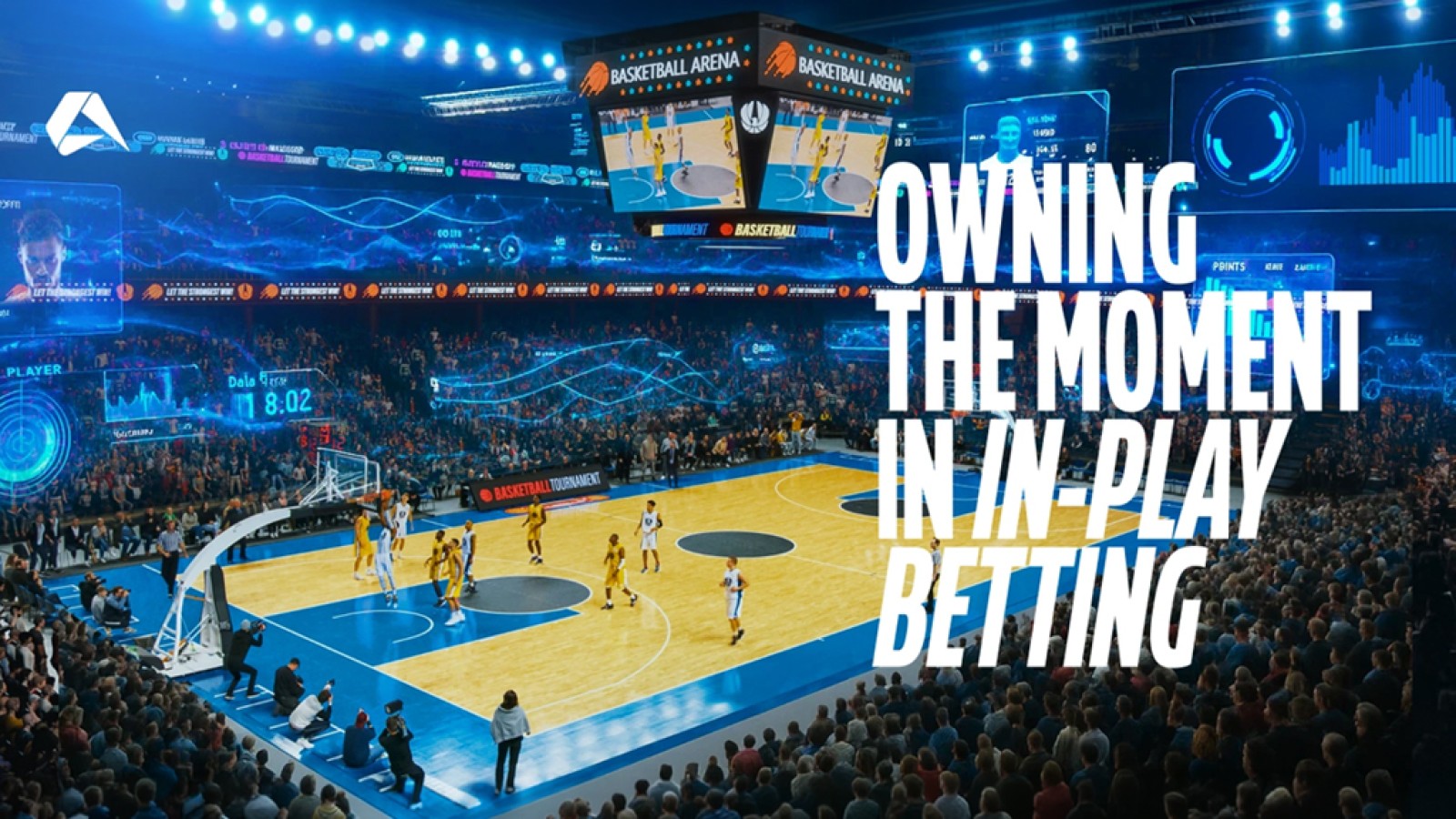
In-play betting has done more than add a new product vertical. It has placed far greater emphasis on operator agility.
And that’s a game changer. When every market runs live, the margin for technical error or latency is almost nonexistent. It’s the reason why operators need to start treating in-play action as the engine that powers their sportsbook, and not simply an add-on.
This article examines the direction of in-play betting, the advantages and challenges it presents, and how operators can stay ahead without compromising control.
The Engine Behind Real-Time Wagering
Let’s start by focusing on the modern technology stack, because live betting software for bookies stretches technology far further than static betting ever demanded. Every market, every price change, every feed refresh, all of it, depends on infrastructure that can process thousands of variables in fractions of a second.
Modern sportsbooks now rely on networks that sit closer to the action than ever before. Live data providers co-locate their servers alongside broadcast hubs, reducing transmission lag that can make the difference between an accurate book and a costly error. Moreover, odds are no longer written in moments of reflection, but they’re generated, tested, and released in continuous motion, often updated several times a second.
That level of control requires more than fast pipes. It demands systems that can automatically read, interpret, and act on live data, as well as systems that can influence probability models in real time. In practical terms, the interval between feed and market has narrowed so sharply that automation is no longer a choice.
Yet for operators, technology is not the only consideration. True advantage comes from knowing when to let the system run and when to intervene manually. Some markets reward raw speed, while others require the discerning eye of a human trader who recognises when the data isn't offering the whole picture.
In-Play Has Become the Core Driver for Growth
In 2025, bettors spend considerably longer in session, place more bets per event, and return more often. That extra engagement time translates into both higher turnover and deeper retention, providing operators with a dependable growth engine in an industry where acquisition costs continue to rise.
The attraction for bettors is readily apparent. It offers immediacy. In-play markets create an ongoing feedback loop between action and emotion. Every aspect of a competitive event invites a new decision. When the experience runs smoothly, it keeps attention locked in because the product itself is entertaining.
Behind this engagement lies commercial intelligence. Live betting generates a constant stream of behavioural data, revealing how players react to changes in odds, timing windows, and bet prompts. The operators who analyse those signals optimise their trading potential, and that’s why in-play is now the control room for the entire sportsbook operation.
Where the Real Advantage Lies
Sportsbooks built around live trading perform better because they continuously capture, process, and monetise activity rather than in bursts. This change translates into measurable advantages for sports betting platforms that embrace live betting as the core engine of operations:
Revenue density
In-play generates three to five times as many betting moments per event as pre-match markets, boosting both turnover and hold. Each micro-market creates a fresh margin opportunity without additional acquisition cost.
Operational intelligence
Every live market feeds data back into pricing and risk management in sports betting. Over time, this feedback improves model accuracy, limits exposure, and helps traders identify inefficiencies. The operator isn’t guessing but learning in real time.
Product stickiness
Platforms optimised for in-play betting maintain higher active-user minutes and repeat sessions. Players who stay engaged throughout an event tend to re-enter the app during future fixtures, boosting retention metrics without increased marketing spend.
Liquidity efficiency
Live betting concentrates activity into short, high-turnover windows. Platforms that optimise for this during these peaks can sustain higher limits with less capital locked in reserve. That makes in-play infrastructure economically more efficient.
Cross-sell strength
The immediacy of in-play keeps players in a live mindset, which transfers well to other verticals, e.g., live casino or virtual sports. Operators with shared wallets and unified front ends naturally capture those extra conversions.
Risk distribution
Continuous trading smooths volatility. Instead of significant pre-match exposures, risk is spread across many micro-markets and short timeframes, improving capital efficiency and reducing sharp event-based losses.
Market differentiation
When most sportsbooks share similar content, speed and reliability become more significant differentiators. Operators that consistently deliver accurate, uninterrupted live markets gain credibility, which directly translates into player trust and retention.
Taken together, these factors explain why leading operators now build their sports betting platforms around live markets first.
The Challenges of Always-On Trading
While building a sportsbook around in-play betting delivers clear commercial upside, running markets that never pause means the system, the traders, and the compliance framework all operate under continuous stress.
The first and most obvious pressure point is latency. Even a minor delay between data feed, odds generation, and display can turn a winning market into a liability. Maintaining sub-second accuracy across multiple sports and jurisdictions requires constant monitoring and redundancy, as well as highly stable infrastructure.
Then there is the concentration of risk. In-play activity compresses exposure into short timeframes, magnifying the cost of pricing or feed errors. Automated trading mitigates part of that risk but introduces another, namely the threat of mass mispricing if models misread live events.
There’s also a human factor to consider. Traders accustomed to scheduled markets now work in perpetual motion, watching dozens of feeds and alerts simultaneously. Without structured rotation and system support, fatigue becomes a real operational risk.
Ultimately, it is unavoidable that regulatory scrutiny increases with every market update. Integrity monitoring, suspicious-bet reporting, and audit-trail retention all become more complex when hundreds of micro-markets open and close within minutes.
Balancing the Benefits and Challenges of In-Play Betting
The commercial benefits of in-play betting are significant, but every advantage comes with its own strain on systems and resources. The table below illustrates the balance between the two.
Competition and Strategy in the Era of Instant Markets
Transitioning to live-first operations is not something that can be achieved at the flick of a switch. It’s a structural rebuild that touches every aspect of a sportsbook operation. And besides, upgrading technology is only half the battle. The more challenging part is timing, and that means knowing when to invest, how deeply to integrate, and where the old and new systems can safely overlap.
For many operators, legacy infrastructure continues to drive core systems in trading, payments, and compliance. Rewiring that framework to support continuous processing without downtime will require a phased implementation. This is more than faster feeds; operators are redesigning how decisions move through the business.
To move from static to live-first, operators must make deliberate choices around the following:
Data control and sourcing – Decide whether to build direct feed partnerships or rely on intermediaries. Data latency and ownership will dictate the competitive advantage that follows.
Automation boundaries – Define which trading functions can safely run autonomously and where human intervention remains essential. Automation without oversight creates invisible risk.
Infrastructure sequencing – Modernise in levels. Core trading, payments, and compliance systems must evolve in sync, not in isolation, to avoid operational disruptions.
Investment pacing – Balance capital between front-end innovation and back-end reliability. The best UI in the world can’t compensate for inconsistent uptime.
Cultural realignment – Equip trading and tech teams to collaborate continuously. The faster the system moves, the more alignment across departments matters.
Regulatory readiness – Plan for higher data audit demands and stricter integrity monitoring. Transparency becomes both a compliance and brand differentiator.
Partnership and vendor strategy - Decide whether to consolidate around a few key sports betting software and technology partners or spread dependencies across multiple suppliers. Fewer integrations improve agility, while diversification reduces exposure to vendor failure.
Market focus and product depth - A live-first approach rewards focus. Determine which sports, markets, or bet types deliver the highest return under live conditions, and prioritise building depth there rather than spreading it thinly across every event.
Scalability and compliance alignment - As volumes rise, both systems and compliance functions need to scale together. Investing early in audit-ready automation prevents costly reworking once regulators tighten scrutiny.
Capital discipline - Transitioning to live-first is capital-intensive. Leaders should plan financing in phases, tying each technical milestone to measurable revenue outcomes rather than committing the entire spend.
Predictive Betting and the Next Phase of In-Play Betting
The next phase of in-play betting won’t be won on speed. That frontier has already been reached. The race ahead is about having the foresight to adopt systems that understand patterns of play, anticipate behaviour, and adjust markets before the event unfolds.
Some of this is already here. Predictive pricing engines analyse live data against historical trends, while machine-learning models identify how specific player actions affect probability. As these systems evolve, trading desks will move from reacting to games to managing probability in advance, deciding which markets to open, when to calibrate liquidity, and how to price momentum before it appears on screen.
Moving into 2026 and beyond, the real test for operators will ultimately be about readiness. Predictive accuracy depends on data quality, latency discipline, and transparent governance. Algorithms that forecast outcomes also need to justify their outcomes to stakeholders who expect fair markets.
Winning in this space is about knowing what comes next and building for it now. And it won’t just reward those who move fastest, but those who move first.
Want to see how Altenar’s live trading technology delivers control at real speed? Book a demonstration today and explore how predictive systems and automation can turn your sportsbook into a truly live-first operation.
Categoría:Analysis
Tags: Altenar,
País: Isle of Man
Región: EMEA




Event





SiGMA North America 2026
01 de September 2026
Manuel Jiménez, CEO of SoluestBet: "Mexico is a priority market for us"
(Mexico City, SoloAzar Exclusive).- Manuel Jiménez, CEO of SoluestBet, analyzed his visit to SiGMA North America and highlighted the priority role of Mexico as a gateway between Latin America and North America. The executive also pointed out the opportunities for suppliers that manage to combine technology, commercial structure and solid relationships with operators in the region.
Monday 21 Sep 2026 / 12:00
Rocío Moitino of Ready Play Gaming looks back on her visit to SiGMA North America
(Mexico City, SoloAzar Exclusive).- After visiting SiGMA North America, Rocío Moitino Head of Sales, Latin America at Ready Play Gaming, analyzed the opportunities of the Mexican market and the new demands of operators. The executive highlighted the importance of combining product, distribution and commercial strategy, in addition to the potential of alternative formats to traditional slots.
Monday 21 Sep 2026 / 12:00
"Technology can be global, but execution in LATAM must be local": Borut Leban on Timeless Tech's Regional Expansion
(Mexico City, SoloAzar Exclusive).- Following a highly successful showing and a 'Best Aggregator 2026' award at SiGMA North America, Timeless Tech CEO Borut Leban reflects on the company's strategic growth across LatAm. In this interview, Leban discusses the necessity of deep market localization, concrete new business opportunities, and the upcoming launch of their unified retention ecosystem, Timeless Arena.
Friday 18 Sep 2026 / 12:00
SUSCRIBIRSE
Para suscribirse a nuestro newsletter, complete sus datos
Reciba todo el contenido más reciente en su correo electrónico varias veces al mes.