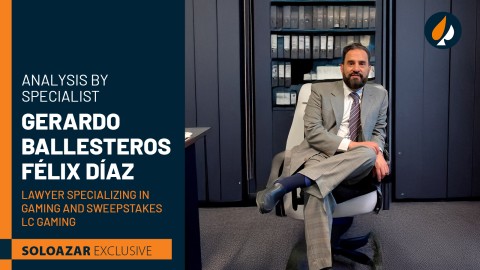
"The Promise and the Limits of AI in Responsible Gambling" by GLI
Tuesday 31 de March 2026 / 12:00
⏱ 4 min read
(Lakewood, NJ).- The gambling industry is entering a turning point. For years, responsible gambling relied on reactive tools, but the rise of Artificial Intelligence is reshaping what’s possible — offering proactive, data-driven ways to protect players while raising new questions about its limits.

The gambling industry is at a genuine inflection point
For decades, responsible gambling programs have relied on a largely reactive toolkit: warning labels, helpline numbers, self-exclusion registries, and staff trained to spot obvious signs of distress. These tools matter. But they were designed for a different era — one before operators could watch, in real time, how every player on every platform behaves. Now Artificial Intelligence (AI) is changing what’s possible, and the early results are worth paying attention to.
Operators around the world are deploying machine learning models that do something no human compliance officer could do at scale: monitor behavioral patterns across entire player populations simultaneously, flagging anomalies that might indicate someone is moving from entertainment into an area of potential harm. For example, in Singapore in 2025, one licensed operator implemented an AI-driven behavioral risk profiling tool that identifies risk clusters across its player base and delivers personalized nudges — encouraging breaks, surfacing spending summaries, or prompting players to revisit their limits — without waiting for a player to raise their hand and ask for help. This is an early and compelling proof of concept for what proactive, data-informed player care can look like.
The data emerging from these interventions is encouraging
A frequently cited study from Auer, M., & Griffiths, M.D. (2020) of 7,134 players whose behavior was tracked by a behavioral feedback system using machine learning and rule-based algorithms found that personalized messages — triggered by events such as high losses, increased deposits, and extended play duration — had a significant impact on behavior. Sixty-five percent of players reduced their gambling activity on the day they received the intervention, with sixty percent maintaining that reduction seven days later. These are not trivial numbers. They suggest that the right message, delivered to the right person at the right moment, can produce real behavioral change.
This represents a meaningful shift. The traditional model of responsible gambling was largely opt-in: the responsibility was solely on players to recognize their own problem, overcome stigma, and voluntarily seek support. AI-assisted behavioral analysis can move that intervention upstream, identifying potential risk before a player reaches the point of crisis. The technology is young, the evidence base is still developing, and researchers and regulators have rightly cautioned that more rigorous longitudinal study is needed before we can draw firm conclusions about long-term impact. But the direction is clear: AI can help us move from one-size-fits-all safeguards to genuinely individualized player care.
We should also be honest about a more troubling possibility. The same AI that identifies an at-risk player and nudges them toward safer behavior can, if used by bad actors do the opposite; targeting that player with a personalized promotion designed to keep them engaged precisely when they should be stepping back.
AI can identify. It cannot understand. It can flag a pattern for trained professionals. It cannot be a substitute of the human experience that trained counsellors, clinicians, and peer support workers bring to this work is not a feature that can be automated.
The emergence of AI-powered chatbots as front-line addiction support also deserves review
The appeal is obvious: 24/7 availability, no waitlists, no stigma. For some players, a low-stakes digital interaction may be a first step toward acknowledging a problem. But chatbots are not expert therapists. They cannot conduct clinical assessments, navigate complex comorbidities, or provide the sustained therapeutic relationship that drives meaningful recovery. Deploying them as substitutes, rather than as pathways to trained human support, risks giving players and policymakers a false sense that the work is over.
The right framework is not AI versus human oversight. It is AI informing trained human oversight. Machine learning can surface risk, prioritize outreach, and personalize early intervention, while trained professionals must remain the backbone of support, treatment, and recovery. Technology can lower the cost and increase the speed of identifying players who need help. It need not lower the quality of the help they receive.
For regulators and operators alike, that means asking harder questions as AI tools proliferate, including: What data is being used? How are risk thresholds set? What level(s) of trained human review exists before a player receives an intervention? When the data suggests someone needs more than a nudge — what is the pathway to qualified human support?
While the promise of AI in responsible gambling is real, so is the risk of mistaking a sophisticated detection tool for a solution. Getting this right requires the same thing good player protection has always required: clear eyes, genuine accountability, and people who care enough to stay in the room when the technology reaches its limits.
By Angela Wong, Vice President of Global Lottery Solutions
By Mike Randall, Responsible Gaming (RG) Specialist
Categoría:Analysis
Tags: Sin tags
País: United States
Región: North America




Event
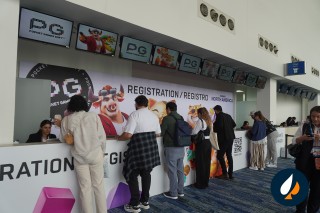









SiGMA North America 2026
01 de September 2026
LatAm Regulators Discussed Illegal Gambling and Innovation at SiGMA North America
(Mexico City, SoloAzar Exclusive).- The panel "The Red Pen Forum: Regulators Respond to the Industry," held during SiGMA North America 2026, brought together representatives from Uruguay, Argentina, Puerto Rico, and Honduras to analyze regulatory challenges, digital transformation, illegal gambling, and the need to adapt lotteries for new generations. The conference was moderated by Rodrigo Cigliutti, Executive Director of CIBELAE (Ibero-American Corporation of State Lotteries and Betting), and featured the participation of Marcelo Visconti, National Director of Lotteries and Quinielas of Uruguay; Carlos Moyano, President of IAFAS Entre Ríos, Argentina; Heidi Hernández Olivo, Deputy Secretary of the Puerto Rico Lottery; and Lissa Mencía, General Director of Lottery Operations and Games at Loto Honduras.
Monday 28 Sep 2026 / 12:00
SiGMA North America Addressed Crisis Management in iGaming
(Mexico, SoloAzar Exclusive).- During SiGMA North America 2026, Rosa Ochoa, founder of the Blue Global Gaming platform and strategic advisor for gaming operators; Iliana María Pineda Echeverri, Chief Legal & Compliance Officer at Wplay.co; Iraid Rosales, Country Manager Mexico at Amusnet; and Elizabeth Maya Cano, Executive President of CORNAZAR, analyzed the key factors in managing crisis situations within the iGaming industry, with a special focus on transparency, communication, technology, and preparation.
Friday 25 Sep 2026 / 12:00
Affiliates and Acquisition: Keys to Regulated Markets in North America
(Mexico City, SoloAzar Exclusive).- During SiGMA North America 2026, Cristopher Guzmán Reyes, Head of Affiliates at Logrand Entertainment Group; Guga Júnior, influencer and slots expert at Scalar Partners; Andrés Gómez, Head of Latin America Go-to-Market Strategy at Admattic; Yambot Aguilera, Gaming and Finance Sales Director at Google; and Paula Gabriel Jiménez, Advertising Client Growth Director for Microsoft at Aleph, analyzed the state and provincial affiliate ecosystem in North America, as well as the acquisition challenges in regulated markets.
Thursday 24 Sep 2026 / 12:00
SUSCRIBIRSE
Para suscribirse a nuestro newsletter, complete sus datos
Reciba todo el contenido más reciente en su correo electrónico varias veces al mes.