The United States rewrites the history of gambling: 12,000 year old dice discovered that predate Africa, Europe and Asia
Tuesday 14 de April 2026 / 12:00
⏱ 3 min read
(Washington D. C.). - A study reveals that the native peoples of the southwestern United States already practiced gambling thousands of years before other cultures, challenging traditional theories about the origin of probability.
Dice, Chance, and Probabilistic Thinking: An Origin Older Than Previously Believed
Recent research shakes the foundations of the history of gambling and probabilistic thinking. According to a study published in American Antiquity, the first evidence of dice and random-linked activities did not emerge in the Old World, but in the present-day southwestern United States more than 12,000 years ago.
The work, led by Robert J. Madden, a PhD candidate in Anthropology and Geography at Colorado State University, documents how Native American societies were already using objects designed to generate random results millennia before the cultures of Africa, Europe and Asia.
Archaeological Evidence: Prehistoric Dice in North America
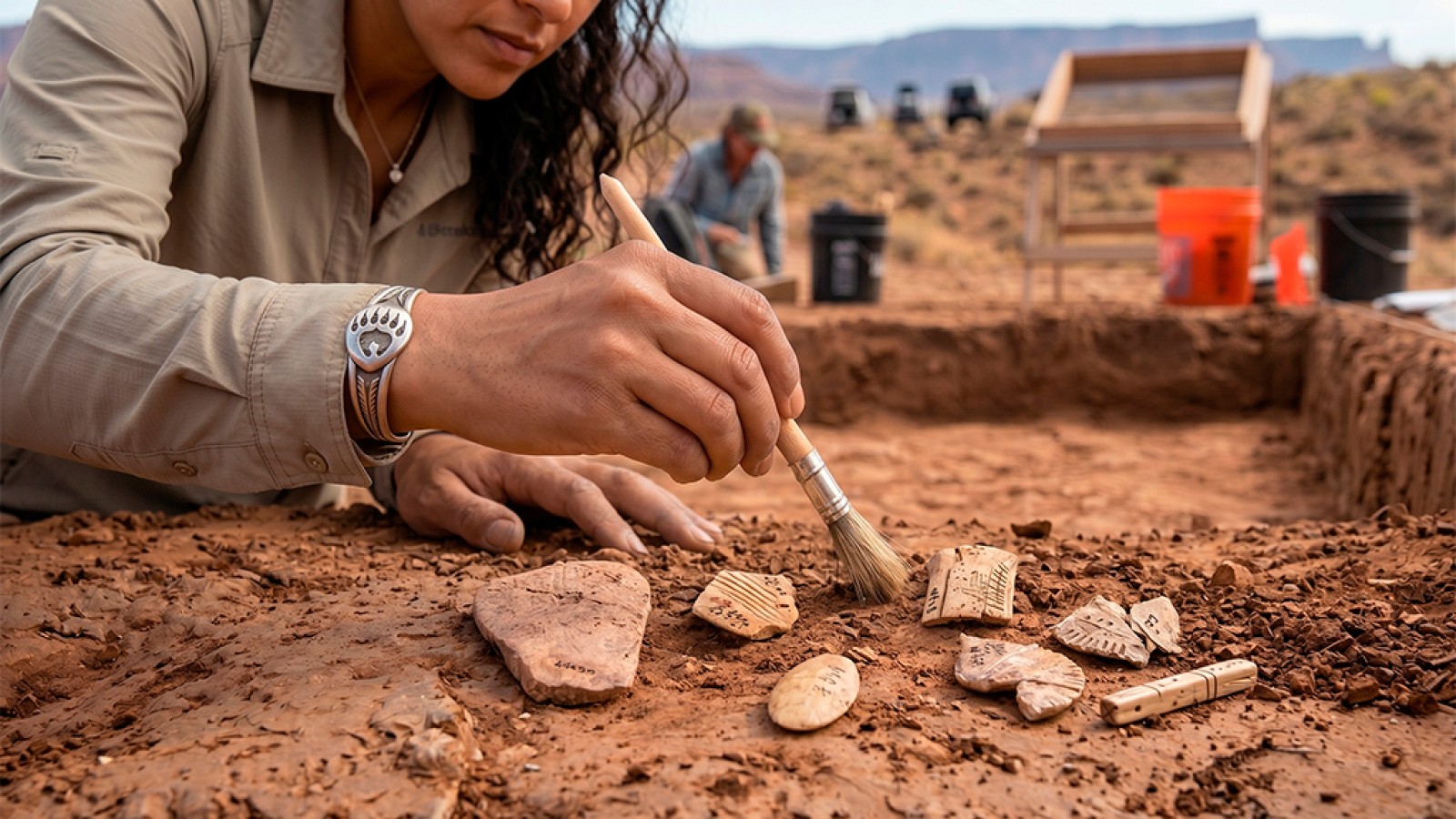
The find is based on the analysis of 28 archaeological pieces made of bone, wood or light stone, with varied shapes – round, oval and rectangular – and marks engraved on their surfaces. These objects were found at sites from the Folsom period in regions such as Wyoming, Colorado, and New Mexico.
Dating places these artifacts between 12,845 and 12,255 years before the present (BP), that is, approximately between 10,895 B.C. and 10,305 B.C. This chronology places them more than 6,000 years earlier than the oldest dice recorded in other parts of the world, whose appearance dates back to just 3,000 B.C.
However, the study notes that no prehistoric dice have been found in eastern North America. Madden clarifies that the list of sites analyzed is not exhaustive, so the absence of archaeological evidence in that region does not necessarily imply that these objects did not exist there.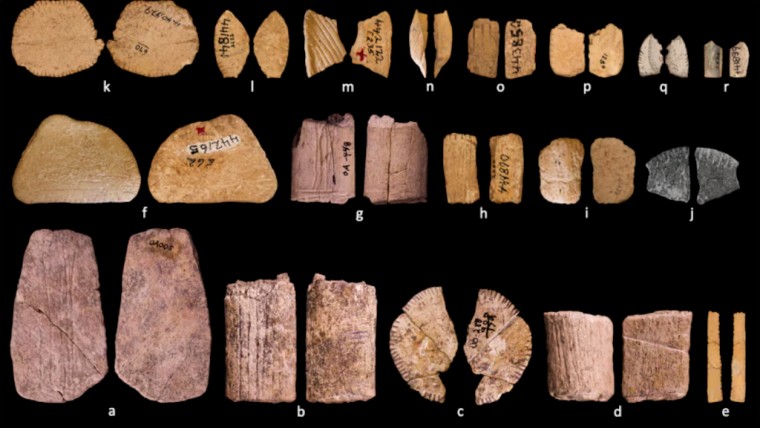
What the first dice were like
Unlike modern cubic dice, these early devices—called "binary lots"—were flat, bifacial pieces. They were designed to produce random results by simultaneously launching multiple items.
Each piece had markings or colors on one of its faces, and the outcome of the game depended on how many of these "marked" faces were facing up after the throw. This system evidences an early understanding of randomness and probability, although in a different format than the current one.
Social value and cultural persistence of play
Beyond its recreational function, the research confirms that gambling constitutes one of the most persistent cultural traditions of humanity, with profound implications in its intellectual history.
Rolling dice involves generating controlled sequences of random events, a practice that is at the origin of the understanding of random phenomena and that, over time, would give rise to more complex mathematical developments.
In their early stages, these games functioned as a true social technology: they facilitated integration between groups, created neutral spaces for interaction and promoted the exchange of goods, information and bonds. Unlike what has been observed in Asia or Europe, there is little evidence that they were associated with divination practices; instead, they predominated as activities of chance, gambling, and collective entertainment.
A tradition that spans millennia
The continuity of these games for more than 12,000 years is especially remarkable. Diverse cultures—from hunter-gatherer societies to agricultural and sedentary communities—adopted dice without distinction of language or lineage.
The study concludes that these practices constitute a true "meta-tradition", capable of surviving profound cultural transformations, including colonization, and that even today it continues to manifest itself in different forms of gambling and betting.
A paradigm shift in the history of chance
The study also takes up and systematizes the criteria of ethnographer Stewart Culin, who at the beginning of the twentieth century documented almost 300 sets of dice used by Native American tribes. From this framework, Madden was able to identify patterns that allow these artifacts to be recognized as true precursors of gambling.
This discovery not only redefines the origin of dice, but positions Native American societies as pioneers in the development of randomness mechanisms, expanding the global understanding about the origins of the game and probability.
Categoría:Analysis
Tags: Sin tags
País: United States
Región: North America




Event










PERU GAMING SHOW – PGS 2026
17 de June 2026
ProntoPaga Consolidates Its Position at Peru Gaming Show 2026
(Lima, SoloAzar Exclusive).- Juan Carlos Loza, Head of Sales Latam at ProntoPaga, spoke exclusively after the company's participation in Peru Gaming Show 2026, highlighting the agreements reached, the interest in their payment solutions, and the expansion plans that will drive their growth across Latin America.
Monday 03 Aug 2026 / 12:00
Enhancing Responsible Gaming Through Effective Training at PGS 2026
(Lima, SoloAzar Exclusive) – Training, prevention, and technology took center stage at the "Value of Responsible Gaming in Gambling Operations" conference during the 2026 Perú Gaming Show (PGS). Presented by Fernando Calderón Castro, President of the National Gaming Society (SONAJA), the session brought industry leaders together to tackle current challenges and explore strategies for safer, more transparent, and sustainable operations.
Wednesday 22 Jul 2026 / 12:00
LSports at the Peru Gaming Show: Building Presence, Opening Doors
(Lima, SoloAzar Exclusive).- The Peru Gaming Show was never just about the booth. For LSports, it was about showing up in a market where showing up still matters — and leaving with more than a contact list. Federico Brancato, Sales Manager for the LATAM Region, came to Lima with a clear sense of what operators in this part of Latin America need most right now. What he found confirmed it.
Friday 17 Jul 2026 / 12:00
SUSCRIBIRSE
Para suscribirse a nuestro newsletter, complete sus datos
Reciba todo el contenido más reciente en su correo electrónico varias veces al mes.