Casino bill could be Senate's top priority after winter recess
Tuesday 16 de July 2024 / 12:00
⏱ 3 min read
(Brasilia).- The project has been on hold for a year and a half, but senators are still discussing the formation of a majority in the plenary; organisations expect Brazil to become the third country with the most gambling.
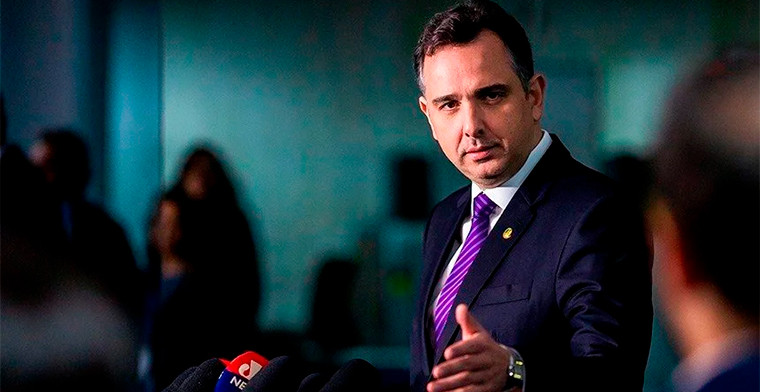
Stalled in the Senate for at least a year and a half, the project to liberalise casinos and bingo centres in Brazil has begun to win over senators, and President Rodrigo Pacheco (PSD-MG) is already pushing the vote as one of the priorities for the second half of the year. The text has already been approved by the Constitution and Justice Commission (CCJ) and parliamentarians are working to negotiate the formation of a majority to approve the text.
Senators interviewed by IstoÉ said the priorities for the next two weeks will be the projects dealing with state debts and the payroll tax exemption. After the votes, the House should recess until 1 August.
The rapporteur of the project, Senator Irajá (PSD-TO), said he was confident that the text would be approved by the full Senate and played down resistance. In his opinion, the measure will promote employment and should boost tourism in Brazil.
"This issue will be good for the country. There will be investments of around 100 billion reais and new projects within an average of five years, as well as the creation of more than one million new direct and indirect jobs. The countries that have already approved the measure have shown that tourism has grown a lot. In the meantime, Brazil is looking at other countries and is left out of the world tourism circuit," he said.
"I am very confident that it will pass in plenary. We have a majority of senators who are convinced that it will pass. The text has been stalled for a year and a half and we have had the opportunity to have a broad debate, exhausting the discussion. The matter is ready to be considered, with all due respect to our colleagues who have some dissenting opinions, but this is already an ideological question, a religious question," he concluded.
In fact, casinos are expected to inject billions of reais into the Brazilian economy. According to the Federation of Hotels, Bars, Restaurants and Similar Services of the State of São Paulo (Fhoresp), about R$30 billion is expected to be generated in the state of São Paulo alone.
"Today we collect about R$15 billion in daily rates and R$5 billion in food and beverages. I think we can add 20-30% of these amounts in per diems and up to 50% in food. Not to mention the marginal income from machines and games. With this, we could double the amount with a new flow and reach R$30 billion a year," says Bruno Omori, director of Fhoresp.
The expectation is that the approval of the text will make Brazil the third country in the world with more gambling, only surpassed by the United States and the Principality of Monaco.
"And also in physical terms. In two of the country's main centres - Rio de Janeiro and São Paulo - there will be bingo halls, tourist casinos, as well as Caixa and state lotteries. There will be a strong economic movement in the country," adds Bruno.
Gambling and money laundering
The text was approved by the CCJ on 19 June with 14 votes in favour and 12 against, reflecting resistance to the project, mainly from the evangelical caucus.
One of the leaders of the evangelical caucus in the National Congress, Senator Eduardo Girão (Novo-CE) claims that the project could increase gambling and crime, calling it "a very bad bill" that will lead to "an increase in money laundering and crimes committed by people related to gambling."
Lawyer Luiz Anselmo, while seeing benefits in the project, warns that "the PL must pay attention to the health of gamblers. It is a public health problem. Mechanisms must be created to visualise and treat addicted problem gamblers."
Irajá refutes these claims, saying that the text already provides for measures to prevent pathological gambling, such as a ban on the use of credit cards and the creation of a national register of gambling addicts.
Anselmo also expresses concern about money laundering, suggesting that "the project bill will have to include a mechanism for monitoring companies and money transfers to prevent the amounts moved from being illicit."
If passed, the casino bill could be signed into law by President Luiz Inácio Lula da Silva (PT) and the measures are expected to come into force between late 2025 and early 2026.
Categoría:Casino
Tags: Sin tags
País: Brazil
Región: South America




Event
iGaming tech leader Cristina Turbatu commends ICE Barcelona's vision for Hall 7
Tuesday 20 Oct 2026 / 12:00
CGA Showcases Canada’s Competitive Edge at ICE Barcelona
Tuesday 13 Oct 2026 / 12:00
ICE Barcelona Hosts WorldGaming-Backed Nineball Championship in 2027
Tuesday 06 Oct 2026 / 12:00
SUSCRIBIRSE
Para suscribirse a nuestro newsletter, complete sus datos
Reciba todo el contenido más reciente en su correo electrónico varias veces al mes.