Dutch market figures highlight the channelisation challenge
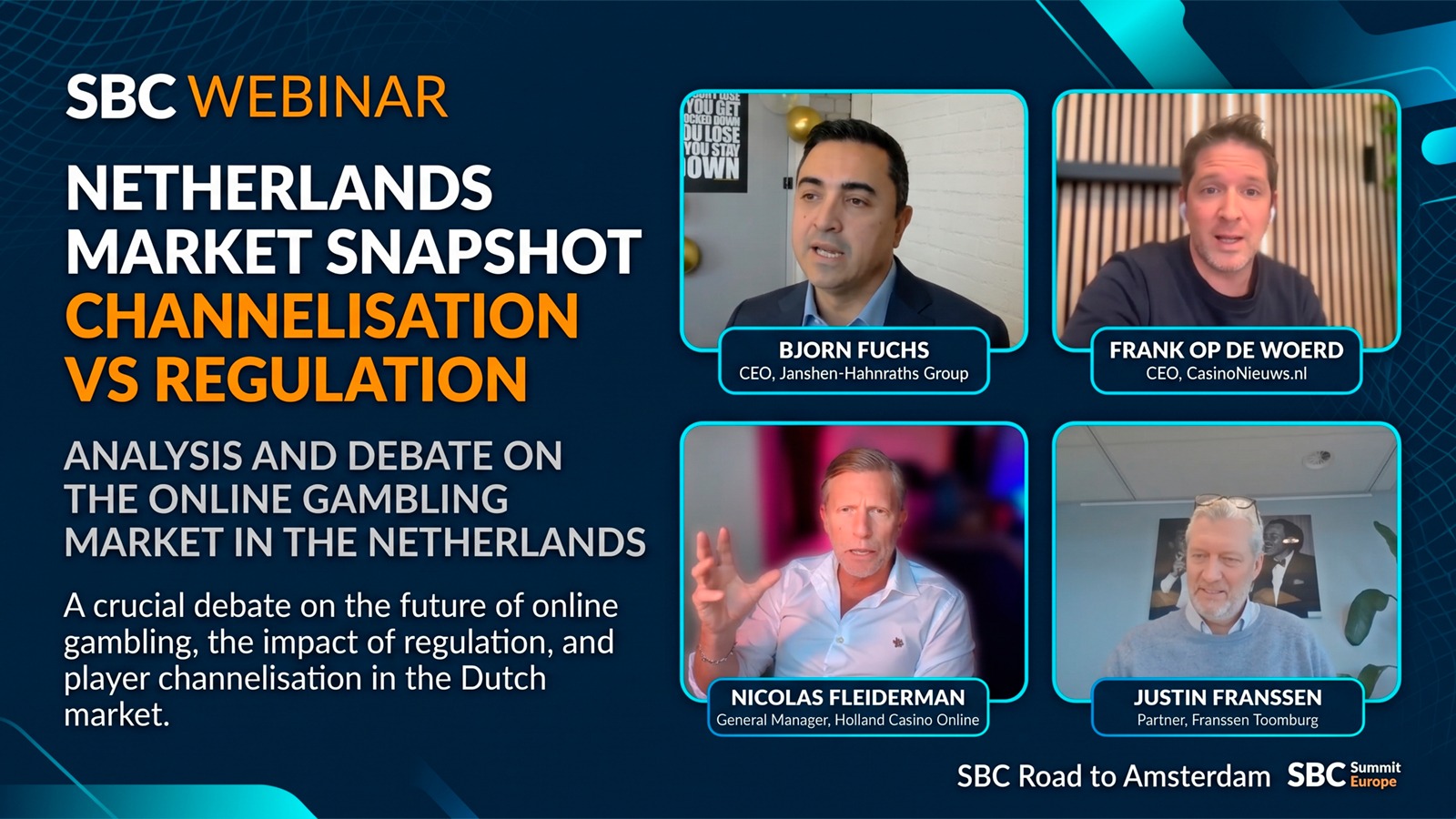
The discussion opened with figures from the Kansspelautoriteit (KSA), the Dutch gambling regulator, showing a gap between the number of players using licensed websites and the share of total player losses generated by those operators.
“For the first half of 2026, the Kansspelautoriteit estimated that 94% of online players used only licensed websites, yet those sites accounted for just 59% of the money lost by players,” said Frank op de Woerd, setting out one of the central concerns surrounding channelisation in the Netherlands.
Although the proportion of players using exclusively licensed platforms had increased from 54% in the previous six-month period, the figures raised questions about how much gambling activity and spending remained outside the regulated market.
A shrinking regulated market
Bjorn Fuchs highlighted the wider economic impact of the current regulatory environment, pointing to the contrast between the Dutch market and the broader European industry.
“The Dutch market shrank by 21% in 2025 compared to 2024, while the rest of Europe saw double-digit growth,” he said.
Fuchs also argued that the illegal market had been growing steadily since the Netherlands introduced its regulated online gambling framework. In his view, the number of people reporting that they use exclusively unlicensed websites is another indicator that the industry should look beyond the headline channelisation figures.
The panellists also cautioned that estimates of the illegal market are difficult to compare. Different studies may include or exclude lottery activity, dormant accounts and other variables, making it challenging to establish a single, consistent measurement of the market’s size.
Deposit limits and changing player behaviour
The panel then examined how regulatory restrictions, particularly deposit limits, have affected the behaviour of customers and the performance of licensed operators.
Justin Franssen discussed the reported decline of approximately €400 million in gross gaming revenue (GGR), alongside a contraction of around 20% in casino activity and approximately 30% in sports betting. The latter decline was particularly notable given the major sporting events held during 2025.
Franssen also pointed to an increase of around 100,000 player accounts. This development may indicate that customers are distributing their activity across several operators rather than necessarily reducing their overall gambling activity.
The impact on customer journeys
Nicolas Fleiderman described how the introduction of net deposit limits had changed the customer journey at Holland Casino Online. According to the company's experience, players were changing how they allocated their spending and, in some cases, leaving platforms sooner.
The concern is that restrictions intended to protect consumers could also create incentives for some customers to seek alternatives outside the licensed market, particularly if they want to continue gambling beyond the limits imposed by regulated operators.
For the panellists, this raises a fundamental question about the relationship between player protection and channelisation. Regulatory measures need to achieve their intended safeguards without unintentionally making unlicensed alternatives more attractive.
Marketing restrictions and the visibility of licensed operators
Another key topic was the effect of advertising and marketing restrictions on the competitive position of licensed operators.
The discussion focused on the imbalance that can emerge when regulated companies face increasingly strict limitations on how they communicate with customers, while unlicensed operators continue to reach audiences through digital channels and other forms of promotion.
Frank op de Woerd referred to research indicating that 77% of gambling-related content seen by young adults was unlicensed. The figure raised concerns about the effectiveness of restrictions that primarily affect licensed businesses while illegal content remains accessible online.
The risk of weakening the regulated offer
The panellists questioned whether tighter advertising rules can achieve their objectives if they reduce the visibility of legal operators without addressing the promotional activity of unlicensed competitors.
Justin Franssen argued against a complete marketing ban, describing it as a measure the government should abandon. The discussion highlighted the importance of maintaining a distinction between responsible communication by licensed operators and promotion carried out by illegal businesses.
The issue is closely connected to channelisation: if consumers have fewer opportunities to identify and engage with licensed brands, the regulated sector may find it harder to retain customers and communicate the safeguards associated with legal gambling.
Cross-operator cooperation and responsible gambling
Beyond regulatory policy, the webinar explored how the industry itself could contribute to improving player protection and strengthening channelisation.
Fleiderman discussed the potential value of cooperation between licensed operators, particularly through the exchange of risk indicators and alerts. Such mechanisms could help operators identify potentially harmful behaviour when customers move between platforms, allowing for earlier intervention.
The discussion also touched on Cruks, the Netherlands' central self-exclusion register. While the system provides an important player-protection mechanism, the panellists considered the limitations of relying on individual operator-level information when customers can move between different platforms.
Sharing information to identify risk
Fleiderman suggested that a more coordinated approach could help operators act on warning signs more effectively. Rather than depending exclusively on deposit limits, the industry could explore ways to share relevant information and strengthen safeguards across the licensed market.
Holland Casino Online is continuing to invest in technology and player-protection initiatives. Fleiderman said the company expected to be able to discuss the results of those investments in April 2027, including their impact on player behaviour.
The broader message was that responsible gambling measures and channelisation should not be treated as separate objectives. More effective cooperation could help licensed operators offer a safer environment while responding to risks that cannot always be addressed by individual companies acting alone.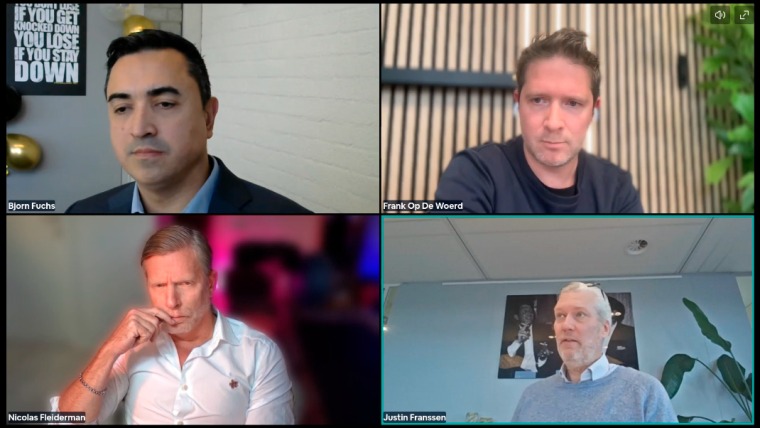
Tackling the black market through stronger enforcement
The panellists also examined what action could make the greatest difference outside the licensed sector. For Bjorn Fuchs, enforcement needs to target the infrastructure that allows illegal operators to reach customers and process transactions.
He argued that fines alone are not enough, as unlicensed operators often fail to pay the penalties imposed on them. Instead, enforcement should address access to advertising, payment services, hosting and game supply.
Pressure on platforms and service providers
The Dutch Online Operators Association, chaired by Fuchs, has taken Meta to court over illegal gambling advertisements appearing on Facebook and Instagram. The case reflects growing concern about the role of major digital platforms in allowing unlicensed operators to promote their services.
Fuchs also said the government was working on stronger tools to act against illegal websites, with the aim of making enforcement more effective.
Franssen discussed the difficulties of securing cooperation from Meta and other platforms, explaining that legal action became necessary after attempts to resolve the issue through dialogue did not produce the expected results. The discussion also addressed the responsibilities of digital platforms under the Digital Services Act (DSA).
For the panellists, tackling the illegal market requires action across the entire supply chain. Restricting access to advertising, payments and other essential services could have a greater impact on unlicensed operators than relying solely on financial penalties.
Industry priorities for 2027
As the webinar concluded, the speakers outlined the issues they expect to revisit in the coming months. Franssen pointed to the progress of the legal case against Meta and the need for industry-led initiatives, while Fleiderman identified player protection and the assessment of new measures as priorities for Holland Casino Online.
Fuchs also called for continued attention to the relationship between regulation, market activity and the ability of licensed operators to compete. The discussion underscored the need to assess whether existing policies are achieving their intended objectives or creating unintended consequences for the regulated sector.
The panel looked ahead to April 2027, when the participants hope to meet again in Amsterdam during SBC Summit Europe. The event will provide an opportunity to review developments in the Dutch market, including progress on enforcement, player-protection initiatives and the industry's efforts to improve channelisation.
The central challenge remains how to maintain effective consumer safeguards while ensuring that the regulated market can remain competitive. For the Dutch gambling sector, the balance between regulation and channelisation is likely to remain a defining issue throughout 2027.