Evolution of Compliance Officers in the Gaming sector: Analysis during the GAT Showcase Santo Domingo 2024
⏱ 5 min read
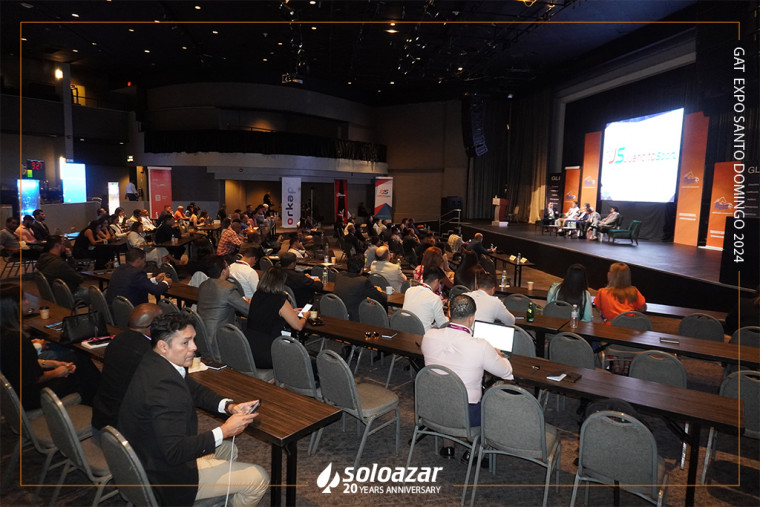
(Santo Domingo, Exclusive SoloAzar) - During the GAT Showcase Santo Domingo 2024, the panel ‘The Role of Compliance Officers in the Prevention of Money Laundering and Terrorist Financing’ analysed the evolution of this figure in the gaming sector.

The panel entitled ‘The Role of Compliance Officers in the Prevention of MLTF’, was moderated by Leonardo Soriano, in charge of the Money Laundering Prevention Department of the Directorate of Casinos and Gaming DR.
Panelists included Giordano Santos, Compliance Officer of Juancito Sport; Francisco Pérez, General Manager of Juancito Sport; David Elías Melgen, Compliance Officer of the Comar Group in the casino sector; and Juan Felipe Figueroa, of Gstar, SRL Lotería Electrónica La Primera.
Together, they explored the evolving role of compliance officers in the gaming sector and their impact on the prevention of illicit activities.

The conversation began with a question from moderator Leonardo Soriano, head of the Money Laundering Prevention Department of the Directorate of Casinos and Gaming DR: “How has the role of the compliance officer evolved in your sector over the last few years?”
The panellists agreed that the sports betting and lottery sector has seen significant growth in terms of compliance, noting that in the last seven years many companies have begun to establish the necessary protocols to combat money laundering and terrorist financing (MLTF). Despite being a relatively recent process, there has been steady and visible progress in the implementation of regulations.
It was also mentioned that the enactment of Law 155 was a challenge for the sector, as it forced them to adapt quickly, creating compliance programmes and adjusting them to their operations. This varies depending on the type of business, as it is not the same to apply the regulations in physical casinos as in online casinos or in tourist areas.
All participants underlined the importance of training and risk assessment as keys to success. The role of the compliance officer, which was initially seen as a purely regulatory figure, has evolved to become fully integrated in the operation of companies, allowing for greater control and effectiveness in the fight against illegality.
Challenges for the Compliance Officer
The moderator, Leonardo, introduced the following discussion by referring to Law 7202 and the subsequent Law 155, which designates casinos as regulated entities and establishes the figure of the compliance officer. He pointed out how, at the beginning, this figure was seen as external or alien to the organisation, when in reality, the moderator clarified, it should be a high-level person within the company, in charge of ensuring that business is conducted in a legal and transparent manner, without slowing down the business activity.
With this brief introduction in mind, he posed the following thought-provoking question to the panellists: What do you identify as the two main challenges facing compliance officers today, considering a change in organisational culture and the way companies must operate under the law?
The panellists agreed on several key points about the challenges facing compliance officers. One of the main obstacles mentioned was the resistance to change within organisations, especially when it comes to implementing new regulations that demand greater transparency and control. This cultural change involves a continuous effort to make employees and partners understand that the compliance officer is not a brake on the business, but an ally who ensures that operations are conducted in a legal and ethical manner. Customer identification was another important challenge noted, given that many gaming sectors still operate under rules that have been more lax in the past.
In this regard, the need to educate both users and operators on the importance of complying with the new regulatory requirements was highlighted.
Juan Felipe Figueroa, representing the electronic lottery sector, added that in addition to players' reluctance to provide information, the high turnover of staff in direct contact with customers is a considerable challenge. ‘Training must be constant and permanent, which requires a massive effort to keep all staff up to date with the regulator's requirements,’ Figueroa added.

The challenge of irregular gambling in the gambling sector
In the roundtable, the moderator addressed Juan Figueroa specifically and raised the question of how betting and internet gaming operators manage the risk of irregular betting, taking into account factors such as anonymity, high cash volume and complex structures that increase the vulnerability of the gambling sector.
Figueroa explained that irregular betting can arise mainly in two contexts: at sporting events, where the irregularity can originate from an external instruction, and in the betting market offered by operators. Operators cannot identify a bet as irregular until the outcome is known. However, they have intelligence systems that generate alerts on unusual betting patterns. These systems allow them to set internal limits and policies to monitor bets and define whether they are irregular. It is also important to consider that staff errors can contribute to irregular situations, although not always intentionally.
How to deal with irregular betting situations
To conclude the panel, this issue was discussed with the understanding that it is the operators who can identify irregular operations, so the moderator's question was as follows: "Can irregularities also arise from outside the internal customer, specifically from the player at the sporting event, as in the case of match-fixing? What controls have you implemented to ensure the transparency and integrity of betting in these scenarios?
The panellists agreed that betting irregularities can depend on the outcome of sporting events. Gambling fans’ must wait for the outcome to assess the legitimacy of a bet. Cases of match-fixing raise concerns for operators, so to mitigate this risk, betting limits are set and alert systems are used to identify suspicious patterns, such as an unusual increase in bets on a specific event.
One panellist mentioned that they offer professional sportsbooks with established protocols, which helps prevent match-fixing. In addition, he noted that the European Union has issued guidelines to address this problem at the international level, emphasising the need for information exchange.
The moderator, addressing Juan Felipe Figueroa, asked him about the technological controls that ensure regulatory compliance in electronic platforms and the differences with respect to traditional gambling. Figueroa commented that technology allows effective control over transactions. He added that artificial intelligence and electronic tools facilitate customer identification and the management of betting limits. We have recording systems, bilateral communication between points of sale and the head office, and regionalisation by risk phase, which provides extensive control over the integrity of the electronic lottery.
Categoría:Events
Tags: GAT EXPO Gaming & Technology,
País: Dominican Republic
Región: Central America and Caribbean




Event










SBC Summit 2026
29 de September 2026
Uplatform Brought "Your Dreams. Our Platform" to Life at SBC Summit Lisbon 2026
Friday 09 Oct 2026 / 12:00
Kambi Highlights Network and LatAm Growth at SBC Summit
Friday 09 Oct 2026 / 12:00
GR8_TECH Highlights Speed and Growth at SBC Summit 2026
Friday 09 Oct 2026 / 12:00
SUSCRIBIRSE
Para suscribirse a nuestro newsletter, complete sus datos
Reciba todo el contenido más reciente en su correo electrónico varias veces al mes.