Implementation of robust identity verification systems by 2024 expected
Thursday 11 de July 2024 / 12:00
⏱ 3 min read
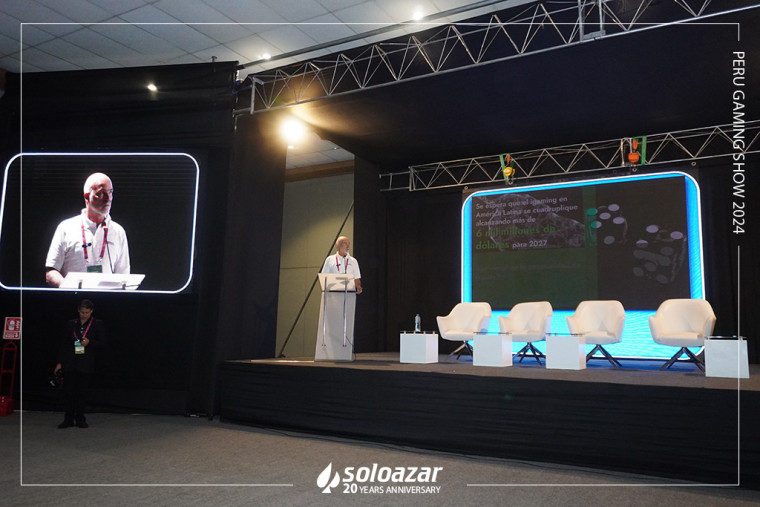
(Lima, Exclusive SoloAzar) - During the conference "Knowing your players, AI, and fradue" at the Peru Gaming Show, Samer Atassi, Vicepresident for Latam at Jumio, addressed the growing concern about online gambling security and highlighted the importance of knowing your players to prevent fraud and protect minors.

Samer Atassi began his presentation by commenting on the exponential growth of online gambling. "In Latin America, where we are starting with different regulations, it is the region that is going to grow the most in the world in terms of online gambling. It is expected that more than 6 billion dollars will be generated in this industry by 2027. This brings benefits to operators and players, but also many challenges, such as fraud and underage gambling prevention," he said.
"At Jumio, we are world leaders in digital validation not only in iGaming, but also in cryptocurrencies, payment platforms and more. We are always one step ahead of the scammers in terms of AI," he said. As such, he continued with the following information:
Most common types of iGaming Fraud:
- Multi-account fraud
- Bonus fraud
- Affiliate fraud
- Account Theft
- Payment Fraud
“Fraud can come in many forms. For example, a fraudster can open multiple accounts with different names and identities. We force them to use their face, so we talk about biometrics and AI. Technology can prevent bonus and affiliate fraud, and it is also very important to prevent account theft and payment fraud, which is closely related to online gambling.”

Online Gambling Fraud Growth Statistics:
- 50% in digital fraud
- 260% in attacks on online operators
- +85% in bogus account openings
"These are numbers that are going to continue to grow if we don't educate ourselves and become aware," says Samer seriously. "While online gambling brings profits and is a huge business, it also brings many risks that require attention," he adds.
What's happening with Artificial Intelligence? "From a global survey in the US, Singapore, UK and Mexico, results show that 72% of consumers are concerned about being cheated by an AI-generated deepfake. In Mexico, the concern is 90%, which is representative of Latin America. We all fear having our identity stolen by AI.
The most alarming thing is that 60% of people believe they can identify a deepfake, which is extremely difficult."
What is a Deepfake? "A deepfake is a video, visual or audio recording that has been distorted, manipulated or synthetically created using deep learning techniques to represent an individual, or a hybrid of several people, saying or doing something they did not say or do.
It is crucial that the entire online gaming community is educated about AI and online fraud. This is not only the responsibility of the regulator, operator or platform and service providers, but also of the ordinary gamer."
What are the Player's priorities?: "The player wants a safe, easy and revenue-generating process. It is important for the player to know the benefits and what to focus on. From the operator's point of view, it is critical to provide a good experience, comply with regulations and totally prohibit access to minors."
How do we know our online players and gamblers?: Jumio's Vice President presented alarming statistics on underage gambling: 22% of young people first gambled at age 11 and most started at age 12 or older. Online organisations should implement biometric-based multi-modal verification to detect deepfakes and prevent the use of stolen personal information.
In addition, he commented that there are other elements to validate the player's identity, such as fingerprints, computer IP, e-mail, SMS activity, etc:
Knowing Our Online Players:
- Perform age verification with AI
- Improve onboarding and reduce abandonment
- Prevent identity fraud and account theft
- Comply with regulatory standards
Samer closed his speech with an encouraging message: "We hope that by 2024 iGaming platforms will go beyond simply extracting date of birth from government-limited identity documents by implementing robust age verification systems. It's good that operators are implementing different technologies to strengthen their operations.
Categoría:Events
Tags: Peru Gaming Show,
País: Peru
Región: South America




Event
iGaming tech leader Cristina Turbatu commends ICE Barcelona's vision for Hall 7
Tuesday 20 Oct 2026 / 12:00
CGA Showcases Canada’s Competitive Edge at ICE Barcelona
Tuesday 13 Oct 2026 / 12:00
ICE Barcelona Hosts WorldGaming-Backed Nineball Championship in 2027
Tuesday 06 Oct 2026 / 12:00
SUSCRIBIRSE
Para suscribirse a nuestro newsletter, complete sus datos
Reciba todo el contenido más reciente en su correo electrónico varias veces al mes.