Key debate during PGS 2025: Enforcement: Process to ensure compliance (laws, norms, rules)
Monday 14 de July 2025 / 12:00
⏱ 5 min read
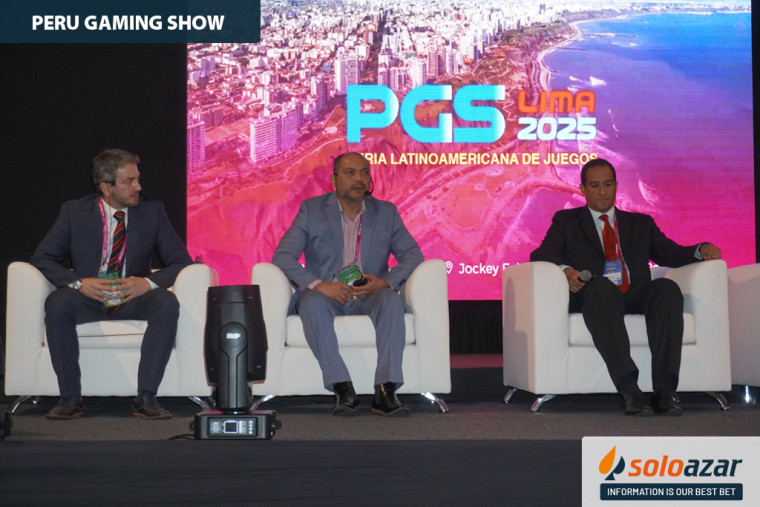
(Lima, SoloAzar Exclusive).- During the 2025 edition of the Peru Gaming Show, the conference ‘Enforcement: Process to ensure compliance (laws, norms, rules)’ took place, with an international panel of professionals who debated about the current challenges to combat illegal gaming and guarantee the application of the laws in the sector, both in Peru and in the Latam region.
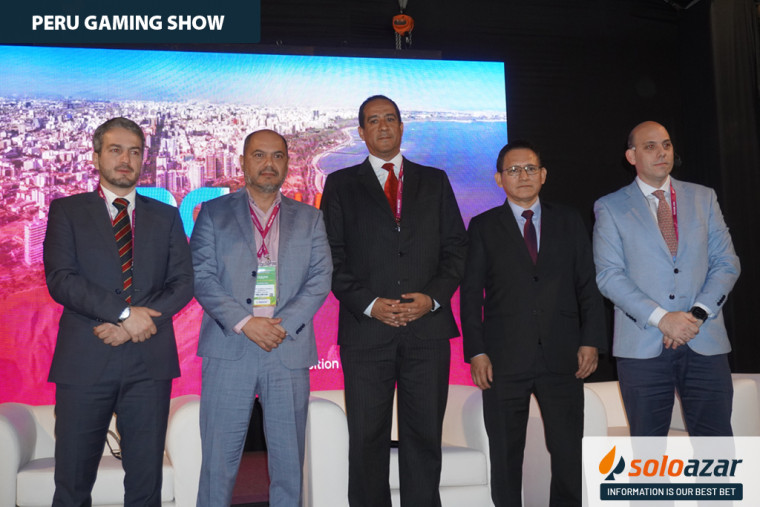
During one of the days of Peru Gaming Show 2025, a panel discussion was held, moderated by the lawyer Tomas García Botta from MF Estudio & Abogados, entitled: ‘Enforcement: Process to ensure compliance (laws, norms, rules)’.
Four expert panellists spoke on the subject:
- Yuri Guerra, General Director of Casino Games and Slot Machines, Mincetur, Peru.
- Fernando Calderón, President of SONAJA
- Carlos Fonseca, CEO of Gaming Law, Peru
- Juan Camilo Carrasco, lawyer at Asensi & Abogados

The Moderator's initial question was: What is the preliminary assessment of the measures taken against illegal gambling and what can be improved?
The first to respond was Yuri Guerra, who highlighted the joint work with the private sector: ‘We work on sharing the responsibility of the control process to maintain the issue of legality, which is a strategic alliance with the private sector’. He added: "We have managed to remove more than 50 illegal sites from the country, and more than 40% of the informal content has been blocked. He also stressed the importance of educating operators on compliance.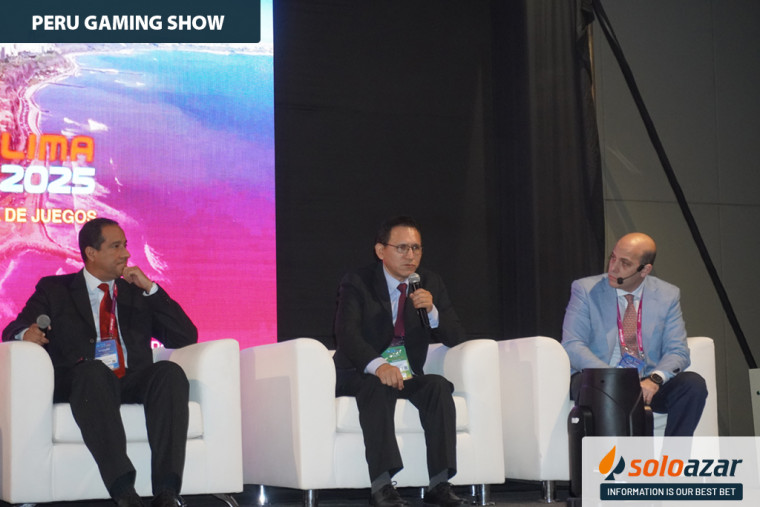
Then, Tomás García Botta moved the discussion to Carlos Fonseca, and Fernando Calderón, with this double question: What is the private sector's view of the regulator's measures? What can be improved?
Fonseca agreed on the need to fight illegal gambling from all fronts: ‘We all absolutely agree that we have to fight, each from our own trenches, against illegal gambling, against the black market.’ At the same time, he highlighted the importance of involving multiple actors - legislators, regulators, unions and suppliers - in a common plan, and positively valued the attitude of the Peruvian Congress in reviewing the Selective Consumption Tax: ‘Yes, there are now several congressmen who see this in a more responsible, more technical way’. He also stressed that ‘suppliers are strategic allies’ in this task, as are the digital platforms that disseminate content.
In line with this vision, Fernando Calderón provided the industry perspective, focusing on the sector's reputation. He highlighted the regulatory demands faced by formal operators: ‘We are constantly over-regulated and we have to keep up’.
He also pointed out the need to correctly execute internal protocols to strengthen the industry's image: ‘The work we do internally is going to demonstrate the quality and standard of our activity’.
Both panellists agreed that regulation must be accompanied by rigorous compliance by the formal sector and effective legal action against illegal operators.
How can poor regulation push the operator into the illegal market?
Juan Camilo Carrasco, reflected on the impact of excessive regulatory frameworks on the channelling of formal gambling:
"Why push the operator into the black market, why take him out when he has already made some investments and has put his cards on the table?
He argued that the aim of good regulation should be to strike a balance: to protect the consumer, attract investment and keep the supply up to date and viable, without holding back innovation.
As a negative example, he cited the case of poker in Colombia, where the international liquidity needed to develop this vertical was blocked: ‘What they did was to block the development, for example, of an offer like poker and today poker does not even appear on the cylinder’. Carrasco reinforced the need to offer clear, stable and attractive conditions to get more operators to enter and stay in the regulated market.
Why do Peruvian players choose to operate on regulated platforms?
Yuri Guerra, explained that there are three main reasons:
1. a competitive offer thanks to the modular system,
2. the guarantee of user protection,
3. confidence in a regulator that is responsive.
‘The Peruvian player knows that there is a regulator and that this regulator will comply with the rules,’ he said. Furthermore, he underlined that the exclusion of large providers from the informal market has reduced its attractiveness.
Finally, he mentioned Mincetur's commitment to quality and transparency through certifications such as ISO 37001 (anti-bribery) and the process to obtain ISO 9001 (quality management), ensuring regulatory continuity beyond political changes.
From the perspective of the legal sector, Carlos Fonseca, reinforced Yuri Guerra's point that the main motivation for playing on regulated sites is the security of the user. ‘By all accounts, it's much safer for the user,’ he said, referring to the support offered by a regulatory authority in the event of non-payment or lack of clear conditions.
He said that, as a result of more aggressive monitoring, a large number of illegal sites have been detected with obvious flaws: no terms and conditions, no contact details and no visible regulatory authority. In addition, he warned about another phenomenon: the counterfeiting of logos of recognised providers, which generates confusion among players and requires greater technical and legal vigilance from the authorities.
Towards the end of the panel, the last question from moderator Tomas García Botta was: Fernando, from your role in an association of operators, how do you complement the work of the State in the fight against illegal gambling and in the effort to increase channelling towards regulated supply?
Fernando Calderón, stressed the importance of building trust in players through secure environments, both physical and digital. He pointed out that data protection, guaranteed payouts and regulatory compliance are key to strengthening the formal industry: "The important thing is that the player feels protected he will be reassured knowing that his wallet is protected, that he will have his winnings paid out.
He also highlighted the need to avoid over-regulation and encourage constant dialogue between the regulator and providers to improve industry standards.
Final conclusions from the panelists
Juan Camilo Carrasco, lawyer at Asensi Abogados, stressed that enforcement is not enough without consumer education: ‘More than prosecution, what we need is to educate the new generations so that they know where it is safe to play’.
Carlos Fonseca, CEO of Gaming Law, underlined the international nature of the sector and the constant dialogue: ‘This is an international activity, and that is why there must be a fluid dialogue between operators, providers and authorities.’
Fernando Calderón, President of SONAJA, emphasised the importance of bringing confidence to players and in the sector: ‘We must continue to generate confidence, not only in the players but also in the authorities.’
Yuri Guerra, General Director of Casino Games and Slot Machines of Mincetur, reaffirmed the State's commitment to the sector: "This is a formal activity that pays its taxes, generates employment and deserves to be recognised as such. The doors of the Directorate are open".
Relive PERU GAMING SHOW 2025 experience with SoloAzar's social media coverage and exclusive interviews. Follow us on LinkedIn and Instagram to stay in the loop!
Categoría:Events
Tags: PGS, Peru Gaming Show,
País: Peru
Región: South America




Event







SiGMA North America 2026
01 de September 2026
LatAm Regulators Discussed Illegal Gambling and Innovation at SiGMA North America
(Mexico City, SoloAzar Exclusive).- The panel "The Red Pen Forum: Regulators Respond to the Industry," held during SiGMA North America 2026, brought together representatives from Uruguay, Argentina, Puerto Rico, and Honduras to analyze regulatory challenges, digital transformation, illegal gambling, and the need to adapt lotteries for new generations. The conference was moderated by Rodrigo Cigliutti, Executive Director of CIBELAE (Ibero-American Corporation of State Lotteries and Betting), and featured the participation of Marcelo Visconti, National Director of Lotteries and Quinielas of Uruguay; Carlos Moyano, President of IAFAS Entre Ríos, Argentina; Heidi Hernández Olivo, Deputy Secretary of the Puerto Rico Lottery; and Lissa Mencía, General Director of Lottery Operations and Games at Loto Honduras.
Monday 28 Sep 2026 / 12:00
SiGMA North America Addressed Crisis Management in iGaming
(Mexico, SoloAzar Exclusive).- During SiGMA North America 2026, Rosa Ochoa, founder of the Blue Global Gaming platform and strategic advisor for gaming operators; Iliana María Pineda Echeverri, Chief Legal & Compliance Officer at Wplay.co; Iraid Rosales, Country Manager Mexico at Amusnet; and Elizabeth Maya Cano, Executive President of CORNAZAR, analyzed the key factors in managing crisis situations within the iGaming industry, with a special focus on transparency, communication, technology, and preparation.
Friday 25 Sep 2026 / 12:00
Affiliates and Acquisition: Keys to Regulated Markets in North America
(Mexico City, SoloAzar Exclusive).- During SiGMA North America 2026, Cristopher Guzmán Reyes, Head of Affiliates at Logrand Entertainment Group; Guga Júnior, influencer and slots expert at Scalar Partners; Andrés Gómez, Head of Latin America Go-to-Market Strategy at Admattic; Yambot Aguilera, Gaming and Finance Sales Director at Google; and Paula Gabriel Jiménez, Advertising Client Growth Director for Microsoft at Aleph, analyzed the state and provincial affiliate ecosystem in North America, as well as the acquisition challenges in regulated markets.
Thursday 24 Sep 2026 / 12:00
SUSCRIBIRSE
Para suscribirse a nuestro newsletter, complete sus datos
Reciba todo el contenido más reciente en su correo electrónico varias veces al mes.