Trade Associations and Governments in Latin America: The Gaming Sector Calls for Technical Dialogue and Regulatory Predictability
⏱ 3 min read
(Cartagena de Indias, SoloAzar Exclusive).- Cartagena de Indias was the stage for an intense debate on the role of gaming associations in shaping public policy, where regional leaders agreed on the need to strengthen dialogue with governments, warned about unilateral decisions that affect the sustainability of the industry, and proposed an evolution of trade associations into key technical actors in the region.

As part of GAT Expo Cartagena 2026, held March 24–26 at the Las Américas Convention Center, the “Associations” panel brought together prominent industry leaders to analyze the relationship between trade associations and governments in Latin America. Participants included Aurea Navarro, Director of AIEJA (Mexico); Fernando Calderón, President of SONAJA (Peru); Mario Trucco, Executive Director of ALEA (Argentina); John Mario Giraldo, Chairman of Cornazar; Rubén Felipe Lagarejo Rivas, President of FEDELCO; and Lorena Rojas, President of APOJA (Paraguay), with moderation by Evert Montero Cárdenas, President of FECOLJUEGOS.
From the outset, Montero set the tone of the meeting as “an urgent conversation” and warned about the deterioration of relations between associations and governments in some countries. “There was an almost total breakdown in relations (…) and that has several consequences,” he said, noting that the lack of technical consultation can lead to “poorly informed decisions” that impact both the sector and the state itself.
One of the central themes was the role of associations as technical interlocutors. In this regard, Aurea Navarro stated that “in an ideal world, trade associations should not only serve as technical interlocutors with the government, but also contribute to public policy.” She cited the Mexican case, where high turnover among regulators — “16 regulators in 16 years” — hinders policy continuity and forces associations to provide constant technical expertise.
From Peru, Fernando Calderón reinforced the importance of institutional articulation: “It’s not only about representing the interests of my members, it’s precisely about how I can contribute to the State so that it can generate adequate and technical regulations.” However, he warned that problems arise when tax decisions are made without consultation: “They begin to distort the market.”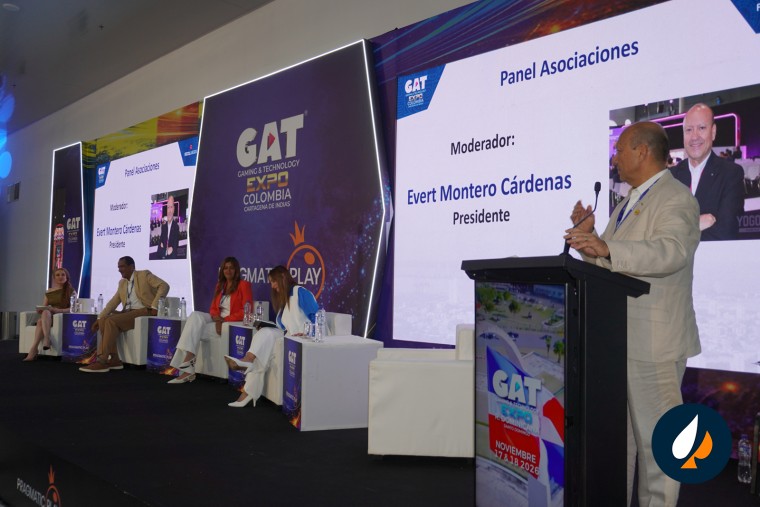
A more optimistic view came from Paraguay. Lorena Rojas highlighted regulatory progress in her country following a recent reform: “We learned that we cannot just react, we have to anticipate.” She emphasized the importance of the private sector acting as an information generator: “There is nothing worse than regulation made from fiction.” She also stressed the need for predictability: “When there is a firm authority (…) as a businessperson you can start talking about what is called predictability.”
From Colombia, the need to rebuild trust was emphasized. John Mario Giraldo was blunt in stating that “regulating without the sector is not inefficient, it is technically incomplete,” highlighting that without real market knowledge “regulation is inward-looking, not outward.” He also warned about the lack of dialogue: “We don’t have trust.”
Mario Trucco, drawing from ALEA’s experience in Argentina, argued that the key lies in consolidating associations as reference entities: “The main thing (…) is to make ourselves known as a reference entity in the sector,” he said, stressing the importance of communication to “dispel myths” and combat stigmatization of the activity.
The debate also addressed the factors necessary to build strong relationships with governments. Transparency, constant communication, and technical support were among the recurring concepts. “Regulating more is not regulating better,” was highlighted during the exchange, along with the need to assess financial impacts and ensure reasonable transitions.
Looking ahead, panelists agreed that the role of associations will evolve toward greater regional integration and a more technical profile. “Without technical dialogue, there are no sustainable public policies,” one speaker affirmed, while Rojas anticipated that associations will become “data providers” and diagnostic sources for governments.
Finally, a paradigm shift was proposed: moving beyond confrontation and advancing toward a unified sector vision. “The sector is one, and if one part does poorly, the entire sector does poorly,” concluded Trucco, encapsulating the spirit of a panel that made clear that the future of gaming in the region will largely depend on the quality of dialogue between industry and government.
Categoría:Events
Tags: GAT EXPO Gaming & Technology,
País: Colombia
Región: South America




Event










SiGMA North America 2026
01 de September 2026
LatAm Regulators Discussed Illegal Gambling and Innovation at SiGMA North America
(Mexico City, SoloAzar Exclusive).- The panel "The Red Pen Forum: Regulators Respond to the Industry," held during SiGMA North America 2026, brought together representatives from Uruguay, Argentina, Puerto Rico, and Honduras to analyze regulatory challenges, digital transformation, illegal gambling, and the need to adapt lotteries for new generations. The conference was moderated by Rodrigo Cigliutti, Executive Director of CIBELAE (Ibero-American Corporation of State Lotteries and Betting), and featured the participation of Marcelo Visconti, National Director of Lotteries and Quinielas of Uruguay; Carlos Moyano, President of IAFAS Entre Ríos, Argentina; Heidi Hernández Olivo, Deputy Secretary of the Puerto Rico Lottery; and Lissa Mencía, General Director of Lottery Operations and Games at Loto Honduras.
Monday 28 Sep 2026 / 12:00
SiGMA North America Addressed Crisis Management in iGaming
(Mexico, SoloAzar Exclusive).- During SiGMA North America 2026, Rosa Ochoa, founder of the Blue Global Gaming platform and strategic advisor for gaming operators; Iliana María Pineda Echeverri, Chief Legal & Compliance Officer at Wplay.co; Iraid Rosales, Country Manager Mexico at Amusnet; and Elizabeth Maya Cano, Executive President of CORNAZAR, analyzed the key factors in managing crisis situations within the iGaming industry, with a special focus on transparency, communication, technology, and preparation.
Friday 25 Sep 2026 / 12:00
Affiliates and Acquisition: Keys to Regulated Markets in North America
(Mexico City, SoloAzar Exclusive).- During SiGMA North America 2026, Cristopher Guzmán Reyes, Head of Affiliates at Logrand Entertainment Group; Guga Júnior, influencer and slots expert at Scalar Partners; Andrés Gómez, Head of Latin America Go-to-Market Strategy at Admattic; Yambot Aguilera, Gaming and Finance Sales Director at Google; and Paula Gabriel Jiménez, Advertising Client Growth Director for Microsoft at Aleph, analyzed the state and provincial affiliate ecosystem in North America, as well as the acquisition challenges in regulated markets.
Thursday 24 Sep 2026 / 12:00
SUSCRIBIRSE
Para suscribirse a nuestro newsletter, complete sus datos
Reciba todo el contenido más reciente en su correo electrónico varias veces al mes.