US Midterm Election Bets Put Prediction Markets to the Test
Monday 09 de November 2026 / 12:00
⏱ 3 min read
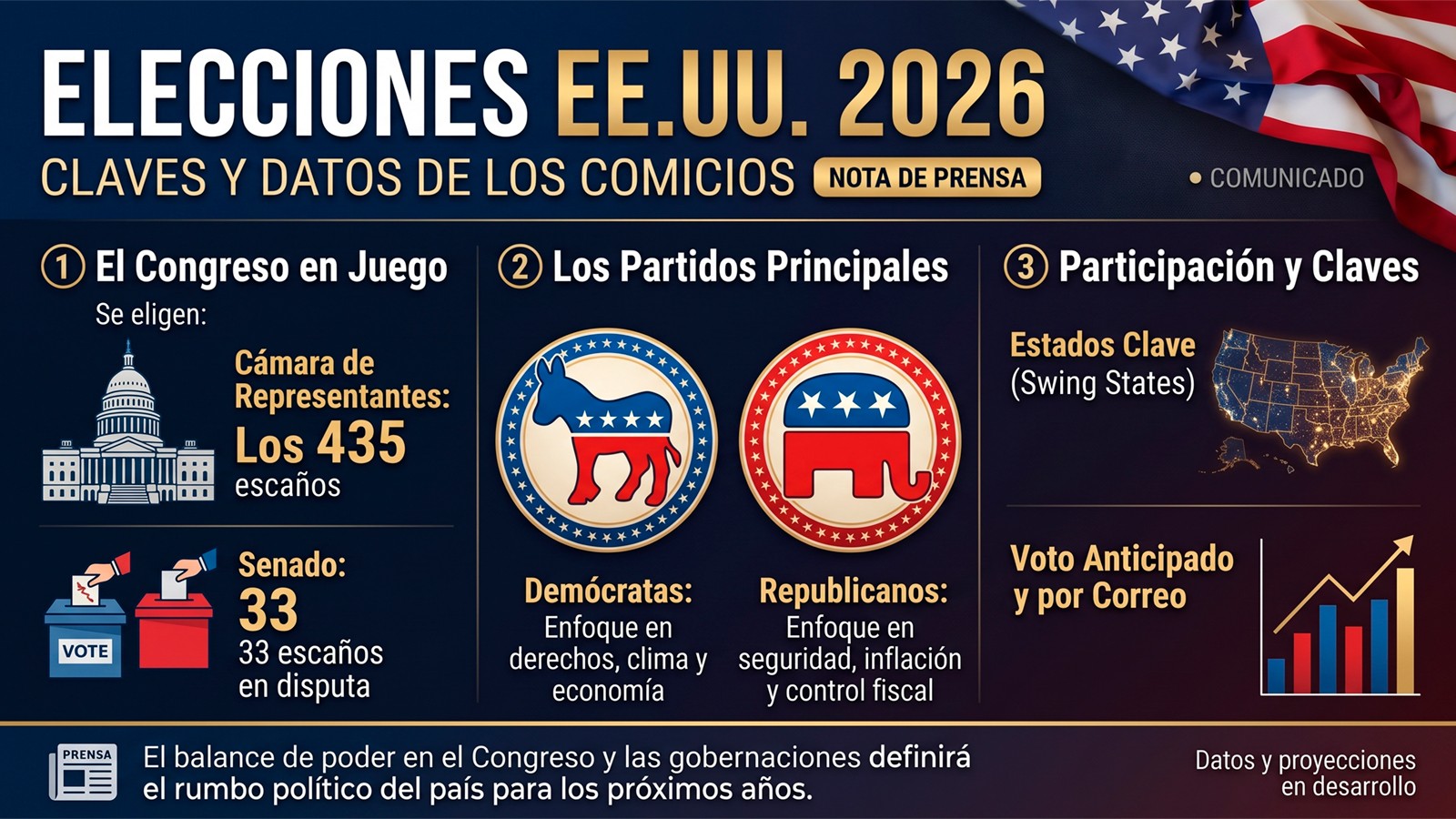
(Washington, D.C.).- More than US$1.48 billion has been traded across US election prediction markets ahead of the 3 November midterm elections, placing platforms such as Kalshi and Polymarket under scrutiny over the accuracy of their forecasts, market integrity and oversight mechanisms. The high level of activity represents a significant test for an industry that has gained visibility since the 2024 presidential election and is increasingly used by media organisations and investors as an indicator of political and market sentiment.
Kalshi and Polymarket See Election Trading Surge
According to data reported by Reuters, prediction markets have attracted substantial trading volumes ahead of the congressional elections, with Kalshi accounting for the largest share of activity.
As of Tuesday afternoon, Kalshi had recorded approximately US$1.33 billion in trading volume across its midterm election contracts. Meanwhile, congressional election markets on Polymarket had generated around US$145 million in bets, according to figures from the Anti-Corruption Data Collective (ACDC).
The scale of activity reflects the growing role of prediction markets in political forecasting. Both platforms expanded their audiences following the 2024 US presidential election, when their probability estimates pointed to Donald Trump's victory while traditional opinion polls remained a central reference for political analysis.
Since then, these platforms have increasingly become sources of information for financial market participants and news organisations.
Markets Give Democrats the Edge in Congressional Races
Data from analytics firm BetInt showed that, by Tuesday afternoon, prediction markets assigned Democrats a 94% probability of gaining control of the House of Representatives and a 74% chance of winning the Senate.
ACDC identified more than 28,000 markets connected to the midterm elections. However, trading activity was heavily concentrated in a limited number of competitive Senate races, particularly in Texas, Michigan, Maine and South Carolina.
The Texas Senate contest had attracted nearly US$67 million in bets as of 29 October. By Tuesday afternoon, markets gave Democratic candidate James Talarico a 74% probability of defeating Republican Ken Paxton.
In Michigan, betting volumes exceeded US$26 million, with Democratic candidate Abdul El-Sayed assigned a 76% chance of defeating Republican Mike Rogers.
Prediction Market Accuracy Faces Renewed Scrutiny
Despite their growing influence, prediction markets have not consistently delivered accurate forecasts. Several projections during US primary elections and Brazil's October 2026 presidential election failed to match the final results, raising questions about their reliability as forecasting tools.
"This election is a real test for the new wave of prediction markets," said Yesha Yadav, Associate Dean of Vanderbilt University Law School.
A 2025 Vanderbilt University study examining nearly 2,500 markets from the 2024 elections found that prediction markets were generally effective at measuring probabilities.
However, Joshua Clinton, a political science professor at the university, cautioned that aggregate performance does not necessarily demonstrate the ability of these platforms to accurately forecast closely contested individual races.
Brazil's presidential election provided a recent example of this limitation. In October 2026, Kalshi and Polymarket assigned Luiz Inácio Lula da Silva only around a 20% probability of defeating Flavio Bolsonaro. Lula ultimately won the election.
These discrepancies have reinforced the distinction between market-implied probabilities and guaranteed electoral outcomes.
Market Manipulation and Regulatory Oversight Under Pressure
Beyond forecasting accuracy, the growing volume of political betting has brought market integrity and manipulation risks into sharper focus.
ACDC found that relatively small wagers could influence the probabilities displayed by prediction markets, potentially affecting public perceptions of electoral races.
Both Kalshi and Polymarket have stated that they have strengthened their oversight procedures, including restrictions preventing individuals with direct interests in elections from participating in related markets.
The issue is particularly relevant as prediction markets attract larger volumes of capital and gain influence beyond their original user base.
Prediction Markets as Indicators, Not Guarantees
For investors, election contracts can provide insights into market sentiment and expectations surrounding political developments. However, the probabilities reflected in contract prices should not be interpreted as definitive predictions of future events.
Carlos Hardenberg, portfolio manager at MCP Emerging Markets, emphasised the importance of understanding their role as analytical instruments rather than guarantees of electoral outcomes.
The US midterm elections therefore represent more than a high-volume trading event for Kalshi and Polymarket. They also provide an opportunity to assess whether prediction markets can maintain their credibility, ensure fair trading conditions and establish themselves as reliable sources of information in an increasingly competitive forecasting landscape.
Categoría:Gaming
Tags: Sin tags
País: United States
Región: North America




Event










SiGMA World 2026
02 de November 2026
SiGMA Italia Awards Charity Auction Raises €34,500 for Good Causes
Monday 09 Nov 2026 / 12:00
Africa Takes Center Stage in Global Gambling Governance at SiGMA World 2026
Thursday 05 Nov 2026 / 12:00
Closing of SiGMA World 2026: Business Opportunities and Activities in Rome
Thursday 05 Nov 2026 / 12:00
SUSCRIBIRSE
Para suscribirse a nuestro newsletter, complete sus datos
Reciba todo el contenido más reciente en su correo electrónico varias veces al mes.