Argentina blocks access to Polymarket, setting a regulatory precedent in Latin America
Tuesday 17 de March 2026 / 12:00
⏱ 3 min read
(Buenos Aires).- The Buenos Aires City Court has ordered the full blocking of prediction platform Polymarket in Argentina for operating without authorization, in a decision that strengthens oversight of online gambling and positions the country as the first in Latin America to restrict this type of market.
Regulatory crackdown on unauthorized platforms
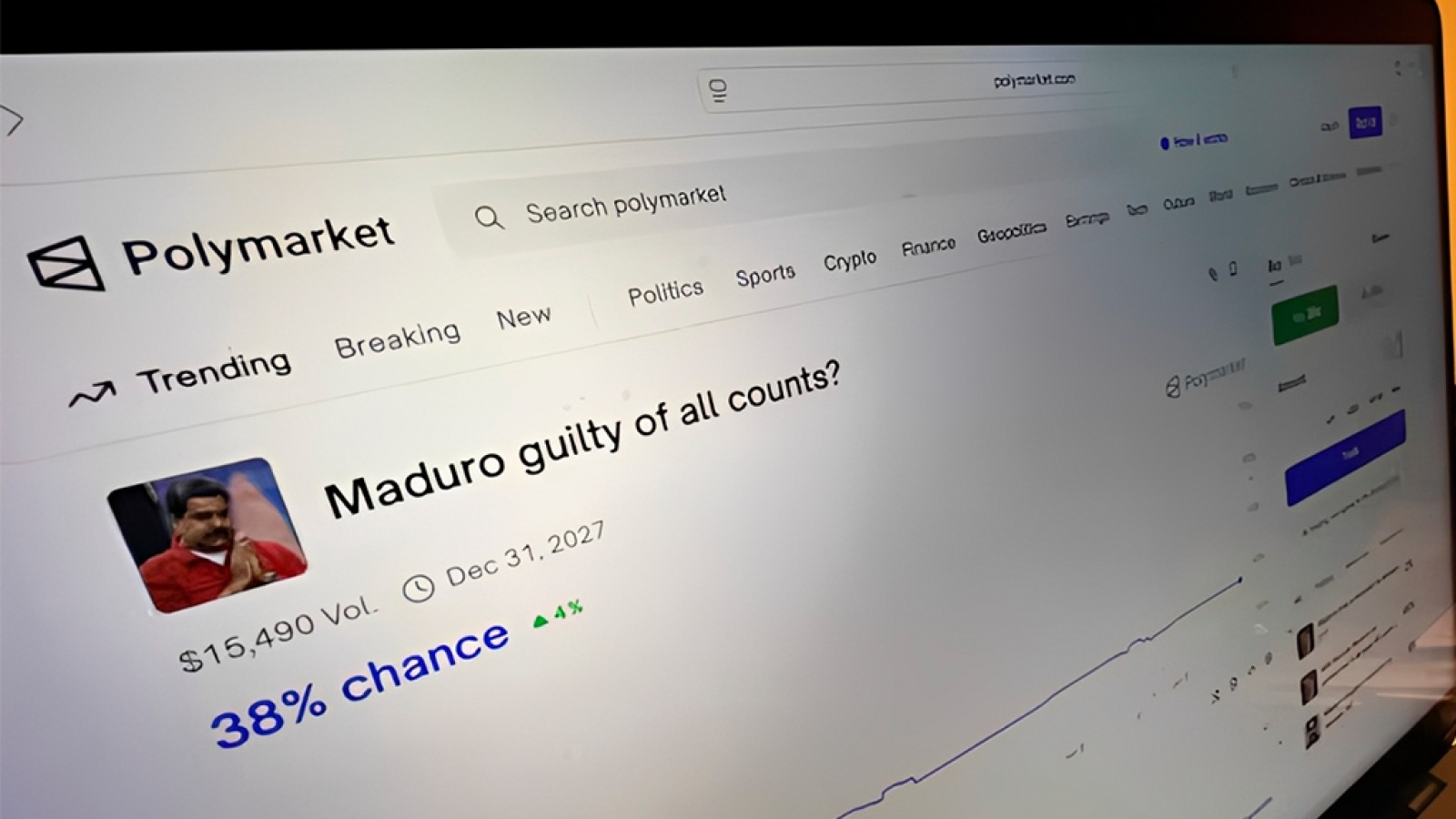
Argentina has taken a significant step in online gambling regulation by blocking access to Polymarket, considered the world’s largest prediction market platform. The measure was issued by Court PCyF 31, under Judge Susana Parada, following an investigation led by the city’s Public Prosecutor’s Office.
The case originated from a complaint filed by the Buenos Aires City Lottery, which identified that the platform was operating without a license in the country. The investigation was led by prosecutor Juan Rozas, head of the Specialized Prosecutor’s Office for Gambling (FEJA).
As a result, authorities ordered the blocking of the website across the entire national territory, as well as the removal of its applications from Google and Apple app stores, affecting both new users and existing accounts in Argentina.
Prediction markets under regulatory scrutiny
According to authorities, Polymarket operated under the appearance of a financial market but with a logic comparable to online betting. The platform allows users to invest in future outcomes — ranging from elections to sports or economic events — through “Yes” or “No” positions, whose prices fluctuate based on supply and demand.
The Public Prosecutor’s Office concluded that the system contains the typical elements of gambling: money at stake, uncertainty of outcome, and the possibility of gains or losses. Additional risk factors included the use of cryptocurrencies, the ability to transact via credit cards, and the absence of identity and age verification controls.
According to the official report, these conditions enabled unrestricted access, even for minors, reinforcing the argument of illegality and risk for users.
Institutional coordination and industry backing
The investigation was supported by the Judicial Investigations Body and the Argentine Association of State Lotteries, which confirmed that the platform was not authorized in any jurisdiction within the country.
Additionally, the Argentine Chamber of Casinos, Bingos and Annexes filed a separate complaint, providing relevant information on the platform’s irregular operations and lack of regulatory controls, echoing concerns from the regulated gaming sector.
To enforce the ruling, the National Communications Authority was instructed to implement the blocking through internet service providers, consolidating a coordinated approach between regulators, the judiciary, and industry stakeholders.
International impact and global context
The decision positions Argentina as a pioneer in Latin America in restricting this type of platform, although similar measures have already been taken globally in countries such as France, Belgium, Singapore, and Australia.
In contrast, the regulatory landscape in the United States has been more volatile. Following the 2024 presidential elections — in which Polymarket accurately predicted Donald Trump’s victory — the platform faced investigations by the Federal Bureau of Investigation and regulatory tensions with the Commodity Futures Trading Commission.
However, the subsequent political climate led to a shift in stance, and the company received strong market backing when Intercontinental Exchange announced a US$2 billion strategic investment, further legitimizing its operations in certain environments.
A precedent for the region
The blocking of Polymarket in Argentina sets a key precedent for the Latin American gaming industry, at a time when the expansion of iGaming and emerging verticals — such as prediction markets — are challenging traditional regulatory frameworks.
For operators and regulators, the case highlights the growing need to clearly define the boundaries between financial innovation and gambling, as well as to strengthen oversight mechanisms over digital platforms operating without licenses in emerging markets.
Categoría:Legislation
Tags: Sin tags
País: Argentina
Región: South America




Event










SiGMA North America 2026
01 de September 2026
"Technology can be global, but execution in LATAM must be local": Borut Leban on Timeless Tech's Regional Expansion
(Mexico City, SoloAzar Exclusive).- Following a highly successful showing and a 'Best Aggregator 2026' award at SiGMA North America, Timeless Tech CEO Borut Leban reflects on the company's strategic growth across LatAm. In this interview, Leban discusses the necessity of deep market localization, concrete new business opportunities, and the upcoming launch of their unified retention ecosystem, Timeless Arena.
Friday 18 Sep 2026 / 12:00
BSW Highlights Validation and Growth Opportunities in the LATAM iGaming Market
(Mexico City, SoloAzar Exclusive).- In Q&A with SoloAzar, Betting Software (BSW) Head of Digital Marketing Ilia Chumak discussed the company's standout showcase in SIGMA North America. Highlighting the incredible energy of the region, Chumak noted that the event was a major success for BSW, resulting in active negotiations and verifying multiple deals straight from their booth.
Friday 18 Sep 2026 / 12:00
SiGMA North America Explores Affiliate Marketing After Sports Events
(Mexico City, SoloAzar Exclusive).- At SiGMA North America 2026, Fernanda Figueroa, Affiliate Manager at 1win Partners, examined how affiliates can monetize sports events in LATAM beyond the initial traffic spike. During the conference “Beyond the Spike: How Affiliates Monetize Sports Events in LATAM All Year Round,” she discussed sports betting traffic, player retention, campaign localization and audience segmentation as key elements for extending the value of major sporting events.
Friday 18 Sep 2026 / 12:00
SUSCRIBIRSE
Para suscribirse a nuestro newsletter, complete sus datos
Reciba todo el contenido más reciente en su correo electrónico varias veces al mes.