"Banning gambling is the same as sweeping it under the rug," says Leonardo Baptista on current situation in Brazil
Monday 09 de December 2024 / 12:00
⏱ 5 min read
(Brasilia).- Leonardo Baptista, CEO of Pay4Fun, the first financial company dedicated to intermediating gambling payments, is optimistic about the regulation of gambling in the country.
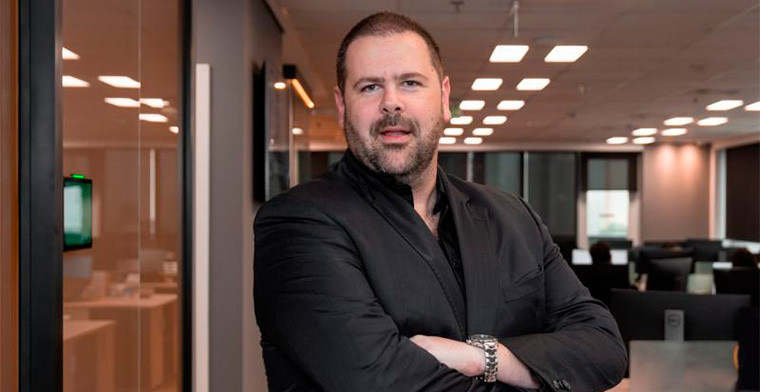
On 1 January, Law 14.790/2023 will come into full force and effect, after a long hiatus and several controversies surrounding the sector in 2024. Leonardo Baptista, CEO of Pay4Fun, a pioneering company in the mediation of payments between bettors and bookmakers, was a guest on a local media podcast, Correio, and spoke about the regulation and the technological innovations that Gambling has brought to the sector.
Baptista holds a degree in Computer Science from Faculdade Associadas de São Paulo (FASP) and a degree in Marketing Management from Universidade Anhembi Morumbi. Leonardo is CEO and co-founder of Pay4Fun, the first payment entity operating in the sports betting sector to receive authorisation from the Central Bank of Brazil. The entrepreneur has more than 20 years of experience in the gaming and IT industry: in 2004 he created the first internet bingo, an operation that was already authorised in Brazil at the time.
What do you think the sector will look like from January onwards - will it grow or shrink?
Both. At the beginning, the market will contract in terms of operators, the sites that are operating. This market will contract in terms of the number of operators because not all companies have 35 million reais to invest and start operating. Now, in the Brazilian market, this rocket cannot go back, there is no turning back for betting in Brazil. It is a market that is growing by nature.
The President has threatened to put an end to gambling. Several MPs are also against it. How do you analyse this attitude?
One of the things that regulation will bring is precisely education for everyone, including removing the fear behind gambling. A regulated market helps people to get an idea of the numbers, the big picture, generates taxes and employment. It can help gamblers who become addicted because this exists whether the market is regulated or not, and with the illegal market it is worse because the gambling is there. If you look at the world market, historically speaking, very few countries have banned gambling in general.
There are major world powers where gambling is fully permitted and regulated: the United States, England, Italy, Germany. So the way forward is regulation, not prohibition. To ban gambling is to sweep it under the carpet and favour those who operated incorrectly. So we are back to Chinese websites, to prizes that are not due and to gamblers who do not get paid when they have won a prize because there is no one knocking on the door to collect it. The way forward is not prohibition, but regulation.
The National Secretariat of Consumer Affairs (Senacon in its original) has published an ordinance on gambling advertising. What did you think?
This has been a long time coming. One of the big things in our market, along with regulation, is precisely this issue of advertising, publicity and marketing. It often became abusive. The first thing I understand: betting is entertainment, it is not guaranteed income, it is not extra income, it is not money to pay the month's bills. There is no way you can talk about prizes, money or guaranteed income.
Everything that is being done and worked on, and has been advanced now, is for the good of the regulated market. I think there were a lot of people who took advantage of the regulatory vacuum, precisely to exploit totally undue advertising. There were influencers on Instagram playing games, showing infinite earnings, driving around in Porsche cars. This is banned and should have been banned from day zero.
How does Pay4Fun work? What role does it play in sports betting payments and how big is it?
Look, I like to make a parallel so that people understand it well, that we are the machines of the betting sites. So the same card machine that you use in a restaurant, in a shop where you go to buy something, we play the same role, just for the betting sites. We are right in the middle between the betting site and the bettors. We take care of all the financial aspects of the money going in and out of the betting site, and vice versa. When the bettor wins, we pay out the winnings, we are in the middle of the road. The call is still out for companies, but of the 290 that applied for a licence, 240 are still in the process, and we operate with about 50% of them. We currently have about 140 companies working with us.
How do these payment methods help authorities identify fraud and money laundering?
There has always been a lot of talk about money laundering, and from the beginning Pay4fun forced users to create a digital account, as is the process of opening a digital bank today. They create an account, they provide all the documents, and based on that, we know who the people are and we accept bank transfers from that CPF. And the payment of premiums is exactly the same. The entry and exit is a closed tunnel, there was not much you could do against money laundering and we had all the documentation behind us.
Pix da Pay brought an innovation: we are the first company to stamp the PIX QRCode with the CPF of the person who generates it. If I generate a Pix QRCode to make a deposit at a bookmaker, pass it on to a third party to deposit it into their account and try to launder it, they won't even be able to process the Pix. I understand, especially now with the regulations, that financial and payment institutions are going to play a crucial role in making this sector work properly.
In terms of technology, what could be improved?
The Central Bank is a fantastic institution, which has been working on technology all the time. Now they are working on the Digital Real, the DREX, the regulation of cryptocurrencies, so this is going to be a big change.
I think by 2025, and for our area specifically, it's going to change a lot because ITP, the payment initiator, is already in place. To give you an idea, Pix is already fast today. But it has a usability problem, because you have to generate the QR code, open the internet bank, enter the password, validate it and finalise the transaction. This takes up to a minute. With ITP, the same transaction will be done in five seconds.
By Fernanda Strickland & Eduarda Esposito
Categoría:Legislation
Tags: Pay4Fun,
País: Brazil
Región: South America




Event
iGaming tech leader Cristina Turbatu commends ICE Barcelona's vision for Hall 7
Tuesday 20 Oct 2026 / 12:00
CGA Showcases Canada’s Competitive Edge at ICE Barcelona
Tuesday 13 Oct 2026 / 12:00
ICE Barcelona Hosts WorldGaming-Backed Nineball Championship in 2027
Tuesday 06 Oct 2026 / 12:00
SUSCRIBIRSE
Para suscribirse a nuestro newsletter, complete sus datos
Reciba todo el contenido más reciente en su correo electrónico varias veces al mes.