Maryland House online casino bill crosses over to Senate
Wednesday 27 de March 2024 / 12:00
⏱ 4 min read
(Maryland).- On March 26, Del. Vanessa Atterbeary presented her Maryland online casino bill to the Senate Budget & Taxation Committee, emphasizing its importance to the education budget and the efforts made in the bill to address concerns about employment in the retail sector. Although this year’s iGaming effort began in the Senate, those original bills are now dead. Atterbeary’s bill passed in the House on March 16 with a vote of 92-43. Hers is now the state’s only hope to hold a referendum to legalize online casinos this year.
Del. Atterbeary began her presentation by emphasizing that the House bill is different, not a refiling of Sen. Ron Watson’s legislation. His bills failed to advance because of a belief in the Senate that the revenue from iGaming isn’t currently needed.
Atterbeary stressed that local governments are having difficulty finding the money to follow the Department of Education’s Blueprint for Maryland’s Future.
According to her, the House Ways & Means Committee found iGaming to be the most appropriate way to address that issue and advanced it as part of a budget package.
The bill would create a fund using 1% of iGaming revenue. This would be distributed to local jurisdictions in proportion to the number of school-aged kids living in each area.
Opponents of the Maryland online casino effort have been stoking fears of potential job losses in the brick-and-mortar casino industry. Del. Atterbeary’s bill would also commit funds to alleviating such problems, should they occur.
However, she faced significant pushback from Sen. Joanne Benson, whose concerns stem from a report by the Center for Data Analytics and Sports Gaming Research at Morgan State University (MSU).
Maryland Online Casino Bill Aims to Quell Union Fears
In recent years, retail casino workers’ unions have emerged as one of the trickiest hurdles for online casino expansion efforts to clear. Retail casinos themselves are now split on the question of whether iGaming is a threat to their revenue. Their employees, however, have seized on those fears of cannibalization.
In Maryland, as in New York, winning union support will be critical if the bill has any hope of passing. Del. Atterbeary presented two ways in which her legislation addresses union concerns.
First, she said it commits the first $10 million in annual revenue—before any other deductions—to create a cannibalization fund. Any workers losing their jobs due to a shift from retail to online gambling would receive compensation from the fund in addition to their usual unemployment benefits.
Del. Atterbeary emphasized that this money would be used only if cannibalization occurs. She believes those fears are unfounded. She said the House had considered five different studies, of which only one suggested that revenue and job losses were likely in the retail sector.
Second, the bill proposes a much lower tax rate on live dealer games revenue than other games—20% vs. 55%. She said this would encourage operators to invest in their live dealer offerings. The bill would require such studios to be located in the same county as a brick-and-mortar casino and to keep their hiring in-state.
That said, promises of new jobs opening up in the live dealer online casino space haven’t always quelled union fears. Retail casino dealers make much of their money from tips. Live dealer games also allow tipping in the US, but the worry is that online customers might not be as generous as retail patrons.
Sen. Benson Establishes Herself as iGaming Critic
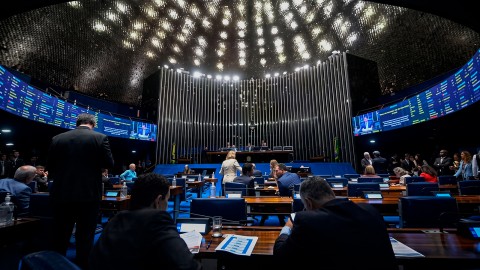
When the committee’s chair, Sen. Guy Guzzone, opened the floor for questions, there was only one. This came from Sen. Benson, whose words made it clear she would be unlikely to support the legislation.
Sen. Benson asked Del. Atterbeary if she had read the MSU report. Atterbeary admitted she had not.
Sen. Benson said she takes the MSU study report very seriously, as it suggests the impact would be “very devastating for people of color.”
Del. Atterbeary and Sen. Benson are both Black, as is Sen. Watson, who sponsored the Senate online casino bill.
A second line of questioning from Sen. Benson was about jobs at brick-and-mortar casinos and the surrounding businesses. On this, Del. Atterbeary deferred to Michelle McGregor, an industry representative from the Sports Betting Alliance.
McGregor cited “other studies” and SBA’s client operators. They have found that in the states with legal iGaming, it has been additive to the retail industry. She said: “Across the six states, data substantially shows that iGaming revenue is additive to land-based casino gaming. In fact, for states where casino gaming was on the decline or stagnant, they’ve since seen increases in their land-based revenue. So I think that would reinforce sustainability for jobs and even for the existing businesses around casinos.”
Sen. Benson was not convinced, reiterating that the MSU report says otherwise.
Possible Outcomes for Del. Atterbeary’s Bill
Maryland’s legislative session ends April 8, so there’s not much time for the bill to pass. It looks like it will have at least one vocal opponent in Sen. Benson, and so far, union leaders have given no indication of coming around.
Passing a bill in one half of the legislature is more progress than other states have made in 2024. However, most pundits have tended to be of the opinion that its odds in the Senate are slim.
The short remaining timeline means there isn’t much leeway to go back and forth on details. However, Sen. Watson’s original legislation came in two parts—one to call the necessary referendum and the other to establish the implementation details. It’s possible that we could see a reversion to that strategy, with only the referendum portion passing in 2024.
Under that scenario, the question of whether to allow online casinos would go to voters in the November general election. If they were to approve it, then the legislature could go back to the drawing board with the implementation details in 2025. Addressing all the concerns coming from every camp would be no easy feat. But it would be easier with a mandate from the Maryland public in hand.
Categoría:Legislation
Tags: Sin tags
País: United States
Región: North America




Event










SBC Summit 2026
29 de September 2026
Uplatform Brought "Your Dreams. Our Platform" to Life at SBC Summit Lisbon 2026
Friday 09 Oct 2026 / 12:00
Kambi Highlights Network and LatAm Growth at SBC Summit
Friday 09 Oct 2026 / 12:00
GR8_TECH Highlights Speed and Growth at SBC Summit 2026
Friday 09 Oct 2026 / 12:00
SUSCRIBIRSE
Para suscribirse a nuestro newsletter, complete sus datos
Reciba todo el contenido más reciente en su correo electrónico varias veces al mes.