Thailand on the way to legalize casinos
Thursday 31 de October 2024 / 12:00
⏱ 4 min read
(Thailand).- The country had legal casinos before and during World War II but later banned the practice due to concerns over their alleged negative effect on society, according to the Center for Gambling Studies (CGS) at Chulalongkorn University.
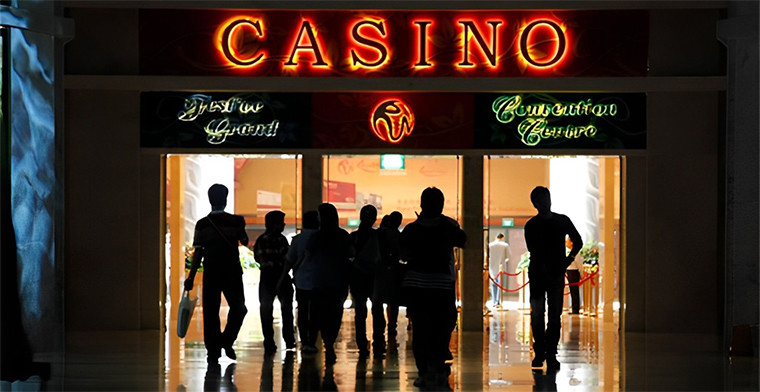
Ever since Nakorn Hindej was a boy, gambling has been a part of his life and local community in northern Thailand.Pok Deng, a card game similar to poker, is popular at social gatherings in his hometown, where people bet money on games.
“Pok Deng is mostly played during funeral wakes in the northern region,” Nakorn, a 47-year-old shopkeeper in Chiang Mai, told BenarNews. “As far back as I can remember from childhood, gambling was present at funerals.”
Most forms of gambling, such as playing cards for cash or betting on matches, are officially prohibited in Thailand, pushing many of those activities underground. But Thailand’s culture of gambling may soon change through a government proposal to legalize casinos.
“People gamble in Thailand anyway. Legalizing it would allow the government to collect taxes, which could be used to help the poor and vulnerable groups,” said Nakorn, who can burn 300 to 500 baht (U.S. $9 to 14) on every Pok Deng game he gambles on.
“It’s better than letting illegal operators and underground casinos continue to profit.”
Now, in a bid to boost revenue from tourism – an engine of the Thai economy – Prime Minister Paetongtarn Shinawatra’s government is pushing a bill to turn casinos into legitimate operations by integrating them into entertainment complexes.
When it was in the parliamentary opposition, the now-ruling Pheu Thai Party first proposed the bill in 2021. It called for inviting investors to establish entertainment complexes that incorporate casinos.
Thailand had legal casinos before and during World War II but later banned the practice due to concerns over their alleged negative effect on society, according to the Center for Gambling Studies (CGS) at Chulalongkorn University.
In 2021, 1.9 million Thais participated in some form of gambling, amounting to at least 100 billion baht ($2.99 billion), said Nualnoi Treerat, CGS director.
In August, the Ministry of Finance opened public consultations on the bill, which is expected to be submitted to the Cabinet for review by year’s end.
An earlier report by a parliamentary committee showed 38% of Thais supporting the draft law, with 80.67% favoring entertainment complexes.
“The ‘Entertainment Complex’ measure will attract tourists, generate revenue, and create jobs,” Interior Minister Anutin Charnvirakul said.
In promoting the bill, the previous Pheu Thai-led government, headed by then-Prime Minister Srettha Thavisin, had noted Singapore’s economic success in its casino industry.
In the first half of 2023, Singapore’s entertainment complexes attracted over 300 billion baht (U.S. $8.87 million) in investments and generated annual tax revenues of at least 20 billion baht ($591.59 million), he said in March.
The industry also created more than 20,000 jobs in Singapore during the period, Srettha added.
Call for safeguards
Some advocates and analysts warn there could be social risks if the government pushes through with legalizing casinos without proper regulation.
One analyst said Thailand’s casino bill falls short of the standards set by other countries, such as Singapore and Japan, in regulating casino industries.
“The Thai draft law lacks important details, such as the proportion of casino space within the broader entertainment complex,” said Nuttakorn Vititanon, an assistant political science professor at Chiang Mai University. “In both Singapore and Japan, casinos occupy only a small part of much larger developments that include theme parks, conference centers, and shopping malls.”
“Without these safeguards, there’s a concern that Thailand’s casino industry could end up like those in Laos, Myanmar, or Cambodia, where the regulation is weak and societal impacts are severe,” he said.
A coalition of youth groups, meanwhile, opposes passage of the bill.
“The government should enforce stricter gambling regulations and establish an independent body to prevent economic interference and protect our children’s future,” the coalition wrote in a letter to Prime Minister Paetongtarn Shinawatra in September.
One social justice advocacy group warned against passing the bill without considering its potential impact on society.
“If the provisions aren’t strict and enforcement is weak, the bill will harm Thai society,” said Jaded Chouwilai, the director of the Women and Men Progressive Movement Foundation (WMP). “Rushing to attract investment without proper preparation and transparency will be dangerous.”
Thailand’s plan to legalize casinos comes as other Asian nations grapple with their gambling challenges.In Indonesia, where gambling remains strictly prohibited, nearly 3.8 million people engaged in online gambling in 2023, with 80% coming from low-income households, according to the Financial Transaction Reports and Analysis Center, a government agency.
The agency’s findings show the practice cuts across all demographics, including students and the unemployed, with the industry taking in “over 34 trillion rupiah ($2.2 billion) in 2023 alone.”
Change in policy
Some Thais who engage in gambling support the bill, provided strict regulations are enforced.
“Legal casinos are a good thing, as long as there is no corruption,” said Bamrung Yuyuen, a cockfighting stall owner in the northeastern province of Khon Kaen. “The revenues go straight to the state.”
Nakorn, the Chiang Mai shopkeeper, supports the change in the government’s policy toward casinos.
“Casinos should be legalized, but it must be fair for everyone. If only the rich and tourists can gamble while locals can still get arrested, then nothing has changed.”
Categoría:Legislation
Tags: Sin tags
País: Thailand
Región: Asia




Event










SBC Summit 2026
29 de September 2026
The Future of Sports Engagement Beyond the Court
Friday 16 Oct 2026 / 12:00
Ninja Gaming Focuses on Innovation and Global Growth After SBC Summit
Friday 16 Oct 2026 / 12:00
SBC Summit 2026 Wraps Up Record-Breaking Lisbon Edition
Thursday 15 Oct 2026 / 12:00
SUSCRIBIRSE
Para suscribirse a nuestro newsletter, complete sus datos
Reciba todo el contenido más reciente en su correo electrónico varias veces al mes.