Would freeing gambling in Brazil be a risky gamble?
Tuesday 15 de April 2025 / 12:00
⏱ 4 min read
(Brasilia).- The debate continues in the Senate about the right time to liberalise gambling in Brazil. While the government maintains that the time is not yet ripe, Senator Irajá, who defends the text of the bill, says it is ready to be voted on.

Senator Jaques Wagner (PT-BA) cites problems with gambling and declares that there is no climate for the bill, which awaits analysis in the Upper House.
The leader of the Government in the Senate, Jaques Wagner (PT-BA), maintains that there is no climate for the vote on bill 2.234 of 2022, which would liberalise casinos, gambling and betting in Brazil. According to the deputy, the text should not be a priority.
‘This is the worst time to debate it, because of the repercussions of gambling. There is no climate to vote on it this semester,’ he told local media.
The PSD senator also said he has been talking to the Senate president, Davi Alcolumbre (União Brasil-AP), to include the text on the agenda. According to Irajá, it is up to Alcolumbre to decide when to submit it for consideration.
The proposal was approved in June 2024 by the Senate CCJ (Constitution, Justice and Citizenship Commission) by 14 votes in favour and 12 against. The proposal came from the Chamber of Deputies and had been stalled in the Upper House since 2022.
PROPOSAL RIPE AND READY TO BE VOTED
The bill has been defended by Senator Irajá (PSD-TO), who says he has the necessary support and is willing to talk to the evangelical caucus to move forward with the proposal to legalise casinos, bingos and gambling.
Senator Irajá (PSD-TO) was the one who proposed the bill to legalise casinos, bingos and gambling in Brazil. He affirms that the text is ready and that it already has the necessary votes to be approved in the Senate.
The bill was approved by the Senate's CCJ (Constitution Commission) during the presidency of Davi Alcolumbre (União Brasil-AP) of the Upper House. Currently, the proposal is still there, under his responsibility.
‘It is ready, it is ripe to be discussed and voted on in the plenary, as soon as our president Davi understands that the environment is right for a vote,’ he said in an interview with a local media.
Irajá said he was willing to talk to the evangelical bench, which is one of the main opponents of free play and is ready to mobilise if the text is presented. To get this support, he said he was willing to make changes to the text.
‘I am open to dialogue, including with the evangelical caucus, which has taken a very strong position against the approval of this issue. I believe in common sense,’ he said.
He estimates that the change will bring 22 billion reais in taxes to the public coffers and increase the number of tourists from 6 to 12 million a year.
Irajá also referred to the 2026 elections. He said he intends to run for re-election to the Senate and defended his mother, former senator and former minister Kátia Abreu (PP-TO), from running in the elections.
You can read the full interview here
THE EVANGELICAL CAUCUS, AGAINST IT
The new president of the Evangelical Front in Congress, Congressman Gilberto Nascimento (PSD-SP) assures that his administration will lobby against the authorisation of casinos and gambling.
‘I'm going to ask everyone to oppose it. We will mobilise. Everyone is addicted, just look at what is happening with gambling. Casinos and physical gambling will only get worse. Brazil is not a country with a vocation for gambling,’ he said.
On Tuesday (8 April), the Central Bank reported that online gambling houses received between R$20 billion and R$30 billion a month from customers. The figures refer to the first quarter of 2025.
UNDERSTANDING THE PROJECT
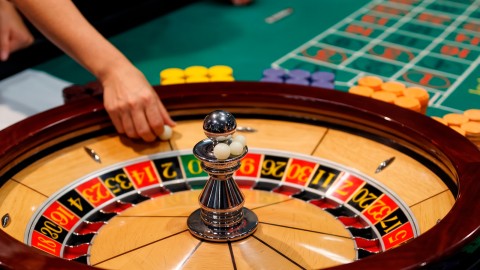
The proposal denounced by Irajá authorises the operation in Brazil of:
- casinos;
- bingos and videobingos;
- Jogo do Bicho
- online gambling.
Only persons over 18 years of age will be allowed to gamble. The government will be in charge of licensing and supervising the sector.
The text also establishes restrictions on who can own these businesses. People who have been convicted of drug trafficking or money laundering, or who have a conflict of interest, such as holding public management positions, for example, will not be allowed to be partners.
The bill also creates the National Gaming and Betting System, which will bring together the Ministry of Finance, audits and gaming operators. The bill also opens up the possibility of creating a specific regulatory agency for the sector.
In the case of casinos, there will be a limit on the number of licences for each state, depending on its population:
1 casino - States with less than 15 million inhabitants. This is the case for most Brazilian states;
2 casinos - States with a population between 15 and 25 million inhabitants. This is the case of Rio de Janeiro and Minas Gerais;
3 casinos - more than 25 million, such as the state of São Paulo.
Casinos will only be allowed to operate in resorts or on ships. The text approved by the House said that casinos could only operate in purpose-built resorts. Irajá, however, amended the text to allow existing resorts to host this type of gambling.
TAXATION
The bill also determines a 20% tax on net winnings of more than 10,000 reais paid to players. The amount will be adjusted annually by the Selic, the basic interest rate. Bookmakers will have to pass this percentage to the IRS as income tax.
In order to operate, the companies operating the games will have to pay every 3 months to the IRS the Gaming and Betting Inspection Tax:
- bingos - R$20,000 per licensed establishment;
- online gaming - R$300,000 per licensed domain;
- casinos - R$600,000 per establishment;
- Jogo do Bicho - R$20,000 per licensed establishment.
Categoría:Legislation
Tags: Sin tags
País: Brazil
Región: South America




Event










SBC Summit 2026
29 de September 2026
The Future of Sports Engagement Beyond the Court
Friday 16 Oct 2026 / 12:00
Ninja Gaming Focuses on Innovation and Global Growth After SBC Summit
Friday 16 Oct 2026 / 12:00
SBC Summit 2026 Wraps Up Record-Breaking Lisbon Edition
Thursday 15 Oct 2026 / 12:00
SUSCRIBIRSE
Para suscribirse a nuestro newsletter, complete sus datos
Reciba todo el contenido más reciente en su correo electrónico varias veces al mes.