Interviews
Nevada’s Regulatory Model Offers Key Lessons for Latin America at GAT Expo Cartagena 2026
2 minutos de lectura
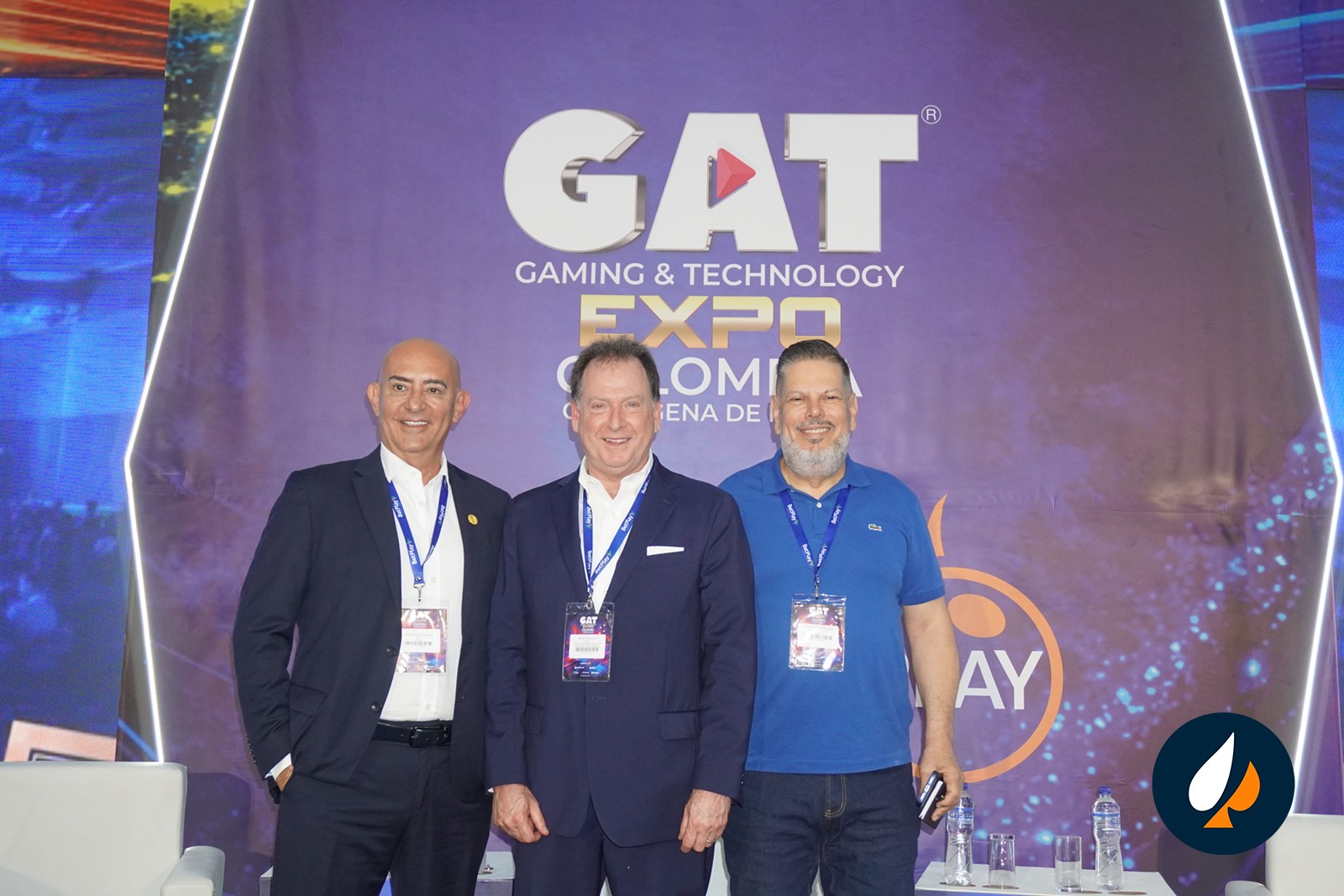
(Cartagena de Indias, SoloAzar Exclusive).- During GAT Expo Cartagena 2026, SoloAzar provided exclusive on-site coverage of the international conference “Lessons from Nevada’s Regulatory Model for Latin America,” where Brian Krolicki, Vice Chairman of the Nevada Gaming Commission, delivered a comprehensive overview of regulatory best practices, emphasizing that “strong regulation is not the enemy of a successful gaming industry—it is the foundation that makes long-term growth possible.”
In a wide-ranging presentation, Krolicki outlined the evolution, principles, and global influence of Nevada’s gaming regulatory framework, while addressing the challenges posed by technological innovation, illegal gambling, and the need for international cooperation. His central message was clear: as gaming becomes increasingly global, regulation must evolve beyond national boundaries.
A Model Built on History and Economic Impact
Krolicki began by contextualizing Nevada’s prominence in the global gaming industry, noting that the sector represents “37% of the state’s GDP” and supports “436,000 jobs,” underscoring its economic significance. He highlighted that more than 300 casinos generated over $1 million each in revenue in fiscal year 2024, reinforcing the scale and maturity of the market.
Providing historical perspective, Krolicki explained that legalized gambling in Nevada dates back to 1931, but early decades were marked by limited oversight and vulnerability to criminal influence. “By the 1950s, concerns about organized crime and corruption grew,” he said, prompting the creation of a modern regulatory structure. The establishment of the Nevada Gaming Control Board in 1955 and the Nevada Gaming Commission in 1959 laid the foundation for what is now considered one of the most respected regulatory systems worldwide.
However, Krolicki cautioned against direct replication of this model. “There is no such thing as a gold standard in gaming regulation,” he stated. “Regulation is not, nor can it be, a one-size-fits-all proposition.” Instead, he encouraged Latin American jurisdictions to adapt core principles—such as transparency, accountability, and strong oversight—to their unique legal and cultural contexts.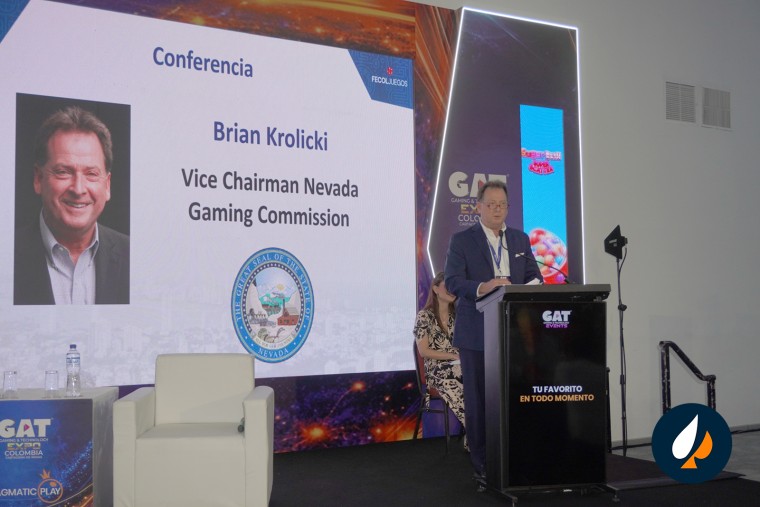
Trust at the Core of Regulation
A recurring theme throughout the conference was trust. “Technology moves fast, markets move faster, but trust moves slowly,” Krolicki emphasized, adding that regulators operate at the critical intersection of innovation and public confidence. According to him, maintaining integrity is essential for sustainable industry growth.
Technology, Cybersecurity, and New Risks
The presentation also addressed emerging challenges, particularly in the digital era. Krolicki highlighted the growing role of artificial intelligence and data analytics, which “allow operators to personalize products” while also providing regulators with tools to monitor compliance. At the same time, these technologies raise complex questions around transparency and consumer protection.
Cybersecurity was another major concern. Recalling high-profile cyberattacks on major operators, he warned that “cybersecurity is not just an IT issue—it is a core operational and regulatory concern.” He cited incidents involving MGM Resorts and Caesars Entertainment as examples of how vulnerabilities can lead to significant financial and operational disruptions.
Illegal Gambling and the Need for Global Cooperation
Illegal gambling was identified as one of the most persistent global threats. Krolicki noted that unlicensed operators “undermine regulated markets and expose players to serious risks,” stressing that effective enforcement requires international collaboration. “Regulatory authority often remains confined within national borders, while financial and digital ecosystems move globally,” he explained.
In this context, Krolicki underscored the importance of cross-border cooperation and the role of organizations such as the International Association of Gaming Regulators (IAGR). He announced upcoming initiatives, including an international illegal gambling awareness campaign during the 2026 FIFA World Cup, aimed at strengthening global coordination.
Latin America’s Growing Influence
Latin America, he said, is playing an increasingly influential role in shaping the future of gaming regulation. He pointed to countries such as Colombia, Brazil, Argentina, and Peru as examples of dynamic regulatory development. “Latin America is becoming one of the most dynamic and influential regions in the global gaming sector,” he affirmed.
A Call for International Collaboration
Closing his address, Krolicki issued a call to action for greater collaboration among regulators worldwide. “Gaming regulation can no longer be purely national— increasingly, it is international,” he stated. He invited attendees to participate in the upcoming IAGR conference in Lima, emphasizing that “the future of gaming will be shaped by collaboration among regulators worldwide.”
Echoing his final message, Krolicki concluded: “The conversations we’ve begun here cannot stay in Cartagena. We need to work together—it’s the only way we can stop the bad actors and ensure the integrity of the markets we serve.”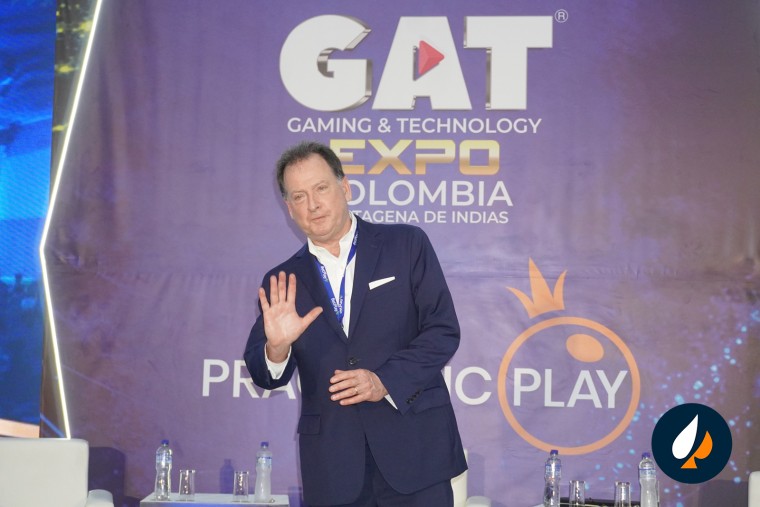
Categories: Events
Tags: GAT EXPO Gaming & Technology,
Region: Europa
Sign Up
To subscribe to our newsletter, please fill in your details
Receive all the latest content in your email several times a month.