AI Strategies for Enhancing Resilience in iGaming Operations, by Ukranian Gambling Council
Monday 25 de May 2026 / 12:00
⏱ 3 min read
(Kyev).- Artificial intelligence (AI) is reshaping the gambling industry far beyond chatbots and marketing automation. As regulatory oversight intensifies in markets like Ukraine, operators are discovering that AI must evolve from a peripheral support tool into a strategic driver of transparency, efficiency, and responsible gaming practices. This shift marks the difference between short-term optimization and long-term transformation.

In professional discussions around gambling, artificial intelligence (AI) is often reduced to the role of a supporting tool, from customer support chatbots to marketing content generation and basic game recommendation systems. While important, this is merely an entry-level application that does little to fundamentally alter either a company’s cost structure or its resilience to growing regulatory and tax pressure. For markets such as Ukraine, where oversight is intensifying alongside rising expectations around responsible gambling, this approach to AI is no longer sufficient.
Today, many B2C companies use AI to optimize existing processes and streamline customer service delivery. AI tools have also become widespread in marketing, enabling rapid creation and adaptation of advertising content tailored to customer preferences and behavior. While these applications can certainly improve sales performance and customer acquisition and retention, they do not fundamentally enhance operational efficiency or transform the underlying business model.
The Critical Role of AI in Distinguishing Optimization from Strategy
In this context, the distinction between “optimization” and “strategy” enabled by AI becomes critical. Optimization makes processes faster and less expensive; strategic AI integration replaces those processes with entirely new operating models and transforms the business as a whole. In other words, the algorithm evolves from a utility into an integral part of decision-making and behavioral analysis systems. This creates opportunities for personalized pricing and betting limits, as well as real-time adaptation of the user experience (UX). It also enables the development of new AI-native products, including gaming environments where even the dealer at the table is AI-powered. Such transformation creates a fundamentally different experience for players while allowing operators to remain more flexible under increasing regulatory constraints.
Deep AI integration encompasses several interconnected areas:
First, dynamic risk and limit management: instead of relying on static rules, the system adjusts betting limits, bonus structures, and other parameters in real time based on player behavior, identified risks, and external factors.
Second, advanced segmentation and personalization aimed not merely at increasing sales, but at strengthening responsible gambling practices among both operators and players. This includes adapting offers to reduce signs of risky gaming behavior or, conversely, restricting certain content for potentially vulnerable player groups.
Third, early detection of anomalous or potentially problematic player behavior: algorithms capable of analyzing hundreds of parameters simultaneously and responding instantly to behavioral changes, thereby preventing excessive spending and harmful gaming patterns.
As a result, the competitive advantage will belong to companies that use AI not as a “cosmetic enhancement,” but as a systemic instrument for managing products, risks, and responsible gambling practices. In markets where the grey sector is steadily shrinking, competition will be determined not only by marketing budgets, but by operators’ ability to demonstrate the effectiveness and responsibility of their decisions through data and automated control mechanisms.
AI at the Core: From Tasks to Transformation
Ultimately, optimization is only the beginning. The true potential of AI emerges when it becomes the strategic core of the business — capable not only of executing assigned tasks, but also of learning, generating solutions, and interacting autonomously with players. These are the operators that will ultimately transform the gambling industry by improving transparency, security, and service quality, while those that keep AI at the periphery risk losing their competitive edge.
In a more mature configuration, artificial intelligence should become part of the operational core of the business model: used for dynamic risk and limit management, deep segmentation and personalization, and the early detection of anomalous including potentially problematic player behavior. It is precisely this level of integration that enables licensed operators to function effectively under stricter regulation without losing focus on business profitability.
Categoría:Analysis
Tags: Sin tags
País: Ukraine
Región: EMEA




Event






SiGMA North America 2026
01 de September 2026
Amusnet Reinforces LATAM Strategy with Best Live Casino Game Award
(Sofia).- Amusnet took home the prestigious Best Live Casino Game Provider 2026 award at the SiGMA North America Awards, cementing its technological excellence and growing footprint in the Latin American iGaming market. During the event, the company reaffirmed its commitment to delivering highly localized solutions and building long-term, sustainable partnerships with operators across the region.
Monday 07 Sep 2026 / 12:00
SiGMA North America 2026 Concludes with a Spotlight on AI and iGaming
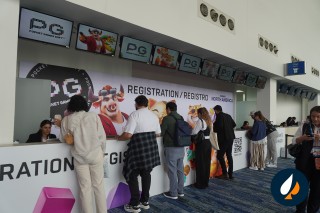
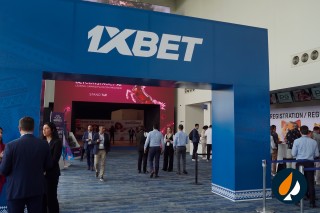
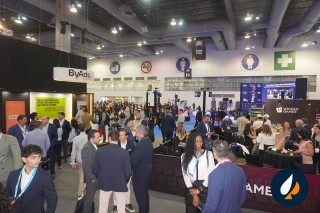
(Mexico City, SoloAzar Exclusive).- SiGMA North America 2026 concluded yesterday in Mexico City after bringing together nearly 2,250 delegates at Centro Banamex. The summit, held from September 1st to 3rd, focused on artificial intelligence (AI), innovation, collaboration between the public and private sectors, and the adaptation of global strategies to the particularities of local markets.
Friday 04 Sep 2026 / 12:00
SiGMA North America 2026 puts the spotlight on Mexico and its regulation
(Mexico City, SoloAzar Exclusive) — SiGMA North America 2026 shone a spotlight on Mexico and the regulatory future of iGaming yesterday during the opening day of its inaugural edition in the country. The agenda featured in-depth discussions on regulation, technological innovation, investment, and sustainable growth, bringing together government officials, industry leaders, investors, and tech companies. The SoloAzar team is on the ground in Mexico City covering the event, which concludes today, September 3, at Centro Banamex.
Thursday 03 Sep 2026 / 12:00
SUSCRIBIRSE
Para suscribirse a nuestro newsletter, complete sus datos
Reciba todo el contenido más reciente en su correo electrónico varias veces al mes.