All about the gaming industry in Peru: the expert perspective of Carlos Fonseca Sarmiento
Monday 02 de February 2026 / 12:00
⏱ 5 min read
(Lima, SoloAzar Exclusive).– In this interview, Carlos Fonseca Sarmiento breaks down in detail Peruvian legislation regarding the gambling industry. Fonseca analyzes current regulatory challenges, expresses strong criticism of the government's management of this sector, and shares his vision on the opportunities and expectations for the future of the gambling market in Peru. "Peru continues to be the country with the most stable, transparent, and competitive regulation in the region," he states.
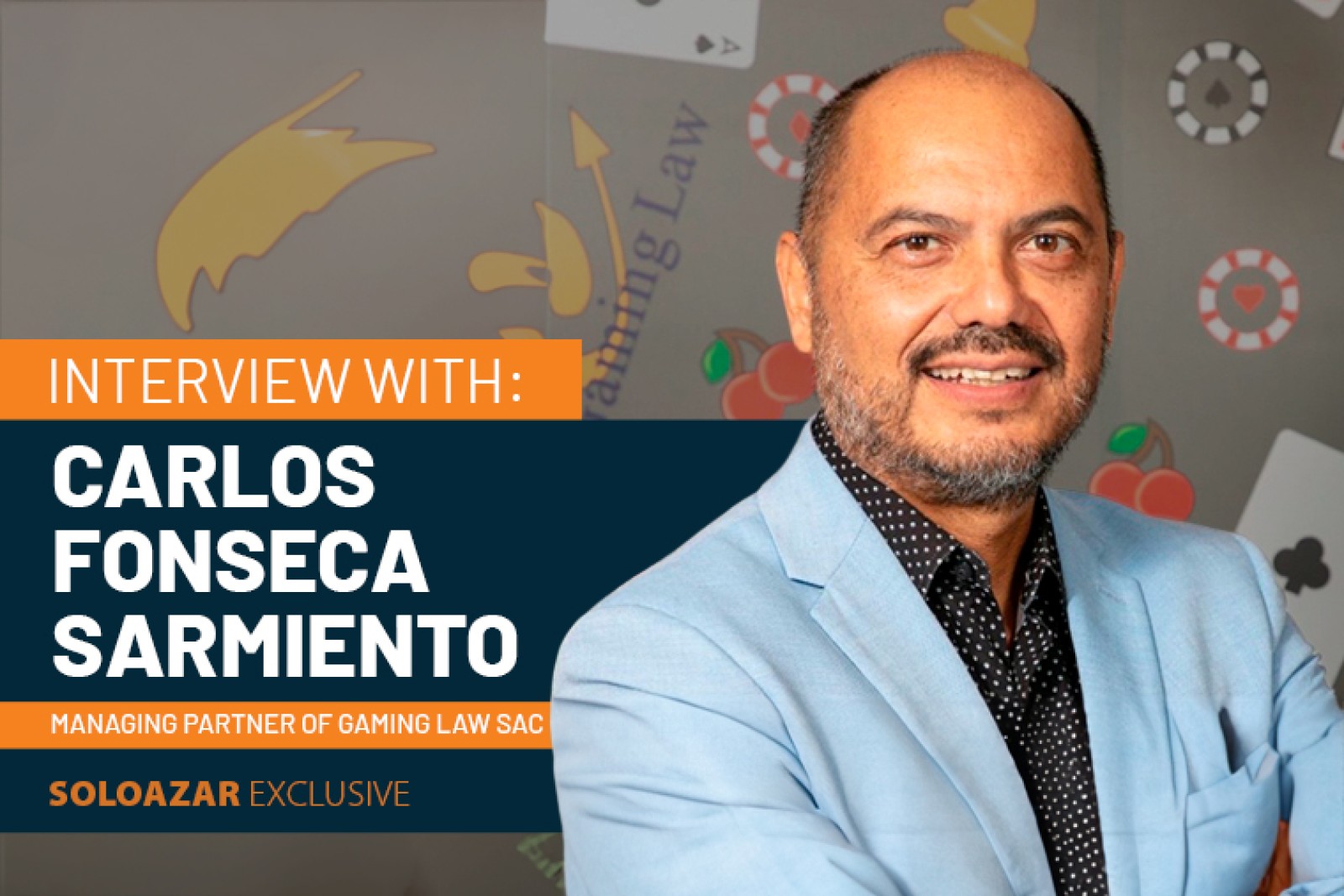
“The gambling industry could be divided into 4 areas,” begins Carlos Fonseca Sarmiento, lawyer, arbitrator and Master in Public Administration and Constitutional Law , CEO and Managing Partner of Gaming Law SAC and principal member of the International Masters of Gaming Law (IMGL).
He then elaborates on the idea: “First, the land-based casino and slot machine sector, which was impacted by the pandemic and new technologies, is expected to maintain or shrink its market share as younger generations show more interest in remote gaming. Second, the remote betting sector experienced a boom with Law 31557 and its amending regulations, generating 120 gaming licenses (60 for remote gaming operators and 60 for remote sports betting operators). However, this number has now decreased to 91 gaming licenses (44 for remote gaming and 47 for remote sports betting), following the usual trend of market concentration after legalization. Therefore, more mergers and acquisitions and a reduction in the number of licenses are expected. Third, the lottery sector continues to grow. Previously, only La Tinka existed , but now competitors like El Torito and Lotobola have emerged , primarily due to the flexible legal framework.” Lotteries where it is only necessary to sign a contract with a Charity Society with the approval of the Ministry of Women ; finally, the fourth sector made up of other gambling games, where new players appear such as predictive markets, social casinos and promotional games organized by influencers.”
The future of the gambling industry in Peru
What trends in the gambling industry in Peru do you consider most relevant for this year?
“In 2026, the fourth sector mentioned in my previous response will experience a boom: the concentration of remote gambling games and more open competition in the lottery market. The major flaw in Peruvian legislation is that not all gambling games receive the same regulatory and tax treatment. This leads to distortions. For example, a single-user electronic gaming machine or terminal could be classified as a slot machine, a video lottery, and, depending on the game's content, even as a terminal for a remote sports betting site. The final decision rests with the General Directorate of Casino Games and Slot Machines (DGJCMT) of the Ministry of Foreign Trade and Tourism (MINCETUR ), but until it clarifies the technical boundaries of each gambling game category, situations may arise where investors seek the most advantageous regulatory framework for their products”.
How do you expect this market to evolve in the next 3 to 5 years?
“Technology and artificial intelligence make it difficult to project beyond a year. The dynamism of this market and its dependence on technology mean that the landscape is constantly changing. It's essential to be disruptive and continuously adapt to technological advancements. The regulatory framework also plays a role . If there were a general law covering all gambling games or if there were changes in taxation, the market would be reconfigured. But what is clear is that land-based gambling is declining while remote gambling is growing. This trend is irreversible”.
The controversial Legislative Decree 1416
In an interview with SoloAzar last year, you were particularly critical of the Selective Consumption Tax applied to remote gambling and sports betting. Do you believe there are aspects of Legislative Decree 1416 that could be modified?
“These taxes cannot be modified; they must be modified, as they constitute a gross violation of the constitutional principles of legality, equality, and non-confiscation, enshrined in Article 74 of our Constitution. Taxes are created and modified by a law. Operators of remote gambling services are currently paying this tax by virtue of a resolution issued by the tax authority (SUNAT). Numerous injunctions have been filed on this matter, and ultimately, the Constitutional Court will have the final say through constitutional channels. However, the Congress of the Republic may correct this error, which originated with the Executive Branch. Congress has already approved the amendment to Legislative Decree 1416, but former President Boluarte vetoed it, and its direct approval by Congress through a veto is pending, following the procedure established by our Constitution. We hope this happens soon, as a constitutional challenge can also be used to halt this process”.
What could be the legal consequences of maintaining a tax that you consider constitutionally unsustainable?
“That many operators, as has indeed happened, are closing their operations in Peru. A tax on turnover or betting is confiscatory and therefore economically unsustainable. The major problem is that officials at the Ministry of Economy and SUNAT (the Peruvian tax authority), representing the Executive Branch, are unfamiliar with this sector and consistently make mistakes when designing tax policy. The simplest solution is to open a dialogue with business owners in the sector. There is no taxation without representation, and the easiest way to design taxes in this sector is with the active collaboration of those who will be responsible for paying them”.
In closing, is there anything else you consider important to highlight for our readers about the future of the gambling market in Peru?
"First, this sector encompasses not only games of chance but also a broader area: betting games (the outcome of which can depend solely on chance but also on the player's skill). Second, regarding remote gaming, remote sports betting, casino games, and slot machines, Peru currently has one of the most recognized authorities worldwide. The current Director General of Casino Games and Slot Machines was chosen as the best gaming regulator of the year globally in 2025 and will host the annual meeting of the International Association of Gaming Regulators in 2026. Finally, Peru's major advantage in this sector is its free competition regime. If one meets all the requirements, one can obtain a gaming license for any betting game that requires it. For some, a special license is not even necessary, but ultimately, it is the market and the consumer who decide who stays and who goes. In Peru, there are no monopolies or oligopolies, nor is there a limited number of licenses. You also don't need "connections" to obtain a gaming license. Everything is very transparent. In my experience working in all Latin American countries, Peru currently remains the country with the most stable, transparent, and competitive regulations in the region" .
Categoría:Analysis
Tags: Sin tags
País: Peru
Región: South America




Event






SiGMA North America 2026
01 de September 2026
LatAm Regulators Discussed Illegal Gambling and Innovation at SiGMA North America
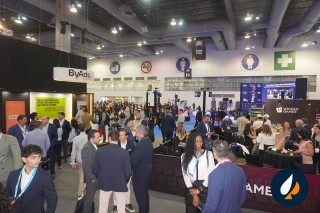
(Mexico City, SoloAzar Exclusive).- The panel "The Red Pen Forum: Regulators Respond to the Industry," held during SiGMA North America 2026, brought together representatives from Uruguay, Argentina, Puerto Rico, and Honduras to analyze regulatory challenges, digital transformation, illegal gambling, and the need to adapt lotteries for new generations. The conference was moderated by Rodrigo Cigliutti, Executive Director of CIBELAE (Ibero-American Corporation of State Lotteries and Betting), and featured the participation of Marcelo Visconti, National Director of Lotteries and Quinielas of Uruguay; Carlos Moyano, President of IAFAS Entre Ríos, Argentina; Heidi Hernández Olivo, Deputy Secretary of the Puerto Rico Lottery; and Lissa Mencía, General Director of Lottery Operations and Games at Loto Honduras.
Monday 28 Sep 2026 / 12:00
SiGMA North America Addressed Crisis Management in iGaming
(Mexico, SoloAzar Exclusive).- During SiGMA North America 2026, Rosa Ochoa, founder of the Blue Global Gaming platform and strategic advisor for gaming operators; Iliana María Pineda Echeverri, Chief Legal & Compliance Officer at Wplay.co; Iraid Rosales, Country Manager Mexico at Amusnet; and Elizabeth Maya Cano, Executive President of CORNAZAR, analyzed the key factors in managing crisis situations within the iGaming industry, with a special focus on transparency, communication, technology, and preparation.
Friday 25 Sep 2026 / 12:00
Affiliates and Acquisition: Keys to Regulated Markets in North America
(Mexico City, SoloAzar Exclusive).- During SiGMA North America 2026, Cristopher Guzmán Reyes, Head of Affiliates at Logrand Entertainment Group; Guga Júnior, influencer and slots expert at Scalar Partners; Andrés Gómez, Head of Latin America Go-to-Market Strategy at Admattic; Yambot Aguilera, Gaming and Finance Sales Director at Google; and Paula Gabriel Jiménez, Advertising Client Growth Director for Microsoft at Aleph, analyzed the state and provincial affiliate ecosystem in North America, as well as the acquisition challenges in regulated markets.
Thursday 24 Sep 2026 / 12:00
SUSCRIBIRSE
Para suscribirse a nuestro newsletter, complete sus datos
Reciba todo el contenido más reciente en su correo electrónico varias veces al mes.