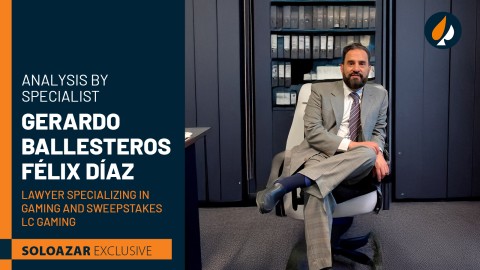
Transparency and Effectiveness: The European Taxation Experience According to the Ukrainian Gaming Council
Monday 24 de November 2025 / 12:00
⏱ 3 min read
(Kyev).- The lottery sectors in France and Liechtenstein illustrate two effective regulatory paths, both grounded in clear licensing, organized GGR structures, and player‑friendly tax policies. Read more on the following analysis.

France and Liechtenstein demonstrate two different but effective approaches to regulating the lottery sector — both based on transparent licensing, structured GGR, and no tax pressure on players.
In France, lotteries operate under the supervision of the ANJ regulator, and the state operator FDJ has a 25-year concession. The main burden in the system is focused on GGR: about 69% of gross revenue goes to the state, including social contributions. Added to this is an annual payment of €380 million for the right to a monopoly. At the same time, French players do not pay tax on winnings, which avoids double taxation and does not encourage a shift to the shadow economy. This works on a large scale: in the first quarter of 2025 alone, the total amount of bets in lotteries and sports betting amounted to about €3.5 billion, of which the state received approximately €2.4 billion thanks to GGR and social contributions.
Liechtenstein uses a different architecture, but it is based on the same principles: flexibility and control. The licensing system depends on the scale of the operator — large companies go through the full procedure, while charitable or small initiatives can operate under a simplified regime. Taxation is also differentiated: large operators pay 10–20% of GGR, while for small and charitable contributions, the contributions are minimal or symbolic. As in France, there is no tax on winnings in Liechtenstein, so the financial burden is not passed on to the player.
Despite the differences, these models share a common logic. Licenses are accessible and understandable, and the state earns money from GGR rather than triple taxation. The systems focus on control and transparency rather than fines and barriers. That is why the market remains legal and predictable, and the budget is steadily filled.
The Ukrainian situation and the new government resolution: a first step, but not a complete reform
Against this backdrop, the Ukrainian model is significantly different. For over 12 years, lotteries have been operating in a "gray area" — without licenses, without transparent monitoring, and without clear rules. In November 2025, the government finally took a key step — it adopted a resolution that brings the lottery segment back into the legal field. The resolution provides for:
– annual license fees of over UAH 67 million,
– a mandatory open competition for obtaining a license,
– full accounting of sales and payments through an electronic system,
– QR codes on tickets and terminals to protect against counterfeiting.
For the first time in many years, this decision creates the basis for a transparent market. However, it does not answer the main question: how exactly should the taxation system be structured?
It is this structure that distinguishes Ukraine from European models. It is not an EU standard, creates barriers for legal business, and stimulates the shadow economy. Therefore, tax unification is the next mandatory step after the government's resolution.
Why Ukraine needs unification
Unification is a matter of transparency, competition, and budget. Clear, uniform rules will make it possible to see the real market turnover for the first time. They will eliminate inequality between different segments of gambling. They will bring more revenue to the budget — as European experience shows, it is GGR models that provide the highest efficiency.
The government's resolution has brought lotteries back into the legal field, which is an important foundation. But for the reform to be complete, Ukraine needs to move to European taxation standards. France and Liechtenstein show that a model with transparent licenses, structured GGR, and no tax on winnings works. This creates a market that is safe, legal, predictable, and profitable.
If Ukraine adapts this logic, the state budget will receive more, and the market will work in the interests of society, not individual operators.
Categoría:Analysis
Tags: Sin tags
País: Ukraine
Región: EMEA




Event

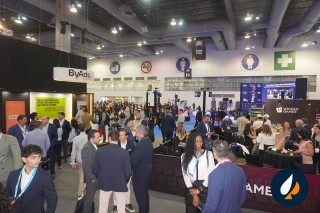
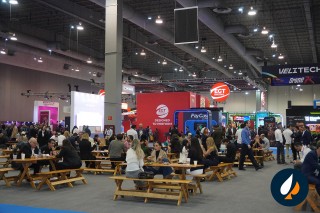

SiGMA North America 2026
01 de September 2026
LatAm Regulators Discussed Illegal Gambling and Innovation at SiGMA North America
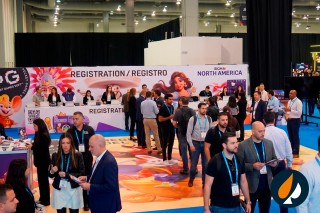
(Mexico City, SoloAzar Exclusive).- The panel "The Red Pen Forum: Regulators Respond to the Industry," held during SiGMA North America 2026, brought together representatives from Uruguay, Argentina, Puerto Rico, and Honduras to analyze regulatory challenges, digital transformation, illegal gambling, and the need to adapt lotteries for new generations. The conference was moderated by Rodrigo Cigliutti, Executive Director of CIBELAE (Ibero-American Corporation of State Lotteries and Betting), and featured the participation of Marcelo Visconti, National Director of Lotteries and Quinielas of Uruguay; Carlos Moyano, President of IAFAS Entre Ríos, Argentina; Heidi Hernández Olivo, Deputy Secretary of the Puerto Rico Lottery; and Lissa Mencía, General Director of Lottery Operations and Games at Loto Honduras.
Monday 28 Sep 2026 / 12:00
SiGMA North America Addressed Crisis Management in iGaming
(Mexico, SoloAzar Exclusive).- During SiGMA North America 2026, Rosa Ochoa, founder of the Blue Global Gaming platform and strategic advisor for gaming operators; Iliana María Pineda Echeverri, Chief Legal & Compliance Officer at Wplay.co; Iraid Rosales, Country Manager Mexico at Amusnet; and Elizabeth Maya Cano, Executive President of CORNAZAR, analyzed the key factors in managing crisis situations within the iGaming industry, with a special focus on transparency, communication, technology, and preparation.
Friday 25 Sep 2026 / 12:00
Affiliates and Acquisition: Keys to Regulated Markets in North America
(Mexico City, SoloAzar Exclusive).- During SiGMA North America 2026, Cristopher Guzmán Reyes, Head of Affiliates at Logrand Entertainment Group; Guga Júnior, influencer and slots expert at Scalar Partners; Andrés Gómez, Head of Latin America Go-to-Market Strategy at Admattic; Yambot Aguilera, Gaming and Finance Sales Director at Google; and Paula Gabriel Jiménez, Advertising Client Growth Director for Microsoft at Aleph, analyzed the state and provincial affiliate ecosystem in North America, as well as the acquisition challenges in regulated markets.
Thursday 24 Sep 2026 / 12:00
SUSCRIBIRSE
Para suscribirse a nuestro newsletter, complete sus datos
Reciba todo el contenido más reciente en su correo electrónico varias veces al mes.