'Understanding Gambling Legislation in Venezuela: Key Insights' by Altenar
Monday 01 de December 2025 / 12:00
⏱ 7 min read
(Douglas).- Venezuela remains one of Latin America’s last untapped iGaming markets. While online regulation is absent, casinos have reopened, lotteries attract players, and demand persists underground. This guide outlines the country’s legal framework, market realities, and the potential path toward digital reform.
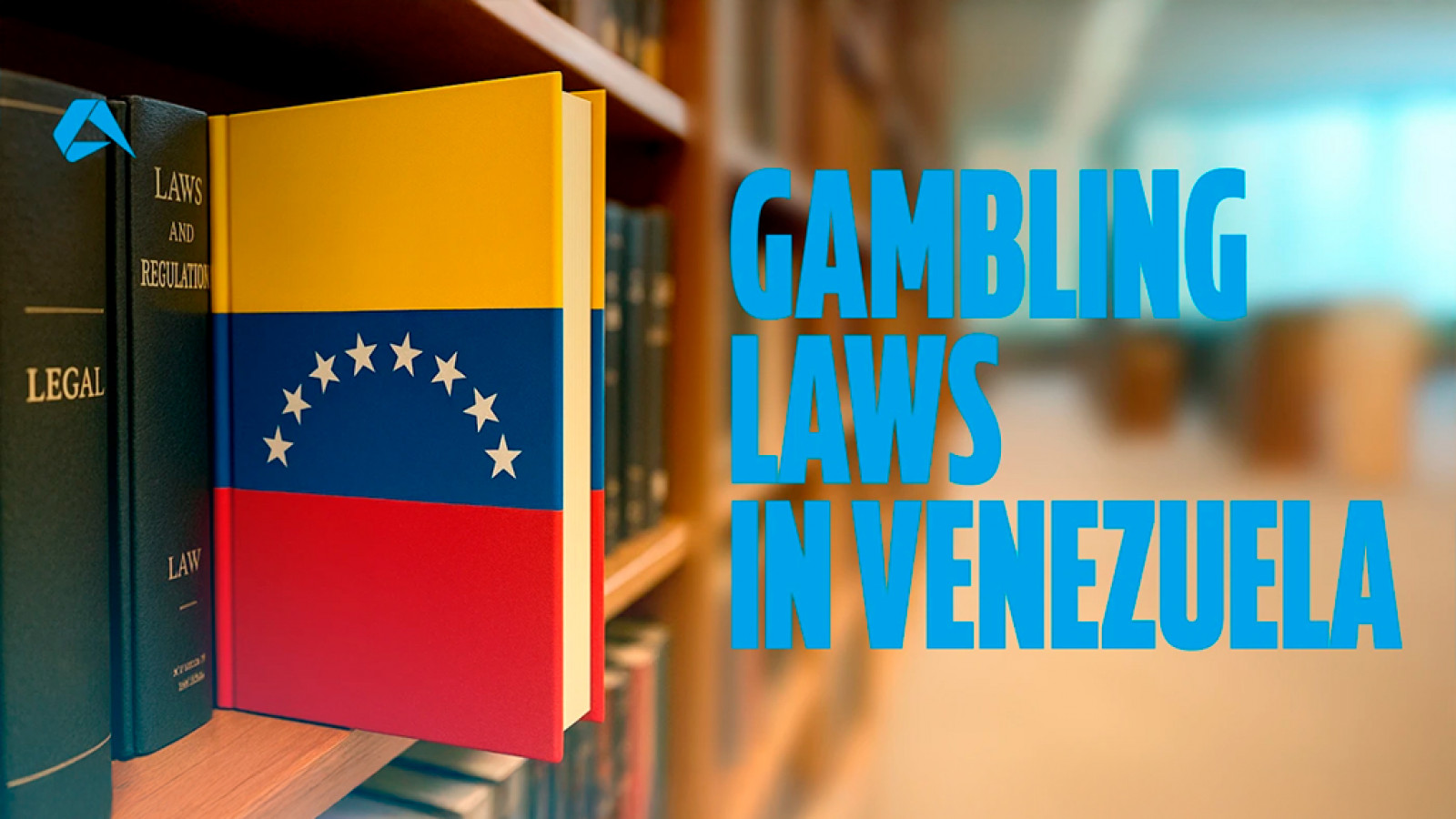
The History of Gambling in Venezuela
Venezuela’s gambling tradition runs deeper than any official rulebook. Informal betting has long been part of everyday life, from cockfights in rural towns to card games in private clubs. Horse racing in Caracas was already drawing crowds in the early 20th century, while bingo halls and slot rooms operated quietly across the country. Though rarely regulated, these activities were widely accepted, anchored in local culture and tolerated by the state.
It wasn't until the late 20th century that the state took meaningful steps to regulate the sector. The decisive moment came in 1997, when Ley para el Control de Casinos, Salas de Bingo y Máquinas Traganíqueles was published in Gaceta Oficial No. 36.254. For the first time, Venezuela had a centralised legal framework for land-based gambling. The law established licensing conditions, such as a requirement that casinos be housed in five-star hotels, and created the Comisión Nacional de Casinos (CNC) as the regulator. It also capped foreign ownership at 80 per cent and imposed financial contributions tied to the value of operators’ assets.
Further segmentation came with the National Lottery Law of 2000, which granted state governments the power to operate lottery games under the oversight of CONALOT.
Despite these reforms, the 2010s brought a sweeping government crackdown. Hundreds of casinos and bingo halls were closed under anti-corruption campaigns, effectively freezing the sector. That changed in 2020, when the Maduro administration, faced with an economic crisis, quietly authorised the reopening of licensed venues.
Online gambling remains legally undefined in 2025, neither prohibited nor licensed. Yet activity continues, drawing increasing attention as the state considers whether to regulate or stay silent. The result is a market suspended between restriction and revival, legally cautious, but economically hard to ignore.
Key Moments in Venezuela’s Gambling History
From informal betting in the early 20th century to sweeping legislation and recent reopenings, each milestone in Venezuela’s gambling history reflects the country’s evolving relationship with regulation, enforcement, and economic necessity.
Here's a concise timeline of defining events that brought the sector to where it stands today:
1908: Horse racing formally established at El Paraíso in Caracas
1971: SUNAHIP created to regulate horse racing/pari-mutuel betting
1997: Casino Control Law passed, centralising land-based rules
1999: Decree No. 422 confirms SUNAHIP as the racing regulator
2000: Modern National Lottery Law framework introduced; CONALOT begins oversight role
2007: State begins revoking unlicensed draws and closing outlets
2011: Hundreds of casinos shut amid anti-corruption campaigns
2020: Maduro government reauthorises licensed casino operations
2024: FATF adds Venezuela to greylist over AML deficiencies
2025: Online gambling still legally undefined, despite ongoing activity
Gambling in Venezuela Today
Venezuela’s gambling market in 2025 remains a patchwork of formal rules and informal realities. While some activities operate under well-defined legal structures, others continue in a legal vacuum, neither expressly banned nor officially authorised.
Regulated and Licensed Activities
Land-Based Casinos
Casinos are licensed under the 1997 Law and must operate within five-star hotels with a minimum of 200 rooms. The CNC issues licences and requires incorporation as a local company, with foreign capital capped at 80 per cent.
Bingo Halls and Slot Rooms
These fall under the same legal framework as casinos but are permitted in hotels rated three stars and above or in specially authorised facilities. Operators must meet strict capital requirements and demonstrate the separation of bingo operations from slot machine areas.
Horse Racing and Betting
Pari-mutuel horse betting remains one of Venezuela's oldest legal gambling activities. Regulated by SUNAHIP under Decree No. 422/1999, racetracks must be licensed, and betting systems must comply with the regulator's operational and transparency standards.
State Lotteries
Lottery activity is governed by the 2000 National Lottery Law, which grants operational authority to state governments. CONALOT handles oversight. Operators must be registered, and games must comply with distribution, reporting, and prize allocation rules defined by law.
Unregulated or Legally Undefined Activities
Online Casinos and Sportsbooks
There is no legislation explicitly permitting or prohibiting online gambling.
Supplier Licensing
Venezuela has no formal licensing scheme for software or platform suppliers.
Looking Ahead
Discussions about formalising the sector have surfaced intermittently, but no concrete legislative initiatives are in motion as of October 2025.
Gambling Regulators and Their Role
Venezuela is governed by a well-defined set of authorities that each control a distinct part of the regulatory machinery. From land-based casinos and slot halls to racetracks and lotteries, oversight is divided among a select handful of agencies with specific mandates.
National Commission of Casinos, Bingo Halls, and Slot Machines (CNC)
The CNC, officially known as the ‘Comisión Nacional de Casinos, Salas de Bingo y Máquinas Traganíqueles’, is Venezuela’s primary regulatory authority for land-based gambling, overseeing licensing, operational compliance, and enforcement. Established by the 1997 Law for the Control of Casinos, Bingo Halls and Slot Machines, the commission authorises venues, monitors technical systems, and verifies adherence to financial, operational, and anti-corruption standards. Casinos and bingo halls must be pre-approved by the CNC before opening, and remain under continuous inspection once active.
Its duties extend beyond licensing. The CNC also determines the technical requirements for slot machines and oversees the interconnection systems that report real-time game data. It works closely with tax authorities like SENIAT and occasionally coordinates with other agencies when compliance or fraud investigations arise.
Operators engaging with the CNC can expect a highly administrative process, governed by specific forms, capital declarations, and hotel-class verification, especially for casino applicants. The CNC holds considerable influence and remains central to any legal gambling operation in Venezuela.
National Superintendency of Horse Racing Activities (SUNAHIP)
The Superintendencia Nacional de Actividades Hípicas (SUNAHIP) is the regulatory authority overseeing horse racing and pari-mutuel betting in Venezuela. Created under Decree No. 422 of 1999, SUNAHIP licences racecourses, supervises betting operations, and ensures the integrity of equine sports across the country. Its mandate includes financial control, registering horse owners and stables, and enforcing anti-fraud measures within the sector.
Operators must obtain SUNAHIP’s approval before conducting races or related betting activities. The agency also monitors racing schedules, issues regulations for jockeys and trainers, and works closely with the CNC and SENIAT, where gambling revenues intersect with tax and compliance requirements.
SUNAHIP plays a central role in maintaining the structure and continuity of Venezuela’s racing tradition, a sector historically rooted in both sporting culture and regulated betting.
National Lottery Commission (CONALOT)
The Comisión Nacional de Lotería (CONALOT) is the regulatory body responsible for supervising Venezuela’s lottery sector. Established under the National Lottery Law of 2000, CONALOT authorises and registers operators at national and state levels, while overseeing the legality and transparency of draws. Its role includes approving game formats, monitoring prize distribution, and verifying the allocation of lottery revenues to social programmes, as stipulated by law.
Operators must register with CONALOT to run legally sanctioned games. The agency also conducts inspections, investigates unauthorised draws, and coordinates with other regulators when activities cross into overlapping jurisdictions.
CONALOT plays a steady, if understated, role in Venezuela’s gambling system, particularly where decentralised lottery operations intersect with national oversight and compliance.
National Integrated Service for Customs and Tax Administration (SENIAT)
The Servicio Nacional Integrado de Administración Aduanera y Tributaria (SENIAT) is Venezuela’s principal tax and customs enforcement authority, including the fiscal oversight of licensed gambling activities. SENIAT is not a gambling regulator but enforces tax obligations across regulated operators. This includes collecting gaming taxes, monthly royalties on slot machines and tables, and contributions based on declared assets.
Licensed casinos, bingo halls, racetracks, and lottery operators must register with SENIAT, submit regular financial declarations, and comply with audit procedures. When fiscal non-compliance is suspected, the agency also coordinates with regulators such as the CNC, SUNAHIP, and CONALOT. Its function is essential to maintaining financial discipline within Venezuela’s legal gambling sector.
Current Legal Opportunities for International iGambling Operators
While Venezuela’s betting sector remains tightly regulated and limited primarily to land-based environments, there are still meaningful opportunities for operators willing to work within the framework. The following sections highlight the current legal avenues for brands looking to establish a presence or prepare for future expansion.
Land-Based Entry: Casinos, Bingo Halls, and Slot Operations
Operators seeking a legal foothold in Venezuela must look to the land-based sector. Regulated under the 1997 Law for the Control of Casinos, Bingo Halls and Slot Machines, this route permits licensed operations within five-star hotels for casinos, and three-star venues or special facilities for bingo halls.
Foreign capital is permitted up to 80% of a company’s equity, but applicants must incorporate locally and meet defined capital thresholds. Licences are valid for ten years and are subject to monthly royalties and taxation on gross winnings. While highly administrative, this is currently the most defined and accessible legal channel for entry.
Horse Racing and Pari-Mutuel Betting - Licensed via SUNAHIP
Venezuela’s horse racing industry is regulated under Decree No. 422/1999 and supervised by the Superintendencia Nacional de Actividades Hípicas (SUNAHIP). This framework allows racecourses to offer pari-mutuel betting, with oversight of licensing, schedule management, and wagering compliance.
However, the system is primarily structured for racetrack operators and affiliated domestic partners, not independent betting platforms. Under SUNAHIP's current remit, there is no provision for online wagering, and foreign entry requires collaboration with established licence holders.
Lottery Partnerships: State-Level Deals via CONALOT
Venezuela’s lottery sector operates under the National Lottery Law (2000), which CONALOT oversees. Each state has the authority to operate or authorise lottery products within its jurisdiction, creating fragmented but localised opportunities. Licensed operators must register with CONALOT, comply with rules governing prize allocation and game structure, and contribute revenue to social development funds.
While the framework does not currently support national-scale digital lottery platforms, state-level partnerships or technology supply deals may offer a route for international firms, particularly those with a track record in terminal-based or draw-driven games. These arrangements remain subject to local negotiation and regulatory approval.
Outlook and Trends
Casinos are operating again in Caracas, and bingo halls have reopened. But Venezuela's real growth story, the one that’s transformed markets across Latin America, is still missing. Without a regulated online gambling sector, the country is sitting on the potential it has yet to tap into.
Read more about the outlook and trends, projected gambling revenue, market pros and cons for operators and how Venezuela compares to other markets, here:
https://altenar.com/blog/gambling-laws-and-regulations-in-venezuela/
Ready to expand in LATAM? Book a demonstration of Altenar’s advanced iGaming platform trusted by operators across regulated and emerging markets.
Categoría:Analysis
Tags: Altenar,
País: Isle of Man
Región: EMEA




Event








SiGMA North America 2026
01 de September 2026
Evert Montero Analyzed Colombia's Gaming Regulation at SiGMA
(Mexico City) — Speaking at SiGMA North America 2026, FECOLJUEGOS President Evert Montero Cárdenas offered a deep dive into the regulatory shifts shaping the Latin American and North American markets. He highlighted the sustainability challenges ahead for Colombia's industry and the ongoing impact of technological innovation. A major highlight of the September 1-3 summit at Mexico City’s Centro Banamex was Montero's induction into the Hall of Game 2026.
Friday 11 Sep 2026 / 12:00
Sportradar highlights LATAM growth at SiGMA North America
(Mexico City, SoloAzar Exclusive).- Rodrigo Cambiaghi, Sales Executive Lead, Digital Advertising at Sportradar, highlighted the strategic importance of Mexico and the broader Latin American market during SiGMA North America 2026. Held from September 1–3 at Centro Banamex in Mexico City, the event brought together nearly 2,250 delegates and focused on artificial intelligence, innovation, public-private collaboration and the adaptation of global strategies to local market dynamics.
Friday 11 Sep 2026 / 12:00
AIEJA Highlights Success of SiGMA North America in Mexico
(Mexico City, SoloAzar Exclusive).- Dr. Miguel Ángel Ochoa Sánchez, Executive President of AIEJA, underscored the success of the inaugural SiGMA North America in Mexico, noting its crucial role in elevating the local gaming industry on the global stage. Speaking at the event—held September 1-3 at Mexico City's Centro Banamex—he also broke down key regulatory hurdles, strategies to combat illegal gambling, and emerging opportunities within the sector.
Wednesday 09 Sep 2026 / 12:00
SUSCRIBIRSE
Para suscribirse a nuestro newsletter, complete sus datos
Reciba todo el contenido más reciente en su correo electrónico varias veces al mes.