Asserting sovereignty, Indian casinos defy California´s governor and reopen
Monday 01 de June 2020 / 04:45
⏱ 5 min read
(California).- It was a high-stakes gamble: a chance to win big at the slot machines but risk getting infected with the coronavirus. Braving a cold drizzle last week, hundreds placed their bet, lining up for hours in front of the Viejas Casino and Resort, a glass-and-stone Indian casino east of San Diego that was reopening despite pleas from California’s governor, Gavin Newsom.
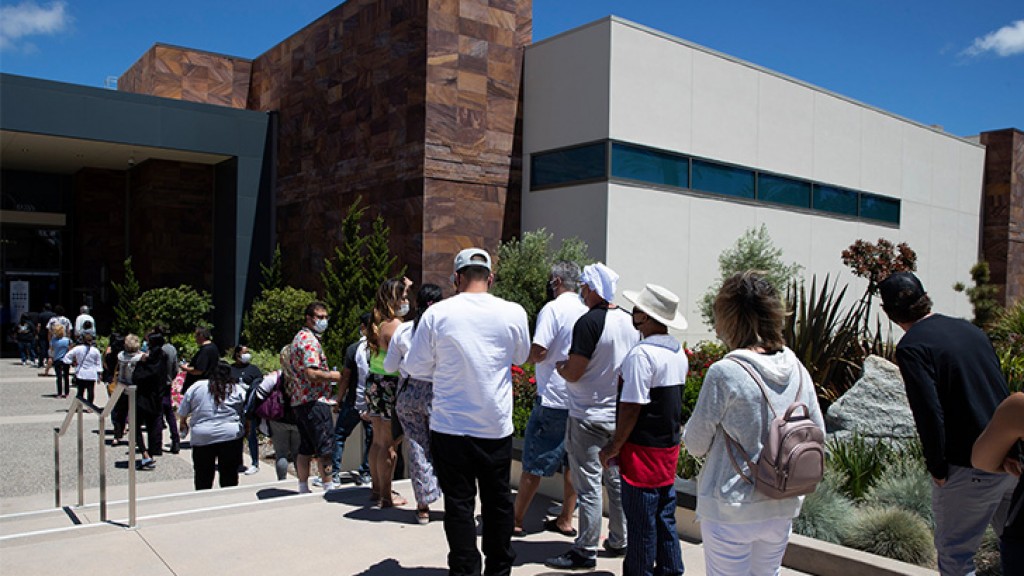
The reopening of the California economy has been a political duel between businesses desperate for income and a governor who warns his constituents at every turn about the dangers of returning to something resembling normalcy too quickly.
Churches and beaches have become bitter battlegrounds, pitting conservatives in California against the Democratic governor, but the issue of the state’s more than 70 Indian casinos, an $8 billion industry that has been shut down for the past two months, has been a separate contest of wills, both legally and politically.
Complicated by the role of Indian sovereignty, the question of who should decide when Indian casinos are allowed to open is shadowed by the legacy of the deadly and degrading treatment of tribal communities for centuries. Under a series of agreements that tribes have with the government, Indian businesses have special status that allows them to operate independently in many areas.
More than a dozen Indian casinos across California reopened last week, with Viejas vowing “a hospital-clean environment” and strict limits on the number of people gambling at one time. A majority of Indian casinos in the state have chosen to stay closed and are coordinating their reopening with the governor’s office, which has proposed an opening date in early June.
The Federated Indians of Graton Rancheria runs a casino north of San Francisco that is still shut, but Greg Sarris, the chairman, does not question the right of other tribes to open. “I will honor any tribe’s sovereignty,” Sarris said. “Sovereignty is the only thing we have.”
In a series of correspondences and video chats with tribal leaders this month, Newsom sought to persuade more than cajole. Referring to the “spirit of sovereign-to-sovereign engagement,” the governor requested that the tribes keep their casinos closed until the state’s public health office allowed the reopening of similar “high-risk” businesses where large groups gather or people are in proximity.
“This virus does not recognize jurisdictional boundaries, and it is in the best interest of public health to move toward reopening in concert,” the governor wrote in a May 15 letter to tribal leaders. Three days later the Viejas casino opened its doors.
The Viejas Band of Kumeyaay Indians, the tribe that runs the Viejas casino, did not respond to requests for comment. But John Christman, chairman of the Viejas Band, co-signed an earlier letter to Newsom by casino-owning tribes in San Diego County that was polite but firm in describing their intentions.
“We fully share and embrace your primary concern for public health and welfare,” said the letter, a copy of which was obtained from an industry consultant. “We believe strongly our governments and business operations are ready, willing and able to maintain public health and welfare while we responsibly reopen our gaming operations.”
Indian casinos say that everyone in the casinos must wear a mask and that both patrons and staff members will have their temperature checked using remote sensing. Casinos have canceled concerts and other performances.
California has by far the largest Indian casino industry, with revenues twice those of Oklahoma, which is the second largest, according to a 2018 report by Alan P. Meister, an economist and consultant who specializes in Indian gaming.
Indian casinos were authorized under the federal Indian Gaming Regulatory Act of 1988 and took root in California a decade later when tribes began reaching agreements with the state. The California casinos have been whittling away at the dominance of the Las Vegas gaming industry ever since.
Howard Dickstein, a lawyer who negotiated five Indian gaming agreements with the state, known as compacts, says tribal governments vary in their levels of indebtedness and their reliance on gambling for income. For some tribes it was more urgent than others to reopen, Dickstein said.
But for all tribes with casinos, the closure in mid-March, which came after considerable haggling with Newsom, elicited fears that the tribes could lose the financial independence that came with owning a successful business.
“Every single one of them comes out of extreme poverty,” Dickstein said. “They don’t want to risk going back to that poverty.”
Indian casinos in California employ more than 60,000 people, and profits are funneled through dividends across Native American communities. The Graton casino underwrites charities in the San Francisco Bay Area and nationally, including scholarships for Native American children, a book fair and food bank.
Several tribes have sought to diversify into other businesses, but those plans are typically bankrolled by the casino operations. The tribal government that Dickstein currently represents, the United Auburn Indian Community, owns buildings that it rents out to the state of California for offices.
A casino outside Sacramento that is run by the United Auburn Indian Community, Thunder Valley, plans to reopen on June 8.
Sarris, chairman of the Federated Indians of Graton Rancheria, says he was very ambivalent going into the casino business two decades ago. Sarris does not gamble or drink. “It has its problems like everything else,” Sarris said of gaming.
According to the latest report by California’s Office of Problem Gambling, 2,800 people called the state’s hotline in 2017 to report problems related to gambling, more than half of whom reported Indian casinos as their preference.
The average annual income of callers was $57,000 and the average annual amount spent on gambling was $33,000. About 10% said gambling had resulted in the loss of a primary relationship and 15% reported problems with creditors. A quarter said gambling had caused them stress, anxiety or depression.
Sarris said that before opening the casino he tried to find other businesses for his tribal members, including cheesemaking. “There was no economic viability being on these very small isolated plots of land,” he said. Gambling, he said, “was the only way anyone would invest in us.”
Native tribes have a monopoly on operating casinos in California, creating a huge industry that is second only to Nevada.
Sarris secured more than $2 billion in financing and the Graton casino, which employs 2,000 people, opened to the public in 2013. It operated nonstop until closing its doors in March because of the coronavirus.
Sarris is working with the governor’s staff members on the timing of reopening, which he hopes to make happen in June. If the long lines outside the Viejas casino last week are any gauge, other casinos will not have trouble attracting customers back.
Categoría:Casino
Tags: Sin tags
País: United States




Event




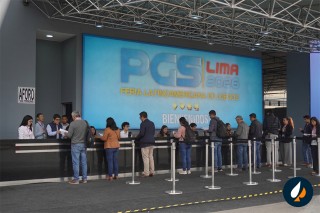



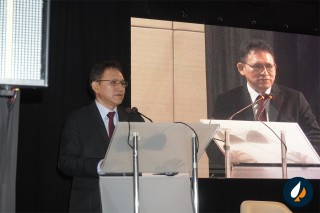
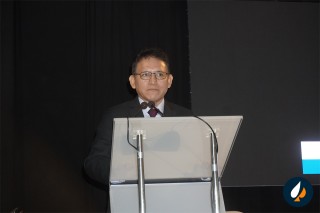
PERU GAMING SHOW – PGS 2026
17 de June 2026
ProntoPaga Consolidates Its Position at Peru Gaming Show 2026
(Lima, SoloAzar Exclusive).- Juan Carlos Loza, Head of Sales Latam at ProntoPaga, spoke exclusively after the company's participation in Peru Gaming Show 2026, highlighting the agreements reached, the interest in their payment solutions, and the expansion plans that will drive their growth across Latin America.
Monday 03 Aug 2026 / 12:00
Enhancing Responsible Gaming Through Effective Training at PGS 2026
(Lima, SoloAzar Exclusive) – Training, prevention, and technology took center stage at the "Value of Responsible Gaming in Gambling Operations" conference during the 2026 Perú Gaming Show (PGS). Presented by Fernando Calderón Castro, President of the National Gaming Society (SONAJA), the session brought industry leaders together to tackle current challenges and explore strategies for safer, more transparent, and sustainable operations.
Wednesday 22 Jul 2026 / 12:00
LSports at the Peru Gaming Show: Building Presence, Opening Doors
(Lima, SoloAzar Exclusive).- The Peru Gaming Show was never just about the booth. For LSports, it was about showing up in a market where showing up still matters — and leaving with more than a contact list. Federico Brancato, Sales Manager for the LATAM Region, came to Lima with a clear sense of what operators in this part of Latin America need most right now. What he found confirmed it.
Friday 17 Jul 2026 / 12:00
SUSCRIBIRSE
Para suscribirse a nuestro newsletter, complete sus datos
Reciba todo el contenido más reciente en su correo electrónico varias veces al mes.