Loto-Québec will not require its casino employees to be vaccinated
Friday 17 de September 2021 / 08:14
⏱ 3 min read
(Quebec).- While gamblers who frequent its casinos must be vaccinated, Loto-Québec has no plans to force its employees to do the same. The Crown corporation does not know the vaccination coverage rate of its employees but estimates that it is similar to the general population.

“It’s a sensitive subject, as we can see everywhere, and the employer doesn’t have all the mechanisms to impose it,” said Loto-Québec president and CEO Jean-François Bergeron, as the provincial gaming company released its first quarter results.
For now, Bergeron is deferring to public health guidelines. He does not intend to ask the government to allow Loto-Québec to impose the vaccination passport on its employees who work in its casinos, which reopened in mid-June.
Loto-Quebec has not conducted a survey to determine the vaccination rate of its employees. The company's top boss believes that anonymous surveys of other companies and the vaccination rate of the general population give him a good idea of the vaccination coverage of his employees.
The 77.5 per cent vaccination rate in Quebec suggests that the vast majority of his employees are vaccinated.
Bergeron insists that the facility is safe for customers and employees. "The employees have their masks on. There have been no outbreaks. It's pretty well managed from a safety standpoint," he said.
Bergeron added that customers' reception including the presentation of the VaxiCode passport is being done in a "rather fluid" way in the casinos and gaming rooms. He took office last May 31 after having directed the Société québécoise du cannabis (SQDC).
LOTO-QUEBEC'S STRONG RECOVERY
Bergeron is optimistic about the 2021-2022 fiscal year. He points out that Loto-Québec's contribution to the Quebec treasury was nearly 60 per cent of its usual level in the first quarter.
Management anticipates that this threshold will rise to 80 per cent for the current fiscal year. "We look to the future with a good eye," said Bergeron.
In the first quarter (ended June 28), consolidated net income was $196 million, up $260 million from a loss of $64 million in the same period last year. This figure is still 42 per cent lower than the pre-pandemic year.
Revenues, meanwhile, are up 154.9 per cent, or $243.9 million, to $401.3 million. This is 38.8 per cent less than in the pre-pandemic year. The lottery remains the largest source of revenue, up 171.6 per cent to $284.3 million.
CASINOS REOPEN
The reopening of the casinos in mid-June will have resulted in the recall of nearly 2,500 of the approximately 4,271 employees who were temporarily laid off. This would leave nearly 35 per cent of employees to be recalled. Approximately 5 per cent decided not to return.
Currently, casino capacity has been reduced by 50 per cent to meet health guidelines. Some of its restaurants have also not reopened, so the company has not yet recalled all its employees.
Loto-Québec is also considering offering food in its casinos. Last April, it announced that it was ending its partnership with L'Atelier de Joël Robuchon. More generally, management is considering the fine-dining offer in all its establishments. Several concepts are being considered, including concepts inspired by food trucks.
Bergeron hopes to test concepts within the next six months, but specifies that he is not "rushing" because of the limited capacity of COVID-19.
Loto-Québec is also discussing with its partners the possibility of presenting shows at the Casino de Montréal, while respecting health regulations.
FIGHTING ORGANIZED CRIME
The reopening of the casinos also brings the issue of money laundering to the forefront.
Media reports revealed that organized crime used casinos to launder money. Last June, an external report submitted to the government made 40 recommendations to address the issue.
Loto-Quebec welcomed the report and says it took some steps even before it was released.
Bergeron said some of the allegations go back several years. He acknowledged that a place where large amounts of money flow, such as a casino, can be a target for organized crime, but said that Loto-Québec is adapting its practices to combat money laundering, but that organized crime members are also adapting their practices.
He called it a bit of a cat and mouse game.
Among recent measures, the amount of deposits allowed without due diligence has been decreased from $10,000 to $3,000.
He added that the security system has been updated with cameras that provide better image quality. The company is also working on changing its computer systems to replace tokens with point cards. This system would ensure that the tokens could no longer be taken out of the gaming areas as currency for criminal activity.
Categoría:Casino
Tags: Sin tags
País: Canada




Event
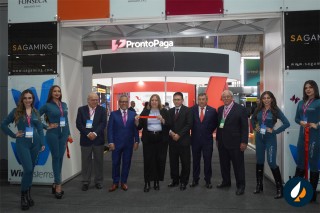

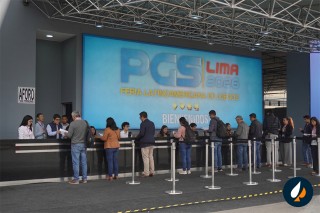

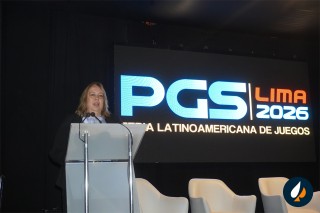


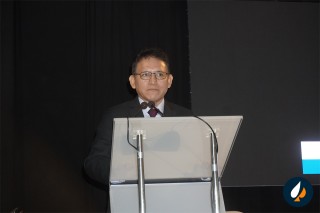
PERU GAMING SHOW – PGS 2026
17 de June 2026
LSports at the Peru Gaming Show: Building Presence, Opening Doors
(Lima, SoloAzar Exclusive).- The Peru Gaming Show was never just about the booth. For LSports, it was about showing up in a market where showing up still matters — and leaving with more than a contact list. Federico Brancato, Sales Manager for the LATAM Region, came to Lima with a clear sense of what operators in this part of Latin America need most right now. What he found confirmed it.
Friday 17 Jul 2026 / 12:00
Martin Ivanov: "Latin America remains one of CT Interactive's key strategic regions"
(Lima, SoloAzar Exclusive).- CT Interactive Chief Operating Officer Martin Ivanov reflects on the company's experience at the Peru Gaming Show, highlights the opportunities emerging in the Peruvian market, and outlines the company's strategic priorities for expanding across Latin America.
Thursday 16 Jul 2026 / 12:00
Regulation and the Black Market in Latin America: Challenges and Solutions
(Lima, SoloAzar Exclusive).– As part of the Peru Gaming Show (PGS) 2026 conferences, gaming industry leaders analyzed one of the main challenges currently facing regulated markets in Latin America: the growth of illegal gambling. The panel "Regulation and the Black Market: Challenges and Solutions" brought together Carlos Fonseca, CEO of Gaming Law, as moderator; Neil Montgomery, founding partner of Montgomery & Associados; Tatiana Vásquez, founding partner of Vázquez Asociados; Karen Sierra Hughes, Vice President for Latin America, the Caribbean, and Spain at GLI; and Vanessa Cabrera, Director of the Control and Sanction Directorate of the DGJCMT-MINCETUR, who debated the causes of the black market, the available regulatory tools, and strategies to strengthen channeling toward legal gaming in the region.
Wednesday 15 Jul 2026 / 12:00
SUSCRIBIRSE
Para suscribirse a nuestro newsletter, complete sus datos
Reciba todo el contenido más reciente en su correo electrónico varias veces al mes.