AI vs. Prediction Markets: The Battle for the Future of Betting
⏱ 6 min read
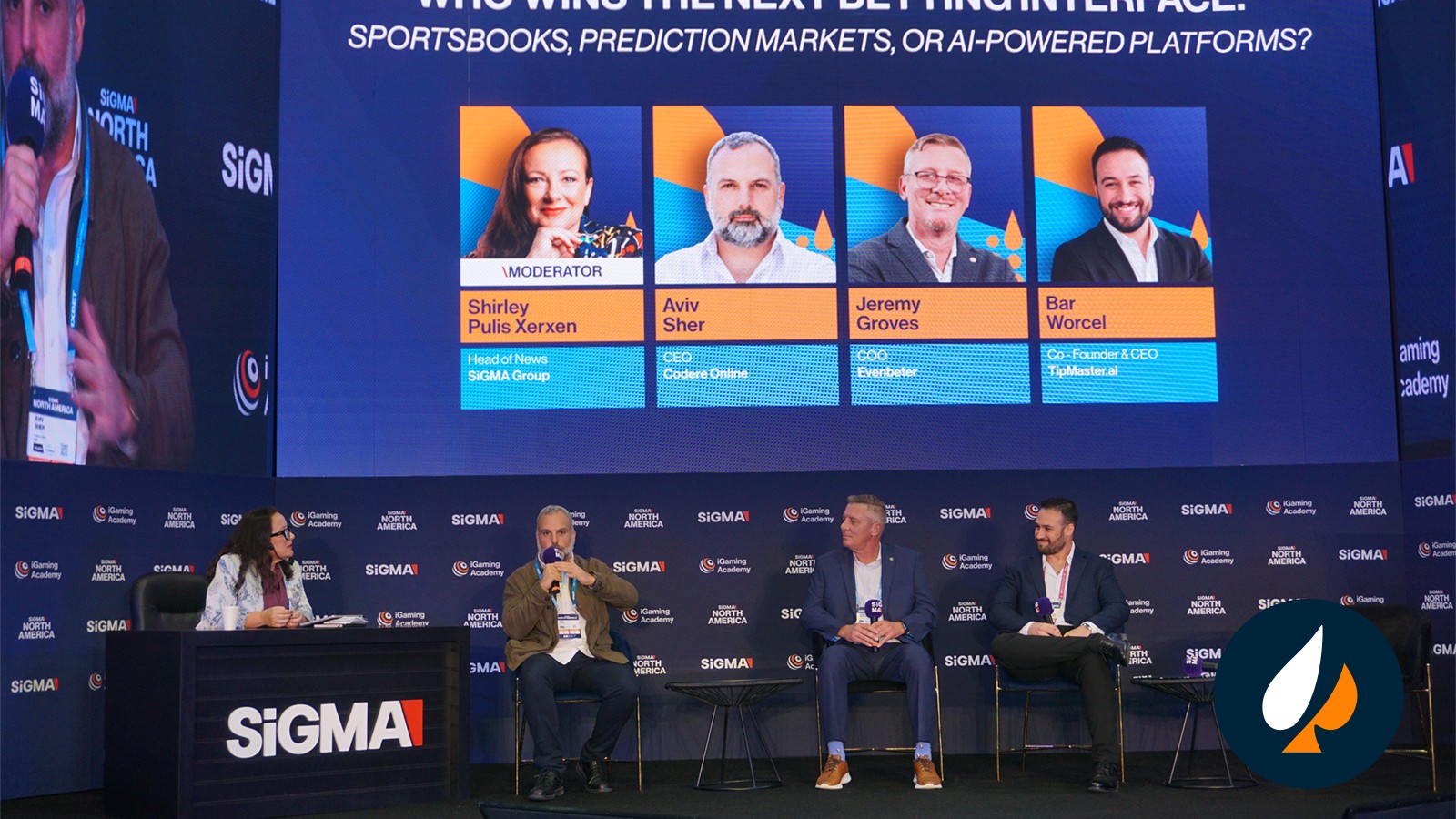
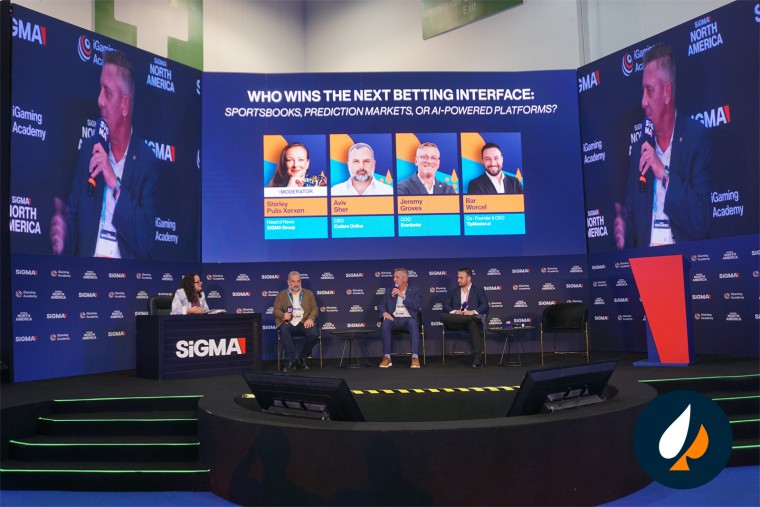
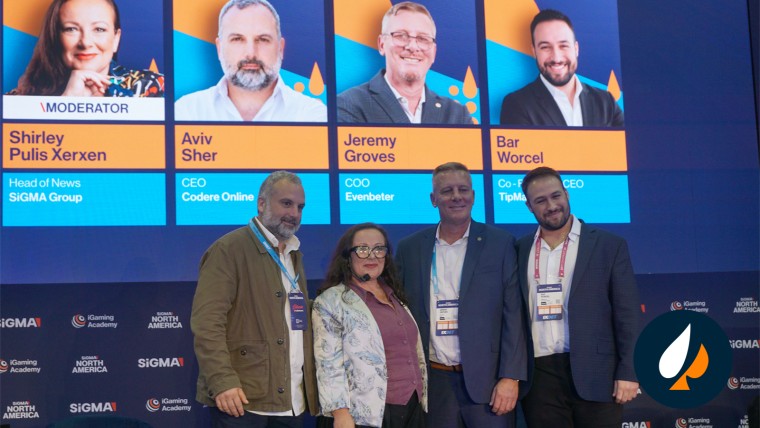
(Mexico City, SoloAzar Exclusive).- Sportsbooks, prediction markets, or AI platforms? At SiGMA North America 2026, a panel of experts including Aviv Sher (CODERE Mexico), Jeremy Groves (Evenbeter), and Bar Worcel (TipMaster) explored the future of betting interfaces and the disruptive impact of artificial intelligence.
Prediction Markets: an Increasingly Relevant Alternative
One of the central themes of the debate was the growth of prediction markets and their ability to attract new user profiles, especially among younger generations.
Aviv Sher, CEO of CODERE Mexico, noted that part of the growth of these markets is tied to the regulatory environment and a simpler, more dynamic user experience.
"I don't think we can say no. I think it's part of regulation and, actually, also a good product that someone is looking for."
Sher highlighted that new generations seek fast and easy-to-use experiences, moving away from interfaces that require analyzing large amounts of information before placing a bet.
"Especially Gen Z or Generation Y are looking for something fast, easy, and fun," he explained.
The executive also noted that prediction markets and sportsbooks could progressively converge. In his opinion, regulation will be a determining factor in defining how this segment evolves. "I think at some point we will meet in the middle."
Different Player Profiles
Jeremy Groves, COO of Evenbeter, suggested that prediction markets and sports betting can attract different user profiles.
"From a sportsbook perspective, we have a slightly different layer," Groves noted.
As he explained, prediction markets can be attractive to users interested in quickly resolved outcomes, such as the temperature or the price of Bitcoin over the next 15 minutes.
In contrast, the traditional sports betting player might study a competition for several days before taking a position.
"These players can do a lot of research on, for example, the NFL. They're not looking for a micro-bet that settles in the next 15 minutes; they place a bet that won't settle for six days," he explained.
For Groves, this difference shows that both models can coexist, given that they respond to different needs and behaviors.
AI Seeks to Become the New Interface
The conversation then shifted toward artificial intelligence and its potential to transform the relationship between operators and users.
Sher explained that messaging platforms and conversational AI will play an increasingly important role in the business.
"Definitely, WhatsApp, Messenger, and AI will increasingly be at the core of our business," he stated.
However, he warned that using conversational interfaces to place bets still faces significant regulatory hurdles.
"We still need to remember that we are a heavily regulated operator," Sher pointed out.
In this regard, he explained that a simple conversation does not necessarily provide the evidence needed to prove what bet a user made and what the exact contracted outcome was.
"We need the evidence, we need it to be more robust."
Sher believes that AI already plays an important role in other areas of the business, from product development to operations and customer service, but it is not yet ready to completely replace traditional betting interfaces.
"I think the direct interaction with the customer is not there yet," he maintained.
Personalization and Retention, Two Key Objectives
Another highlight during the conference was AI's ability to personalize each user's experience.
Jeremy Groves explained that technology can use information about playing habits to display more relevant content depending on the time and the user's preferences.
"If you like to play a certain type of game during the weekend, but another during the week, AI will help show content that is relevant depending on the time of day or the day of the week," he explained.
For Groves, this personalization can have a direct impact on retention and customer lifetime value.
In the case of prediction markets, Sher also suggested that AI could facilitate the creation of quick-resolution contracts, especially those linked to assets like Bitcoin.
The executive noted that automation will be necessary to manage markets that require continuously generating new contracts and prices.
Finding Value Before Betting
AI could also modify the traditional bettor's journey. Sher argued that the future of the experience does not necessarily start at a sportsbook, but rather in the search for a value opportunity.
"The whole betting experience will start by finding the edge."
From there, the user could select where to execute the bet, compare odds between platforms, or go directly to an operator they are already familiar with.
In this scenario, AI would act as a discovery, recommendation, and personalization layer connecting the user with different alternatives.
This vision also highlights a central issue for Bar Worcel, co-founder and CEO of TipMaster: the need for technological evolution to be accompanied by greater transparency and tools that allow users to evaluate available information. The executive noted that, as betting experiences incorporate AI-based recommendations and new conversational interfaces, "transparency and verified performance will be more important than ever."
Where Should Operators Invest?
Faced with the need to define investment priorities, the participants debated whether operators should focus their resources on prediction markets, conversational AI, or new interfaces.
Groves maintained that AI can help reduce player acquisition costs by presenting more relevant content for each profile.
"AI will help reduce player acquisition costs and allow showing specific content for each player's use case," he stated.
As he explained, instead of offering a generic interface with games the user will probably never play, operators will be able to use AI to select and prioritize the most relevant options.
From another perspective, Sher noted that operators already have regulated and consolidated products, so they can observe how prediction markets evolve before making large investments.
However, he warned that delaying decisions too long could represent a competitive disadvantage.
"Whoever wins the AI race can win the whole game."
The executive added that the technology needed to develop prediction markets would not necessarily be the biggest challenge for operators with sufficient resources. The real differentiator could lie in developing AI tools ahead of competitors.
The Dominant Interface in 2028
The conference closed with a look toward September 2028 and a question about what interface the average player will use: a traditional sports betting app, a prediction market, or a system based on conversational AI.
Jeremy Groves warned that prediction markets could face limits in the number of contracts they can offer.
"In prediction markets, you can only create a certain amount of yes or no contracts," he noted.
At the same time, he highlighted that the combination of AI and friction reduction could be decisive in attracting new users.
"I think it's a combination of AI and reducing friction for the user, always staying within the limits of regulation."
Bar Worcel brought a perspective focused on the evolution of the user experience to this discussion. For the co-founder and CEO of TipMaster, the challenge is not only to accelerate the moment a bet is placed, but to transform the way users discover information, identify opportunities, and make decisions. This view aligns with TipMaster's approach, which seeks to use verified performance data to help bettors determine which sources and predictions can be reliable.
Sher, for his part, adopted a more conservative position regarding the future of sportsbooks.
"The core will remain the same."
As he explained, although new layers, AI tools, tipsters, and other formats may be incorporated, the central sports betting model will likely remain valid due to the profile of the users who currently generate most of the revenue.
However, he also recognized that prediction markets can benefit from a perception of greater transparency and trust among certain audiences.
Profitability and Regulation Will Mark the Competition
In the final stretch of the debate, the panelists identified the indicators they will watch to determine which model is gaining ground between now and 2028.
Sher pointed to profitability, liquidity, and GGR (Gross Gaming Revenue) growth as fundamental variables.
"For me, it will still be important how profitable those companies will be as GGR grows."
He also highlighted the role that regulatory evolution in the United States, where prediction markets are currently booming, will play.
Groves agreed that profitability and the ability to generate recurrence will be key. In this regard, he argued that retention is one of the most important indicators to determine if a platform truly offers value to the user.
"Retention is everything."
The debate thus laid out a scenario in which sportsbooks, prediction markets, and artificial intelligence will not necessarily have to compete to occupy completely separate spaces. The next generation of platforms could combine elements of all three models, while regulation, liquidity, personalization, and the ability to reduce friction will define which interfaces manage to consolidate.
Watch the full conference:
Categoría:Events
Tags: Sin tags
País: Mexico
Región: North America




Event





SiGMA North America 2026
01 de September 2026
AIEJA Highlights Success of SiGMA North America in Mexico
(Mexico City, SoloAzar Exclusive).- Dr. Miguel Ángel Ochoa Sánchez, Executive President of AIEJA, underscored the success of the inaugural SiGMA North America in Mexico, noting its crucial role in elevating the local gaming industry on the global stage. Speaking at the event—held September 1-3 at Mexico City's Centro Banamex—he also broke down key regulatory hurdles, strategies to combat illegal gambling, and emerging opportunities within the sector.
Wednesday 09 Sep 2026 / 12:00
PopOK Gaming's Yo Dragon Wins Best Slot Game at SiGMA America 2026
(Douglas).- PopOK Gaming wins Best Slot Game 2026 for "Yo Dragon" at SiGMA North America Awards.
Tuesday 08 Sep 2026 / 12:00
Amusnet Reinforces LATAM Strategy with Best Live Casino Game Award
(Sofia).- Amusnet took home the prestigious Best Live Casino Game Provider 2026 award at the SiGMA North America Awards, cementing its technological excellence and growing footprint in the Latin American iGaming market. During the event, the company reaffirmed its commitment to delivering highly localized solutions and building long-term, sustainable partnerships with operators across the region.
Monday 07 Sep 2026 / 12:00
SUSCRIBIRSE
Para suscribirse a nuestro newsletter, complete sus datos
Reciba todo el contenido más reciente en su correo electrónico varias veces al mes.