Google highlights the importance of trust in the gambling advertising ecosystem
During his keynote, Aguilera emphasized that user trust remains Google's most valuable asset and a fundamental factor in how brands connect with potential customers across its platforms, particularly Google Search and YouTube.
"User's trust is what Google values most, because when you trust us, you click on us, you are there and you see something on Google or on YouTube videos," he explained.
According to the speaker, Google and YouTube offer a full-funnel advertising ecosystem, allowing brands to reach consumers throughout different stages of their digital journey, whether they are searching, streaming, scrolling or sharing content.
Aguilera also addressed the impact of artificial intelligence on online search, describing it as a major development for the industry. Google currently processes more than five trillion searches annually, reaching record levels as users increasingly interact with broader questions and more conversational search experiences.
However, he clarified that AI-powered search recommendations are not yet available for the gambling vertical due to its strict regulatory requirements.
For example, users searching for "best casinos in Mexico" will not currently receive AI Overviews recommending gambling operators.
AI adoption and the regulatory landscape in Latin America
Aguilera noted that although AI adoption is growing globally, its everyday use across Latin America remains below the levels seen among technology professionals and industry representatives.
He estimated that between 5% and 10% of the region's general population uses AI tools in their daily lives, excluding AI Overviews, which are integrated into Google Search.
The presentation then turned to the regulatory environment for gambling advertising across Latin America.
Five markets currently authorized for Google Ads
According to Aguilera, five Latin American countries are currently authorized for gambling advertising on Google Ads: Colombia, Peru, Mexico, Argentina and Panama.
He explained that Argentina operates under a system similar to the United States, with regulations fragmented across provinces.
Brazil, which had previously been included in the list, is no longer among the authorized markets. Aguilera said Google is still evaluating what will happen next, adding that further updates will be communicated when available.
Ecuador, Paraguay and Chile among the markets to watch in 2027
The Google executive identified three countries that could become relevant opportunities for gambling advertisers in the coming years: Ecuador, Paraguay and Chile.
Ecuador recently received 16 license applications from operators active in the market. Aguilera explained that once a country establishes its regulatory framework, Google evaluates the situation and develops the corresponding advertising certification requirements.
Paraguay is also undergoing a transition in its licensing system, moving away from its previous monopoly structure. According to Aguilera, this could create opportunities by late 2027.
Chile was the third market he highlighted, although he acknowledged that its timeline remains uncertain.
"Those three markets are very important for you to watch in the future: Ecuador, Paraguay, and Chile," he stated.
Mexico's gambling market and the impact of major sporting events
Aguilera described Mexico as the most dynamic gambling market in Hispanic America, estimating its value at almost US$1.5 billion.
He also highlighted its mobile-first characteristics, noting that nearly 70% of transactions take place through applications or mobile devices.
One of the presentation's key examples concerned the impact of the FIFA World Cup on digital gambling activity in Mexico.
The World Cup effect on acquisition and retention
According to the figures shared by Aguilera, the event generated a 431.7% increase in digital transaction volume and a 75% rise in first-time deposits (FTDs).
Beyond initial acquisition, he stressed that customer retention was another significant outcome: almost 80% of the customers acquired during the World Cup remained with the brands as long-term users.
"Brands didn't just win new clients—they stayed. Almost 80% of clients acquired during the World Cup stayed with the brands as long-term users up to date," he explained.
Aguilera encouraged operators and affiliates to apply these insights to other major sporting events, including the Super Bowl, UEFA Champions League finals and the start of LaLiga.
He argued that major sporting occasions create more competitive traffic environments and increase acquisition costs, but can also deliver strong returns when considered against customer lifetime value.
Google Ads policies: Compliance as a competitive advantage
One of the central themes of the keynote was the importance of mastering Google's advertising policies.
Aguilera described compliance as a competitive advantage, explaining that advertisers who establish a strong relationship of trust with Google can access better placements and additional advertising opportunities.
"If Google trusts you, Google will place you in better positions that cost less," he said.
This trust is built through compliant advertising campaigns and strong quality scores, which can unlock access to premium opportunities such as YouTube Shorts, YouTube Masthead and YouTube Select.
Transparency and verifiable information
Aguilera explained that Google's automated systems evaluate multiple aspects of an advertiser's operation, including websites, redirects, landing pages, quality scores and the overall user journey.
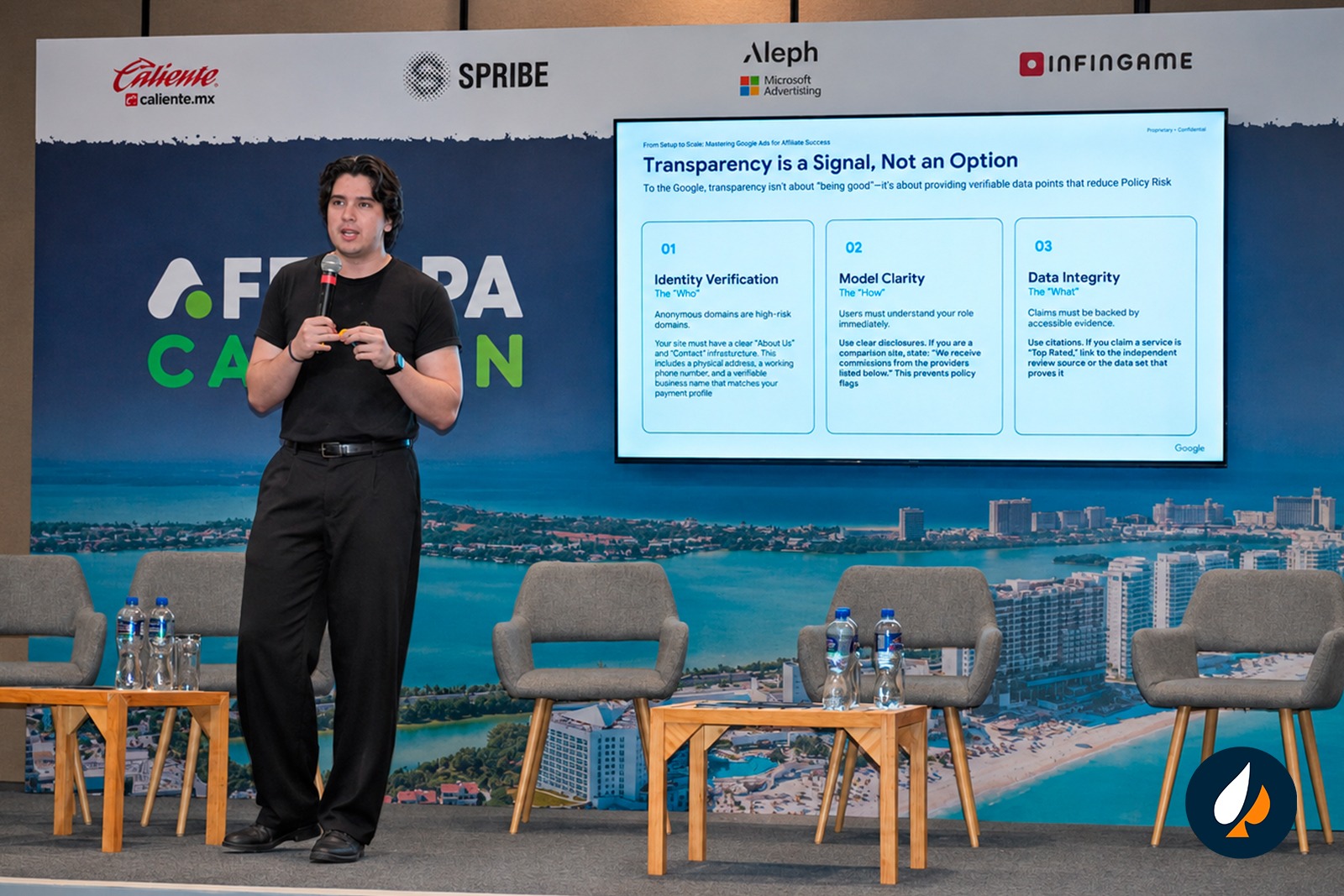
"Transparency is a signal, not an option," he emphasized.
He outlined three essential elements for building a compliant advertising presence:
- Company identity: Websites should include clear About Us and contact pages, allowing users and automated systems to identify who operates the business.
- Business model clarity: Users must immediately understand whether they are interacting with a casino, a comparison affiliate or another type of service, as well as what is being offered.
- Data integrity and verifiable evidence: Advertising claims must be supported by accessible information, including licensing details, concrete figures, payout timeframes and verifiable terms.
He also warned against exaggerated or misleading advertising language. Expressions such as "secret trick to win online slots", "instant payouts" or "100% safe" can raise red flags when they are not supported by evidence.
Instead, advertisers should communicate specific, verifiable information about their services and business operations.
Authentic content and advertising creatives
Another recommendation concerned the creation of authentic and realistic advertising content.
Aguilera clarified that Google does not prohibit the use of AI-generated content. In fact, he mentioned that Google's New Business program provides guidance to companies expanding into Latin America and other international markets on how to use AI appropriately.
He also stressed that advertising creatives must reflect the relevant gambling vertical. For example, sports betting campaigns should use sports-related imagery, such as football, rather than unrelated elements that could trigger policy concerns, including cars, guns or stacks of cash.
Account suspensions and the importance of operational structure
The presentation also addressed one of the most common challenges faced by gambling advertisers: account suspensions, even after completing the certification process.
Aguilera acknowledged that these situations occur because Google's policies are particularly strict when it comes to protecting user trust.
He recommended that affected companies follow a clear process: gather documentation proving their business activity, investigate the cause of the suspension and submit an appeal as soon as possible.
For operators, this means providing the relevant local gambling license. Affiliates should also have contracts with the licensed operators to which they send traffic, together with the documentation supporting their operations.
Companies participating in Google's New Business program can contact their representatives for assistance in escalating cases internally. Aguilera clarified that this does not mean bypassing Google's policies, but rather ensuring that regional regulatory details are properly considered when automated support processes fail to recognize them.
Separating accounts by brand, country and license
For agencies, affiliates and groups managing multiple brands, Aguilera recommended maintaining a well-organized Google Ads account structure.
He explained that all accounts connected to a Manager Account (MCC) can be affected by individual suspensions, potentially creating risks for the entire structure.
To reduce exposure, he advised separating MCCs according to brand, country and license.
Each Google Ads account must also be certified using the applicable local gambling license. While payment profiles and Google Analytics insights can be shared, new clients or creators should be tested separately before being incorporated into established account structures.
Another critical requirement is exact domain matching.
"If your local license states 'casino5.mx', you must verify and advertise 'casino5.mx'," Aguilera explained, warning that discrepancies between licensed domains and advertised websites can trigger immediate blocks.
Regarding billing, he also mentioned that advertisers can pay by card or access monthly invoicing through Google's onboarding program, providing greater payment certainty during seasonal peaks.
SEO, GEO and landing pages as part of a sustainable strategy
Aguilera highlighted the importance of maintaining high-quality landing pages, explaining that they contribute to advertising performance, help prevent suspensions and strengthen trust with Google's automated systems.
He connected this approach with the growing relevance of SEO (Search Engine Optimization) and GEO (Generative Engine Optimization), alongside video content, as complementary elements for sustainable growth.
During the Q&A session, an audience member asked whether paid advertising could directly improve organic search rankings.
Aguilera clarified that paid media does not directly influence organic rankings. However, it can help protect a brand's visibility while its SEO strategy develops.
He illustrated this with the example of a licensed casino facing competition from an unlicensed website using a similar brand name. Paid search campaigns can help the legitimate operator secure prominent visibility immediately, while its organic positioning develops.
He also confirmed that misleading or exaggerated claims can negatively affect trust signals across Google's broader ecosystem, not only within Google Ads, but also across other channels such as SEO and Gmail.
AI-powered search and the future of gambling affiliates
The future of affiliate marketing in an increasingly AI-driven search environment was another major topic during the audience discussion.
Asked how affiliates could adapt as AI-generated answers become more central to online search, Aguilera referred to ongoing tests in the United States involving advertising within Gemini and other AI-assisted experiences.
He suggested that regulated advertisers already certified for Google Ads could be among the first to gain access to these new advertising placements.
"I don't think AI Mode will openly recommend unlicensed gambling sites anytime soon—maybe never—because Google is extremely protective about not sending users to unlicensed casinos," he said.
He expects developments to emerge first in the United States and Europe, with Mexico potentially becoming the first market in Latin America to adopt similar experiences.
Regarding the possibility of AI recommendations directing users toward unlicensed or gray-market gambling brands, Aguilera acknowledged that preventing such situations remains an ongoing challenge.
"We are continuously improving automated detection and AI safeguards globally to prevent users from being directed to unlicensed gambling sites," he explained.
Stronger operator-affiliate relationships as a growth driver
Towards the end of his presentation, Aguilera addressed the relationship between operators and affiliates, encouraging both sides to develop stronger partnerships based on transparency, trust and cooperation.
He argued that affiliates should not be treated simply as traffic buyers, but as strategic partners capable of contributing directly to an operator's growth.
"How is David going to beat Goliath? By doing something different," he said, referring to the challenges smaller casinos face when competing against established brands with larger budgets, stronger marketing teams and extensive brand ambassador networks.
For Aguilera, one of the most important differentiators in Latin America is an operator's willingness to trust its affiliate partners, allowing them to integrate tracking tools and connect properly with its platforms while maintaining clear operational boundaries.
He also introduced Google's New Business / Gambling growth program, designed to support licensed brands and affiliates working with licensed operators as they enter new markets.
The initiative provides assistance with account setup, license certification, access to credit lines and the assignment of an account manager who works with participating companies on a weekly basis, at no additional cost.
"Google invests in this because today's new advertisers are the major advertisers of the future," Aguilera stated, adding that many of the leading gambling brands in Mexico and across Latin America have emerged through this program.
Google says its advertising framework follows national regulation
The final questions addressed Google's relationship with governments and regulators when new gambling markets open or existing restrictions change.
Aguilera explained that Google participates in public and private industry discussions, although it does not seek to influence governments to change gambling legislation.
Instead, the company's approach is to monitor the legal framework established in each country and develop its advertising certification requirements once regulation becomes active.
As an example, he mentioned Colombia, where several lotteries had expressed interest in advertising through Google Ads but were initially unable to obtain approval.
After reviewing and escalating the relevant local regulatory documentation internally, Google approved official lotteries to advertise approximately one month before the conference.
Aguilera concluded that Google's approach is based on the regulatory status of each market: national legislation comes first, followed by the development of the corresponding certification framework.
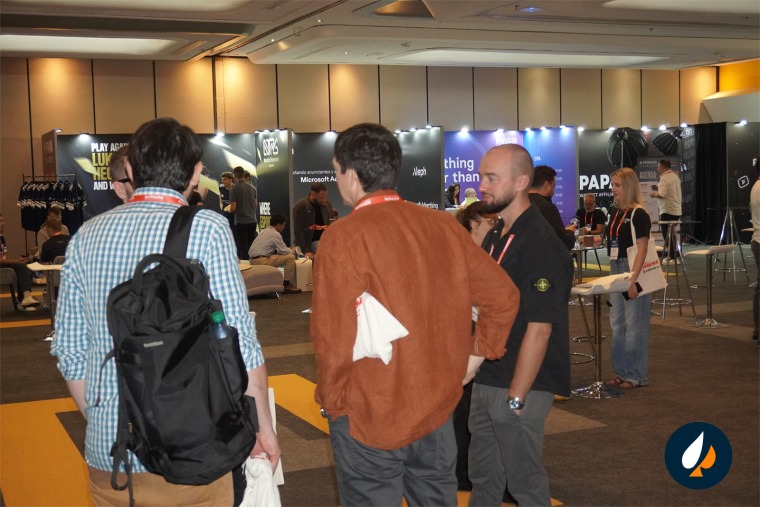
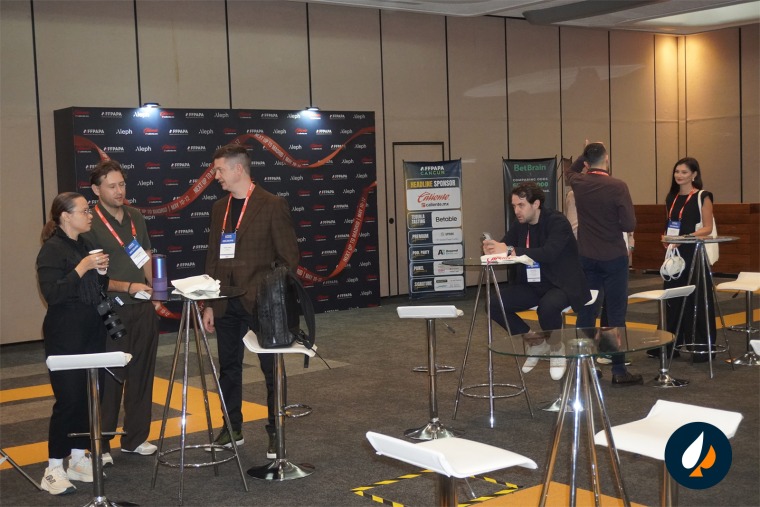
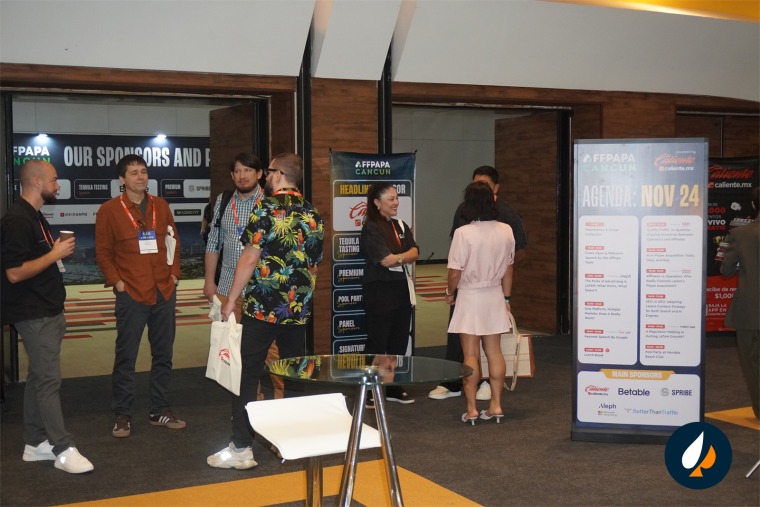
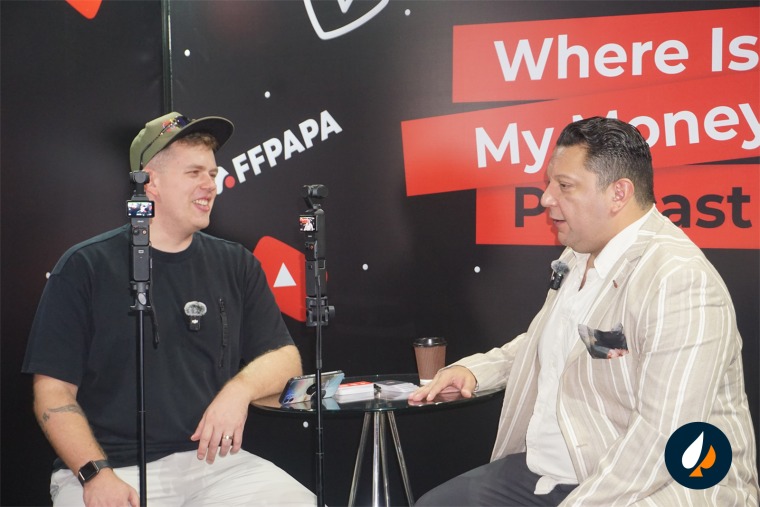
His keynote at AffPapa Conference Cancun 2026 provided affiliates, operators and B2B providers with an overview of the opportunities and challenges shaping the region's digital gambling advertising ecosystem, highlighting compliance, technological adaptation and stronger business partnerships as essential factors for future growth.