Ukraine Advances Digital Gambling Reform
Thursday 15 de October 2026 / 12:00
⏱ 9 min read
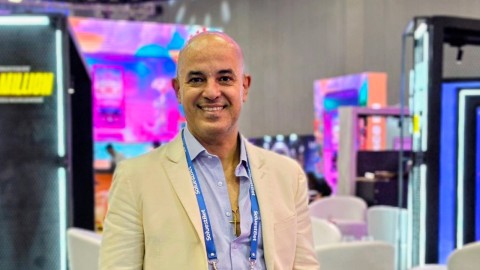
(Lisbon, SoloAzar Exclusive).- Natalia Denikeieva, Deputy Minister of Digital Transformation of Ukraine, spoke to SoloAzar during her visit to SBC Summit, discussing the country’s ongoing gambling reform, the implementation of digital regulatory tools, player protection measures, and efforts to combat the illegal market. In this interview, she explains the Government’s priorities for modernising the regulatory framework, improving taxation and creating a more predictable environment for licensed operators, while sharing the main lessons she took away from the international industry event.

Ukraine’s New Digital Regulatory Model
Ukraine is entering a new stage of its gambling reform, with a model increasingly based on digital regulation. What are the main changes the Government plans to implement, and what objectives does it seek to achieve in this new stage?
I would describe this new stage as a shift from establishing the rules to building a regulatory system that can actually see the market, understand what is happening in it and respond quickly.
When we started this reform, we wanted to fundamentally change the way the state approaches gambling regulation. Our vision is a system that is digital, transparent and data-driven, with less bureaucracy and as little room as possible for subjective decision-making.
For businesses, this means simpler and more predictable interaction with the state. For the regulator, it means having reliable data and digital tools instead of relying mainly on paperwork and retrospective reporting.
One of the major elements is the State Online Monitoring System. It is designed to give the state data on bets, payouts and refunds close to real time. The system is already operating in test mode, and we are now expanding its functionality while preparing for its full-scale rollout.
This is a fundamental change in the way the market can be supervised. Instead of waiting for reports after the fact, the regulator can increasingly work with actual market data – to monitor compliance, support tax control and make more evidence-based regulatory decisions.
The same principle applies to the way legitimate businesses interact with the state. We are moving licensing online through the Diia portal, so companies can apply digitally and the necessary information can be verified through state registers.
Another major priority is player protection. We are moving towards a model where responsible gambling is a shared responsibility between the player, the operator and the state. That means earlier identification of risky behaviour, stronger responsible gambling policies from operators and better access to support when problems arise.
Technology is also central to our approach to the illegal market. We do not want to spend simply blocking one website after another. The objective is to target the broader infrastructure that allows illegal operators to function. Specifically, access to players, payments, advertising, and gaming content.
So the overall objective is quite clear: make operating legally in Ukraine simpler, more transparent and more predictable, while making illegal activity difficult and economically unattractive.
Player Protection and the National Strategy Through 2035
One of the pillars of the reform is player protection. How is the National Strategy to Address Gambling-Related Harm through 2035 progressing, and what new responsibilities will operators have to detect and prevent problematic gambling behaviour?
The adoption of the National Strategy to Address Gambling-Related Harm through 2035 is a major achievement for Ukraine. For the first time, we have a long-term national policy that brings together almost 40 public authorities and institutions, rather than leaving this issue to the regulator alone.
The most important change is the shift from dealing with the consequences of gambling addiction to preventing harm and identifying risks earlier. Until now, much of the responsibility has rested with players themselves: people were expected to recognise when their gambling was becoming problematic and use self-exclusion or other protective tools. We want to change that model.
This means giving gambling operators a much more active role in player protection. They will need stronger responsible gambling policies, more accessible protective tools such as limits and, over time, better use of gambling behaviour data to identify risks earlier. The Strategy also provides for automated analysis of gambling activity to help detect risky patterns before they develop into a more serious problem.
But identifying a risk is only part of the solution. People also need to understand where they can get help. That is why the Strategy provides for a continuous pathway of support from early intervention and psychological assistance to treatment, rehabilitation and ongoing support. And because gambling-related harm often affects families as well, support should also be available to people close to the player.
We also wanted to make sure the Strategy would not remain simply a framework document. That is why we have already approved an Operational Plan for 2027-2029, with specific measures, responsible authorities, timelines and indicators to assess progress.
State Online Monitoring System: From Reporting to Real-Time Data
Ukraine has already launched the State Online Monitoring System. What concrete changes will this tool bring to market oversight, and how can access to real-time data improve the regulator’s ability to detect irregularities?
The system is already operating in test mode, with 29 out of 30 licensed operators connected. It records bets, payouts, refunds and other financial transactions. Each transaction has a unique identifier, while player data is transmitted in anonymised form.
This gives the regulator a very different level of oversight. With access to actual transactional data, it becomes possible to compare information, identify unusual activity or inconsistencies, and detect potential violations much faster. In other words, we are moving from checking what operators report after the fact to analysing what is actually happening in the market.
And this is only the first stage. PlayCity is now preparing the second phase of the system, which will allow us to analyse not only financial transactions, but also what happens within individual games, including game outcomes and the ratio between winnings and losses. We plan to develop this functionality by the end of 2026.
In the longer term, the system can also support oversight of responsible gambling standards and operators’ compliance with player protection requirements.
So the main value for us is not simply having more data. It is the ability to make market oversight faster, more precise and based on what is actually happening in the market.
Combating Illegal Gambling Beyond Website Blocking
The fight against illegal gambling remains one of the major challenges. More than 16,000 illegal websites have been submitted for blocking over the past 18 months. What will be the next step in tackling a market that also uses payment systems and other digital infrastructure to operate?
Blocking websites remains an important tool, but we recognise that it is not enough. Our broader goal is to make the illegal gambling business model itself unsustainable.
Over the past 18 months, our illegal gambling website tracking system has helped us submit, actually, more than 20,000 online casino websites and mirror domains for blocking. We have also significantly reduced the response time. In the past, blocking a website could take weeks. Today, once PlayCity sends the information to the electronic communications regulator, the process takes around one day. Our next goal is to reduce that to just a few minutes.
But even very fast domain blocking has its limits. An illegal operator can simply launch a new mirror and return. That is why we are increasingly focusing on the wider infrastructure that allows illegal gambling businesses to operate.
The first area is access to players. If an illegal operator cannot effectively reach Ukrainian consumers, it becomes much harder for that business to grow. That is why we are tackling illegal advertising and working directly with digital platforms to remove content and accounts that promote unlicensed gambling.
The second area is payments. Illegal operators can disguise gambling transactions as payments for other goods or services and use different schemes to collect and move funds. As long as an illegal operator can easily receive money from Ukrainian players and move it through the financial system, blocking the website alone will have only a limited effect. That is why we are working with the National Bank of Ukraine on mechanisms to better identify and disrupt the payment infrastructure used by illegal operators.
The third important element is coordination between public authorities. PlayCity has launched an inter-agency working group that brings together institutions with different powers and responsibilities in tackling the illegal market. The aim is to exchange information faster and make the overall response more coordinated and effective.
Ultimately, we want to move away from a model where the state simply blocks one illegal website after another towards one where an illegal operator finds it increasingly difficult to reach players, advertise its services, collect payments and maintain access to the Ukrainian market.
That is what a systemic approach to tackling the illegal market looks like.
Gambling Legislation, Taxation and Licensing Priorities
The Government is currently working on a broader update of gambling, taxation and lottery legislation. What changes do you consider a priority to achieve a balance between clear conditions for licensed operators, player protection and an effective reduction of the illegal market?
Our main goal is to create clear and predictable conditions for licensed businesses while strengthening state oversight and player protection. To achieve that, we need to update several key parts of the regulatory framework.
The first is the way the gambling market itself is regulated. Responsible gambling is one of our main priorities. We want operators to take greater responsibility for managing gambling-related risks, rather than leaving that responsibility mainly to players.
Under the proposed changes, operators would be expected to identify risky gambling behaviour and respond to it. We also plan to introduce personalised player limits and additional safeguards. Responsible gambling should become a core obligation for every licensed operator.
Another important area is financial transparency. We propose moving away from cash-based betting and introducing gaming tokens or other alternatives to direct use of the hryvnia. The aim is to make transactions more traceable and significantly reduce opportunities for manipulation.
At the same time, we are strengthening due diligence requirements for companies and their owners, including checks for possible links to the aggressor state.
We are also reviewing the sanctions framework to make it more proportionate. A technical or administrative violation should not automatically result in the loss of a licence. Businesses should understand in advance which violations lead to a fine and which can put their licence at risk.
A Proposed Single 18% GGR Tax Rate
The second major area is taxation. This has been one of the key unresolved issues since the market was legalised.
The current model creates a double-taxation problem through the simultaneous application of gambling revenue tax and corporate profit tax. We propose moving to a single 18% GGR rate across all gambling segments and removing this distortion.
We also need clearer rules for taxing winnings. Tax should apply to the player’s actual income — the positive difference between the amount received and the amount spent on gambling.
Modernising Lottery Regulation
The third area is completing the lottery reform. Last year, we restarted licensing in this sector for the first time in 12 years. The next step is to modernise the legal framework itself.
We want to move from the current operator selection model to electronic auctions for licences and remove artificial barriers to market entry, including requirements that effectively prevent new international companies from entering Ukraine.
And one point is fundamental: lotteries and gambling need to be clearly separated, both in law and in practice. A lottery licence should not become a way to operate effectively as a bookmaker or casino under a different regulatory regime.
Ultimately, we want to build one coherent framework for a modern gambling jurisdiction: clear market entry, predictable taxation and sanctions, digital oversight, strong player protection, and far fewer opportunities to operate in the grey zone.
For international companies in particular, I think predictability is the key word. A business should be able to understand the rules before entering the Ukrainian market, know how those rules will be enforced, and plan for the long term with confidence.
SBC Summit: Lessons for Ukraine’s Gambling Reform
Following your participation in SBC Summit, which has just concluded, how was your experience at the event, and did it meet the expectations you had before attending? After these days of meetings and conversations with representatives of the international industry, what conclusions or lessons will you take back to Ukraine’s reform process?
It was a very productive trip. For me, SBC Summit was first and foremost an opportunity to step outside our domestic context, see how other countries are addressing the same challenges, and speak directly with regulators, experts and industry representatives.
We closely follow the experience of countries that have already built mature gambling regulatory systems. I find it particularly valuable to see how far some jurisdictions have come in areas such as licensing, player protection and tackling the illegal market. This matters for Ukraine because we do not have to start from scratch. We can learn from solutions that already work — and from the mistakes other countries have already made.
At the same time, one of my main takeaways is that Ukraine is still a relatively young jurisdiction in regulatory terms. Gambling was legalised almost six years ago, but the real shift in the way the sector is regulated started only around a year and a half ago, when the Ministry of Digital Transformation took responsibility for policy in this area.
So we are still building many parts of the system. But despite that, our ambition is very clear: we want Ukraine to be seen as a competitive, modern jurisdiction for responsible international business.
I am coming back from SBC Summit not with the idea of copying the model of any one country, but with many practical examples and lessons that we can adapt to the Ukrainian context.
Categoría:Exclusive
Tags: Sin tags
País: Portugal
Región: EMEA




Event









SBC Summit 2026
29 de September 2026
SBC Summit 2026 Wraps Up Record-Breaking Lisbon Edition
Thursday 15 Oct 2026 / 12:00
Exploring Market Particularities: Insights from ALEA’s Alexandre Tomic
Thursday 15 Oct 2026 / 12:00
CT Interactive Showcases Expanded Content Portfolio at SBC Summit
Thursday 15 Oct 2026 / 12:00
SUSCRIBIRSE
Para suscribirse a nuestro newsletter, complete sus datos
Reciba todo el contenido más reciente en su correo electrónico varias veces al mes.