Germany – DSWV calls for rethinking of regulation to combat the black market
Monday 13 de March 2023 / 12:00
⏱ 4 min read
(Berlin).- The German Sports Betting Association (DSWV) will report on the current development of the sports betting market in Germany at its 2023 annual press conference.

Although millions of people in Germany show great interest in sports betting, it is becoming increasingly difficult for legal providers to meet the high demand with attractive products due to overly strict regulation and a rampant black market. As a result, there was also a noticeable decline in the market in 2022. The latest figures and data are cause for great concern, because the undesirable development feared a year ago has been confirmed and is obviously intensifying.
After the German sports betting market stabilized again at pre-Corona levels in 2021 with stakes of EUR 9.4 billion, there was a massive decline in the permitted market in 2022. Despite the World Cup year, gaming stakes fell to around €8.2bn last year. State revenues from sports betting tax were also correspondingly lower than in the previous year, at €433m.
However, the rather disappointing World Cup, partly due to Germany’s early exit and the resulting up to 80% drop in betting, is only contributing to a small extent to this development. The main reason for the market decline has to do with the extremely restrictive German regulation and the rampant black market:
Legal providers are only allowed to operate within a very narrow regulatory framework and are therefore unable to offer sufficiently attractive products. In a European comparison, Germany’s legal gambling market is one of the most restrictive in this respect. At the same time, the black market continues to expand unhindered. Customers are not gambling less than before, but elsewhere.
DSWV President Mathias Dahms said: “Unfortunately, in 2022, exactly the scenario we have warned about time and again has come to pass: The legal market has to hold its own against the countless black market providers who do not adhere to any specifications or rules. For most customers, whether a provider has a permit from Germany is secondary. They are looking for the most comprehensive offer, the best odds, uncomplicated payment processes and interesting bonuses. That’s where the legal offers have a hard time.”
And customers are finding it. In February 2023, the DSWV repeated its market study from the previous year and found an increase of at least 65% in active illegal gambling and sports betting offers. Out of a total of around 1,500 websites without a German license that were checked, players from Germany can access 840 illegal websites and open a gaming account on 723 sites. This contrasts with only 46 permitted providers – 31 of which are sports betting providers – which have little room for maneuver due to the excessive regulation. In the area of betting shops, too, there are still too many unauthorized betting opportunities. In some cases, providers whose applications for permission have been rejected are still operating on the web and locally with betting stores. Here, too, the local authorities must step up controls and take action.
The previous enforcement measures of the Joint Gambling Authority of the Federal States (GGL) are visibly reaching their limits in the fight against the black market. The fact that the authority’s push for IP blocking, i.e., the blocking of illegal websites by Internet providers, has now also been curbed by three court rulings should give cause to focus on alternative approaches in the fight against illegal offerings. This includes, in particular, the consistent strengthening of the legal market: In order to be competitive, the permitted sports betting providers need as attractive and broad a range of offers as possible. The extremely strict restrictions on offerings and advertising urgently need to be put to the test.
A look abroad shows one thing above all: In addition to an attractive legal market, advertising for permitted sports betting is one of the most important factors for successful regulation. Overly strict restrictions and bans, on the other hand, harm the sport and only serve the black market, as shown by several examples:
Advertising bans encourage black markets, have a negative impact on the sport and are detrimental to player protection.
DSWV Chief Executive Luka Andric commented: “Advertising serves to steer all those who are already interested in sports betting into the state-supervised, and thus safe, market. In order to obtain a sports betting license in Germany, providers must meet numerous player protection criteria. The illegal providers from third countries do not care about the German regulations. Many advertise even in the Internet purposefully thereby to let also blocked players play. This type of advertising must be urgently prevented, and the advertising possibilities of legal providers must be strengthened.”
Contrary to the claims of individual players, there is no correlation between the volume of gambling advertising and gambling addiction. This is demonstrated in particular by countries such as the UK and Denmark, where, unlike in Germany, reliable data on the gambling market is collected on a regular basis.
Mathias Dahms emphasized: “Sports betting is an extremely popular entertainment product and has long since arrived in the middle of society. With advertising and sponsorship spending of around 200 million euros in 2022, the sports betting industry makes a significant contribution to promoting professional sports in Germany. Together with the GGL and the federal states, we want to further develop German sports betting regulation with a particular focus on security, responsibility and black market containment.”
Categoría:Gaming
Tags: Sin tags
País: Germany
Región: EMEA




Event

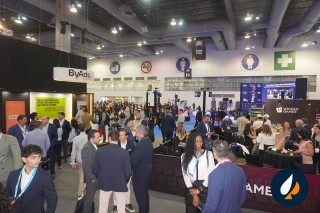

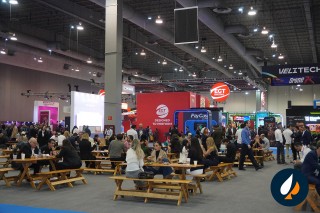

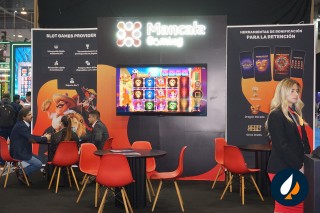
SiGMA North America 2026
01 de September 2026
Affiliates and Acquisition: Keys to Regulated Markets in North America
(Mexico City, SoloAzar Exclusive).- During SiGMA North America 2026, Cristóbal Guzmán Reyes, Head of Affiliates at Logrand Entertainment Group; Guga Júnior, influencer and slots expert at Socios Escalares; Andrés Gómez, Head of Latin America Go-to-Market Strategy at Admattic; Yambot Aguilera, Gaming and Finance Sales Director at Google; and Paula Gabriel Jiménez, Advertising Client Growth Director for Microsoft at Aleph, analyzed the state and provincial affiliate ecosystem in North America, as well as the acquisition challenges in regulated markets.
Thursday 24 Sep 2026 / 12:00
Jordi Sendra, CEO of Alea: "Latin America is one of our most important regions"
(Mexico City, SoloAzar Exclusive).- The CEO of Alea analyzes the company's participation in SiGMA North America, the potential of Mexico and Brazil and the growth opportunities in North America and Latin America. It also reviews the new features presented during the event, including the new sportsbook vertical and Alea Jackpot.
Wednesday 23 Sep 2026 / 12:00
CP Games at SiGMA North America: Localization, Integration, and Regional Growth
(Mexico City, SoloAzar Exclusive).- Following a successful showcase at SiGMA North America, Caio Ruiz, Head of Growth and Strategic Partnership at CP Games, reflects on the event's key takeaways. He discusses the critical need for localized strategies across the Americas, the importance of flexible technical integrations, and the company's next steps in navigating the diverse gaming landscapes of LatAm and North America.
Tuesday 22 Sep 2026 / 12:00
SUSCRIBIRSE
Para suscribirse a nuestro newsletter, complete sus datos
Reciba todo el contenido más reciente en su correo electrónico varias veces al mes.