AGA, IGA Fight Together Against Prediction Markets
Monday 27 de April 2026 / 12:00
⏱ 5 min read
(Washington).- The Indian Gaming Association (IGA) and American Gaming Association (AGA) are intensifying their push in Congress to block the spread of sports betting prediction markets nationwide
The AGA is organizing a coordinated pushback with states, attorneys general, policymakers, and industry stakeholders against what it views as encroachment on established authority, market integrity, and the rule of law.
Tres York, vice president of government relations at the AGA, appeared last week on the webcast hosted by their IGA ally to outline what’s ahead. The AGA appeared with IGA Chair David Bean Wednesday, the day before a closed non-public hearing before the House Agriculture Committee, which has jurisdiction over the Commodity Futures Trading Commission that has sanctioned sports betting prediction markets.
“About 16 members showed up, about a third of the committee, and it was a good discussion,” said Jason Giles, IGA’s executive director. “Of the folks testifying, four were in the bag for prediction markets and the NFL representative did their NFL wishy-washy thing. It was up to the AGA’s Chris Cylke (senior vice president of government relations) to cut through all the euphemisms and sophistry and magic tricks these guys are trying to lay on Congress.”
Giles said a non-public meeting is more free-flowing, without the media grandstanding of the public meetings.
York said, “Some folks were trying to pull the wool over these members’ eyes and give them a total crock that hopefully not all of them are buying.” He added that a lot of the House members, depending on what states they’re from, are likely to see a direct impact on their states with 40 having legalized sports betting. That means reduced tax revenue to pay for infrastructure or education.
“Fifteen states are now in active litigation against them and 40 state AGs have signed onto an amicus brief opposing sports gambling through prediction markets,” York said. “So making sure they’re aware of what’s going on within their states is critically important. If Congress really intended to legalize nationwide sports betting in 2010 (as proponents of prediction markets claim), then why did we spend six years trying to overturn PASPA? If this is what Congress intended 16 years ago, why did it take someone 15 years to realize what Congress did? The answer is, it was never Congress’s intent.”
York said members of Congress respect that line of thinking. Ultimately, when the issue reaches the Supreme Court, it will come down to what lawmakers intended in 2010 when it updated the Commodity Exchange Act that strengthened the CFTC’s oversight of derivatives.
“The entire concept of betting on LeBron James recording 12 rebounds as a financial derivative is completely ridiculous,” York said. “Everyone who has open eyes and isn’t taking a lot of money knows that.”
Victor Rocha, IGA’s conference chair, said the prediction market issue is starting to “break outside its containment,” with the mainstream media noticing the hypocrisy of this argument. He said it will get the attention of lawmakers, because the issue is going mainstream, especially with reports of insiders profiting from private information.
Giles said it’s frustrating to have a hearing behind closed doors in which the issue doesn’t get the same attention that CFTC Chair Michael Selig got when he spoke at an open hearing.
Bean said it’s a mixed bag dealing with members of Congress, with some who are “already drinking the Kool-Aid” in favor of prediction markets and others are on the fence. He urged tribal leaders to reach out to members of Congress from both political parties.
“Our message is prediction markets are not only eroding tribal sovereignty, but also eroding state sovereignty as well,” Bean said. “We’re giving the history of the Indian Gaming Regulatory Act and framework established by that Act and how we’re overseen by the National Indian Gaming Commission and our state partners. We’re talking about how Indian gaming benefits our communities and relations with the state and how we put emphasis along the way on strong regulations to protect the consumer, protect the integrity of the game and American sports, and assets of the tribe. That is all part of our messaging.
“They’re disrespecting tribal and state sovereignty and the framework we’ve established over the last four decades in attempting to protect the industry and consumer and grow in a good way,” Bean said. “We’re saying that this is complete and blatant disrespect for tribal sovereignty and we’re not going to have it.”
Giles said there seems to be a coordinated movement among prediction market operators to combat the negative narratives about allowing underage gamblers, screening for money laundering, and problems with insider trading. The prediction market operators are running ads on television to try and normalize the activity, he noted.
“(Prediction markets) just kind of exploded last year and while everyone was trying to get their breath and figure out what’s going on, they ran amok,” York said. “That’s when you saw advertising and hiring 15-year-old influencers and crazy stuff that you would never get away with in any state if you were being regulated appropriately.”
York said the coordinated efforts among prediction markets started to occur when state AGs got involved across the country and litigation started to spread. Bills are being introduced in Congress to preempt prediction markets and tough questions are being asked, he added.
“A lot of bad press has come out against these guys,” York said. “They have an unlimited amount of resources and spend an incredible amount of money on lobbying. They created the coalition because of the pressure they’re feeling.”
York said the prediction market operators “can’t get out of their own way.” He pointed out that Kalshi is claiming only 4% of those 18 to 21 are part of the trading volume on the exchange. It looks like a low number, until you realize Kalshi does $3 billion in trades a week.
“So 18- to 21-year-olds are betting $120 million a week on these platforms,” York said. “That’s $6.2 billion a year. Once these types of things keep happening, it will raise awareness. Members of Congress and AGs are concerned and in many cases ticked off. We’re starting to see more enforcement actions.”
Categoría:Legislation
Tags: AGA,
País: United States
Región: North America




Event








SiGMA North America 2026
01 de September 2026
Beyond the Games: EGT Digital’s Vision for Sustainable Growth in the Americas
(Mexico City, SoloAzar Exclusive).- At SiGMA North America, EGT Digital proved it is far more than just a premium content provider. Andres Troelsen, Regional Sales Director LATAM, discusses the industry's shift towards comprehensive tech ecosystems, the importance of tailoring strategies for the diverse Latin American market, and the company's latest innovations. Discover what’s next for EGT Digital’s expansion across the Americas.
Thursday 17 Sep 2026 / 12:00
SiGMA North America celebrates Football, LATAM growth and brings the iGaming community together in Mexico City
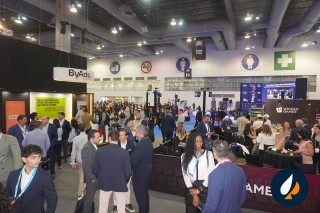
(Mexico City).- For its first edition, SiGMA North America marked a successful debut in Mexico City, bringing together the international and regional iGaming community while highlighting the continued growth and strategic importance of the Latin American market.
Thursday 17 Sep 2026 / 12:00
Eman Pulis Assesses Success of SiGMA North America in Mexico
(Mexico City, SoloAzar Exclusive).- SiGMA Group founder Eman Pulis assesses the success of SiGMA North America in Mexico following its September 1–3 edition at Centro Banamex, where around 2,250 delegates gathered to connect the North and Latin American gaming markets and explore opportunities across the region.
Wednesday 16 Sep 2026 / 12:00
SUSCRIBIRSE
Para suscribirse a nuestro newsletter, complete sus datos
Reciba todo el contenido más reciente en su correo electrónico varias veces al mes.