EU Eyes Unified iGaming Tax: What Could It Mean for Ukraine’s Gambling Market?
Thursday 05 de March 2026 / 12:00
⏱ 3 min read
(Kyiv).- A proposal in the European Parliament to introduce a small supranational tax on gambling operators has reignited debate over tax harmonization across Europe’s fast-growing gaming sector and its potential impact on emerging markets.
Europe’s gambling industry continues to evolve rapidly, but the regulatory debate is now shifting to a new level. While several countries are still refining national frameworks for taxation, licensing, and advertising, policymakers in the European Union have begun discussing the possibility of introducing a supranational tax on gambling operators.
The proposal was put forward by Viktor Negrescu, Vice-President of the European Parliament, who suggested the creation of a fixed European levy on the gambling sector.
According to Negrescu, even a modest 1% additional tax applied on top of existing national taxation could generate substantial revenue for the European Union. The funds would help support education and youth initiatives, particularly programs such as Erasmus+.
A Small Tax with Billion-Euro Implications
At first glance, the proposal may appear limited in scope. However, the scale of the European gambling market tells a different story. The sector is estimated to generate close to €200 billion annually, with annual growth of around 5%, driven largely by the expansion of online gambling.
Because digital gaming remains one of the fastest-growing segments of the digital economy, even a small percentage levy could translate into billions of euros in additional tax revenue each year. Supporters of the proposal argue that the industry’s scale and profitability justify a coordinated fiscal approach.
Europe’s Fragmented Gambling Tax Landscape
Currently, gambling taxation across Europe varies widely. Gross Gaming Revenue (GGR) tax rates range from around 5% to as high as 40%, depending on the jurisdiction.
Countries such as France and Sweden have recently increased gambling taxes in an effort to boost public finances and strengthen regulatory oversight. Meanwhile, Estonia has opted for a different strategy by reducing tax pressure to support industry growth.
This patchwork of fiscal policies has created structural distortions within the European market. Operators often concentrate their activities in jurisdictions with lower tax burdens, while countries with higher rates risk losing part of their potential tax base.
The Political Challenge of Tax Harmonization
Despite its theoretical appeal, implementing a unified gambling tax across the EU would be extremely complex. Unlike VAT, which is partially harmonized at the European level, gambling taxation remains fully controlled by individual national governments.
Any attempt to introduce a pan-European levy would require unanimous approval from all 27 EU member states—a political hurdle that could prove difficult to overcome. Countries with strong and competitive iGaming industries may oppose measures that could weaken their market position.
For that reason, many analysts believe that while the idea will likely remain part of policy discussions, a rapid implementation is unlikely.
Opportunities for Emerging Gambling Markets
For countries in Central and Eastern Europe, the debate has a dual dimension. The region is experiencing strong growth in its gambling sector, and evolving EU tax policies could create both risks and opportunities.
If an additional European levy is introduced without coordination mechanisms, it could increase the overall fiscal burden on operators. However, younger jurisdictions may also benefit by offering more flexible regulatory and tax frameworks, potentially attracting investment and new operators.
Lessons for Ukraine
Ukraine should closely observe this trend. Although we are not yet an EU member, our course toward integration means gradual alignment with European regulatory standards. The key lesson lies not so much in the size of the tax itself as in the principle of transparency and the harmonization of rules. Clear, understandable, and competitive tax rates, combined with modern monitoring systems, could bring billions of hryvnias out of the shadow economy and into the state budget.
For the Ukrainian market, it is important to benefit from the innovations of European tax policy by creating a flexible taxation model that ensures budget revenues while preserving the attractiveness of the legal segment. If legal businesses operate under predictable conditions while illegal operators face real risks of blocking and sanctions, the balance will gradually shift in favor of the regulated sector.
A Strategic Moment for Gambling Policy Reform
As discussions about gambling taxation continue within the European Union, the evolving landscape could influence regulatory strategies far beyond the bloc itself.
Higher tax pressure in some European markets may encourage operators and investors to explore alternative jurisdictions that offer more balanced regulatory frameworks. For policymakers in developing gaming markets, this creates a strategic opportunity to design tax models that both support public finances and maintain the competitiveness of the legal industry.
Categoría:Legislation
Tags: Sin tags
País: Ukraine
Región: EMEA




Event






SiGMA North America 2026
01 de September 2026
LatAm Regulators Discussed Illegal Gambling and Innovation at SiGMA North America
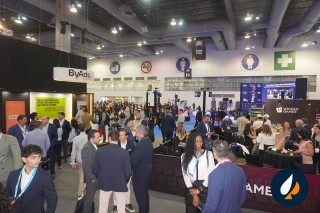
(Mexico City, SoloAzar Exclusive).- The panel "The Red Pen Forum: Regulators Respond to the Industry," held during SiGMA North America 2026, brought together representatives from Uruguay, Argentina, Puerto Rico, and Honduras to analyze regulatory challenges, digital transformation, illegal gambling, and the need to adapt lotteries for new generations. The conference was moderated by Rodrigo Cigliutti, Executive Director of CIBELAE (Ibero-American Corporation of State Lotteries and Betting), and featured the participation of Marcelo Visconti, National Director of Lotteries and Quinielas of Uruguay; Carlos Moyano, President of IAFAS Entre Ríos, Argentina; Heidi Hernández Olivo, Deputy Secretary of the Puerto Rico Lottery; and Lissa Mencía, General Director of Lottery Operations and Games at Loto Honduras.
Monday 28 Sep 2026 / 12:00
SiGMA North America Addressed Crisis Management in iGaming
(Mexico, SoloAzar Exclusive).- During SiGMA North America 2026, Rosa Ochoa, founder of the Blue Global Gaming platform and strategic advisor for gaming operators; Iliana María Pineda Echeverri, Chief Legal & Compliance Officer at Wplay.co; Iraid Rosales, Country Manager Mexico at Amusnet; and Elizabeth Maya Cano, Executive President of CORNAZAR, analyzed the key factors in managing crisis situations within the iGaming industry, with a special focus on transparency, communication, technology, and preparation.
Friday 25 Sep 2026 / 12:00
Affiliates and Acquisition: Keys to Regulated Markets in North America
(Mexico City, SoloAzar Exclusive).- During SiGMA North America 2026, Cristopher Guzmán Reyes, Head of Affiliates at Logrand Entertainment Group; Guga Júnior, influencer and slots expert at Scalar Partners; Andrés Gómez, Head of Latin America Go-to-Market Strategy at Admattic; Yambot Aguilera, Gaming and Finance Sales Director at Google; and Paula Gabriel Jiménez, Advertising Client Growth Director for Microsoft at Aleph, analyzed the state and provincial affiliate ecosystem in North America, as well as the acquisition challenges in regulated markets.
Thursday 24 Sep 2026 / 12:00
SUSCRIBIRSE
Para suscribirse a nuestro newsletter, complete sus datos
Reciba todo el contenido más reciente en su correo electrónico varias veces al mes.