When “Disguised” Gambling Surpasses National Economies
Monday 01 de June 2026 / 12:00
⏱ 3 min read
(Kyiv).- New Report Reveals a USD 5.9 Trillion Grey Market Dominated by Unregulated and Emerging Gambling-Like Products.
A new study from Gaming Compliance International highlights the staggering size of the global unregulated gambling economy, estimating annual betting turnover at USD 5.9 trillion. The report underscores the rapid rise of “disguised gambling” products—such as social casinos, prediction markets, skin trading platforms, and influencer-led competitions—which mimic traditional gambling mechanics while operating outside most regulatory frameworks, creating significant challenges for governments, regulators, and licensed operators worldwide.
A Shadow Economy Measured in Trillions
Recently, Gaming Compliance International published its report, GCI Online Gaming 2025: Global, on the global unregulated gambling market. According to the company’s estimates, the scale of the market is truly staggering, even by global economic standards, reaching an annual betting turnover of USD 5.9 trillion. This figure exceeds the combined budgets of many European countries and is surpassed only by the economies of the United States and China. Importantly, this includes not only directly illegal gambling operations, but also “disguised gambling” — a relatively new segment that is growing at an extraordinary pace in the online environment.
The problem of illegal gambling has always been acute across jurisdictions, regardless of whether gambling itself is legalized or prohibited. With the evolution of the online sector, the issue has become even more pronounced and has ultimately developed into an alternative economy with transaction volumes measured not in hundreds of billions, but in trillions of dollars. The recent Gaming Compliance International report confirms this trend, estimating the size of the grey market at more than USD 5.9 trillion.
The Rise of “Disguised Gambling”
Within the global grey gambling economy, an increasingly significant share is now occupied by so-called “disguised gambling.” This category includes products that replicate core gambling mechanics — wagering, risk, and reward — while legally avoiding classification as gambling.
These include social casinos, pseudo-financial services, skin trading platforms, TikTok competitions, prediction markets, and other similar formats. Although they are not formally categorized as gambling products, they adopt gambling logic by embedding betting mechanics into users’ everyday digital experiences, thereby normalizing the gambling nature of the product.
At the same time, such products circumvent regulatory safeguards typically applied to the licensed gambling sector, such as responsible gambling requirements. After all, if a product is not formally classified as gambling, those regulations technically do not apply.
Grey Market Revenues Outpace the Regulated Sector
According to Gaming Compliance International, all segments of the grey gambling market, including disguised gambling products, generate 78% of global GGR, while only 22% is generated by the legal and regulated market.
This means that 78% of revenues derived from activities that could reasonably be classified as gambling are effectively neither taxed nor monitored by regulators.
Three Major Consequences for Governments and Regulators
This situation leads to at least three major negative consequences.
1. Increased Consumer Protection Risks
Products that function like gambling but are not legally classified as such cannot be properly regulated. This blurs the boundaries of what constitutes gambling and the methods through which it is delivered. As a result, the risks associated with gambling addiction among users of such products increase significantly.
2. Massive Losses in Potential Tax Revenue
Governments lose billions of dollars in potential tax revenues. Even if we apply a hypothetical GGR tax rate of 10% to the USD 5.9 trillion market, this would amount to USD 590 billion in potential tax income.
For comparison, Ukraine’s 2026 state budget is slightly above USD 108 billion — only 18.3% of that amount.
3. A Blurring of Market Boundaries
Due to sophisticated technological infrastructures designed to disguise gambling as other types of products, consumers perceive the market as a single ecosystem in which licensed brands, offshore operators, and disguised gambling products all compete side by side.
This erodes the distinction between licensed and unlicensed gambling and creates a range of new regulatory challenges.
Why the Grey Layer Requires Greater Oversight
The conclusion is straightforward: this third, most opaque “grey” layer effectively functions as a true gambling segment and therefore requires the same level of monitoring, oversight, and regulation as the traditional licensed market.
Otherwise, any efforts aimed at regulation and taxation will systematically fail to address the industry’s most dynamic and fastest-growing segment.
A Growing Challenge for Future Gambling Reforms
This is something policymakers in Ukraine must clearly recognize and take into account in the course of future gambling market reforms.
Combating illegal operators has never been simple, but the challenge has now become even more complex: regulators must identify products that may not appear to be gambling at first glance, classify them appropriately, and develop corresponding regulatory frameworks capable of addressing an increasingly sophisticated digital marketplace.
Categoría:Legislation
Tags: Sin tags
País: Ukraine
Región: EMEA




Event

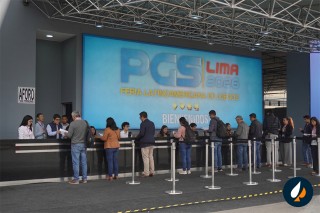
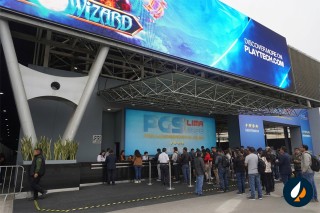
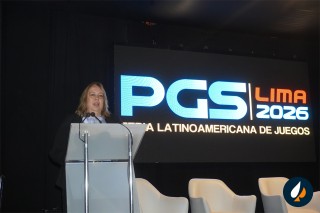



PERU GAMING SHOW – PGS 2026
17 de June 2026
LSports at the Peru Gaming Show: Building Presence, Opening Doors
(Lima, SoloAzar Exclusive).- The Peru Gaming Show was never just about the booth. For LSports, it was about showing up in a market where showing up still matters — and leaving with more than a contact list. Federico Brancato, Sales Manager for the LATAM Region, came to Lima with a clear sense of what operators in this part of Latin America need most right now. What he found confirmed it.
Friday 17 Jul 2026 / 12:00
Martin Ivanov: "Latin America remains one of CT Interactive's key strategic regions"
(Lima, SoloAzar Exclusive).- CT Interactive Chief Operating Officer Martin Ivanov reflects on the company's experience at the Peru Gaming Show, highlights the opportunities emerging in the Peruvian market, and outlines the company's strategic priorities for expanding across Latin America.
Thursday 16 Jul 2026 / 12:00
Regulation and the Black Market in Latin America: Challenges and Solutions
(Lima, SoloAzar Exclusive).– As part of the Peru Gaming Show (PGS) 2026 conferences, gaming industry leaders analyzed one of the main challenges currently facing regulated markets in Latin America: the growth of illegal gambling. The panel "Regulation and the Black Market: Challenges and Solutions" brought together Carlos Fonseca, CEO of Gaming Law, as moderator; Neil Montgomery, founding partner of Montgomery & Associados; Tatiana Vásquez, founding partner of Vázquez Asociados; Karen Sierra Hughes, Vice President for Latin America, the Caribbean, and Spain at GLI; and Vanessa Cabrera, Director of the Control and Sanction Directorate of the DGJCMT-MINCETUR, who debated the causes of the black market, the available regulatory tools, and strategies to strengthen channeling toward legal gaming in the region.
Wednesday 15 Jul 2026 / 12:00
SUSCRIBIRSE
Para suscribirse a nuestro newsletter, complete sus datos
Reciba todo el contenido más reciente en su correo electrónico varias veces al mes.