Experts call for streamlined casino regulations in South Korea to boost national tourism strategy
Tuesday 21 de October 2025 / 12:00
⏱ 3 min read
(Seoul).- Several experts told GGRAsia that South Korea’s casino oversight is currently split among various public agencies, and the industry would benefit from a more unified regulatory framework.
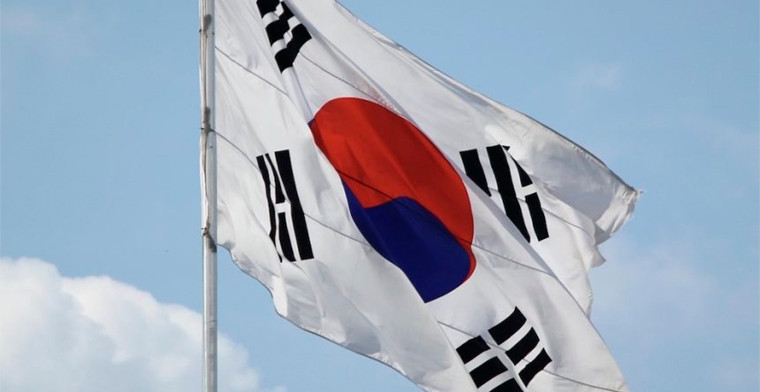
There is some division of responsibilities between public agencies that oversee casino gaming in South Korea, and it would help the sector to have a unified system, suggested several experts, in comments to GGRAsia.
“We need a single body that can both regulate and lead,” said Lee Jae-seok, associate professor of tourism management at Gangneung-Wonju National University. “Without structural transformation, the country risks falling behind regional rivals,” he added.
Mr Lee further stated: “It is also difficult to formulate a long-term development plan for casino integrated resorts [IRs] under the current fragmented system.”
South Korea’s casino industry has 18 venues. Only one, Kangwon Land, is permitted to offer gambling to locals. The rest are foreigner-only casinos.
The Ministry of Culture, Sports and Tourism grants casino licences on the South Korean mainland, while the National Gambling Control Commission (NGCC) oversees supervision for the entire industry. Jeju, a semi-autonomous holiday island, has eight foreigner-only casinos licensed by, and with day-to-day supervision from, Jeju Special Self-Governing Province.
Mr Lee said rotation of officials at oversight bodies can lead to loss of expertise, and inconsistent policy execution. GGRAsia was able to confirm that officials across all departments at the Ministry of Culture, Sports and Tourism typically change annually.
Mr Lee contrasts South Korea’s situation with Singapore and Japan respectively. In the former, the Gambling Regulatory Authority is the competent body for casino regulation oversight and enforcement. Japan has formed the Japan Casino Regulatory Commission, though its first IR with casino, MGM Osaka, is not due to open until the end of 2030.
An Ock Mo, president of the Association of Korea Gaming Tourism Professionals, a body set up in 2023, told GGRAsia that the focus of regulation in her country should not be confined to social-harm prevention, but also promote IRs as engines of growth for inbound tourism and what she termed “national competitiveness”.
Yanolja Research, a Seoul-based company, said in a February report – citing Korea Culture and Tourism Institute data and the Korean Duty-Free Shop Association – that while South Korea had a “surge” in tourist arrivals in 2024, tourism income had “stagnated”.
A policy for visa-free entry to South Korea by Chinese tourists travelling in groups, took effect from late September and is due to last for more than half a year.
Ms An envisions an “integrated casino management authority” that could monitor resort operators’ compliance with the objectives of laws, regulations, and the policy intent of the country’s lawmakers.
She said data-driven disclosure systems could be used to promote regulatory openness, public trust, and fair markets. By centralising power in a single competent organisation, government could remove overlaps and regulatory loopholes.
Government could also create an industry-guiding framework, adding consumer protection functions, such as gambling addiction prevention, harm redress, and operator-gambler conflict mediation, suggested Ms An.
According to a Jeju official, speaking to GGRAsia on condition of anonymity, the island’s semi-autonomous status makes for some jurisdictional challenges.
The person said: “De jure [by right] the Ministry [of Culture, Sports and Tourism] and NGCC can interfere in the island’s casino affairs, but NGCC’s casino-related activities in the country occur once or twice a year.
“In addition, its [NGCC’s] role is negligible,” while some of its officials “lack expertise in the casino industry,” suggested the person.
Categoría:Legislation
Tags: Sin tags
País: South Korea
Región: Asia




Event


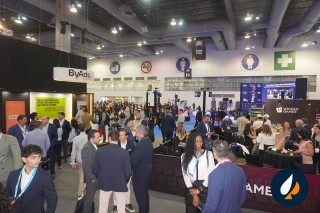





SiGMA North America 2026
01 de September 2026
LatAm Regulators Discussed Illegal Gambling and Innovation at SiGMA North America
(Mexico City, SoloAzar Exclusive).- The panel "The Red Pen Forum: Regulators Respond to the Industry," held during SiGMA North America 2026, brought together representatives from Uruguay, Argentina, Puerto Rico, and Honduras to analyze regulatory challenges, digital transformation, illegal gambling, and the need to adapt lotteries for new generations. The conference was moderated by Rodrigo Cigliutti, Executive Director of CIBELAE (Ibero-American Corporation of State Lotteries and Betting), and featured the participation of Marcelo Visconti, National Director of Lotteries and Quinielas of Uruguay; Carlos Moyano, President of IAFAS Entre Ríos, Argentina; Heidi Hernández Olivo, Deputy Secretary of the Puerto Rico Lottery; and Lissa Mencía, General Director of Lottery Operations and Games at Loto Honduras.
Monday 28 Sep 2026 / 12:00
SiGMA North America Addressed Crisis Management in iGaming
(Mexico, SoloAzar Exclusive).- During SiGMA North America 2026, Rosa Ochoa, founder of the Blue Global Gaming platform and strategic advisor for gaming operators; Iliana María Pineda Echeverri, Chief Legal & Compliance Officer at Wplay.co; Iraid Rosales, Country Manager Mexico at Amusnet; and Elizabeth Maya Cano, Executive President of CORNAZAR, analyzed the key factors in managing crisis situations within the iGaming industry, with a special focus on transparency, communication, technology, and preparation.
Friday 25 Sep 2026 / 12:00
Affiliates and Acquisition: Keys to Regulated Markets in North America
(Mexico City, SoloAzar Exclusive).- During SiGMA North America 2026, Cristopher Guzmán Reyes, Head of Affiliates at Logrand Entertainment Group; Guga Júnior, influencer and slots expert at Scalar Partners; Andrés Gómez, Head of Latin America Go-to-Market Strategy at Admattic; Yambot Aguilera, Gaming and Finance Sales Director at Google; and Paula Gabriel Jiménez, Advertising Client Growth Director for Microsoft at Aleph, analyzed the state and provincial affiliate ecosystem in North America, as well as the acquisition challenges in regulated markets.
Thursday 24 Sep 2026 / 12:00
SUSCRIBIRSE
Para suscribirse a nuestro newsletter, complete sus datos
Reciba todo el contenido más reciente en su correo electrónico varias veces al mes.