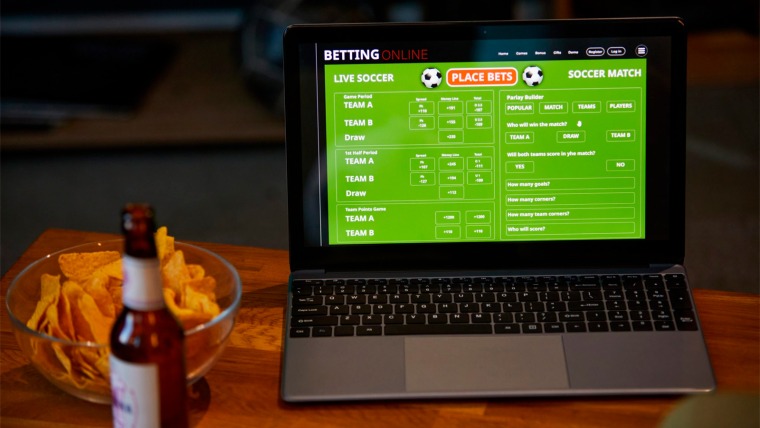
The Federal Government decided to regulate and tax the segment to increase the collection of up to R$ 150 billion.
Sports betting has been legalized in the country since 2018, but until this year it was not regulated and neither is it taxed. With the regulation, the Ministry of Finance will have to collect from R$ 12 billion to R$ 15 billion per year.
If Helder's request is accepted, the governments of Acre, Amapá, Amazonas, Mato Grosso, Maranhão, Pará, Rondônia, Roraima and Tocantins will be able to receive part of this federal collection. The document sent to the Planalto Palace highlights that the intention of the Consortium is to use the funds with Amazon conservation policies.
“It seems that the Provisional Measure provided by this regulation is being prepared by the Ministry of Finance. However, income taxation provides benefits to the National Public Security Fund, public education entities, and sports. Taking into account that the Conservation of the Amazon acquires very expressive proportions, where the recognition of the need for exceptional treatment in relation to the states that constitute it is brilliant, also considering the importance and need to encourage economic activities that combine the development of the Amazon region to the jungle, we fight so that the benefits of the collection in question are extended in favor of the protection of the Brazilian Amazon”, says the letter.
Sports betting tax
Last month, the Federal Government announced that it will tax companies and bettors that operate in the sports betting market in Brazil. Therefore, the taxation of the segment will form part of a Provisional Measure that should be published by the end of this week, according to information from UOL.
With the MP, bettors must pay 30% tax on the prize amounts received during a sporting event. There will be an exemption for earnings that are within the value of the first range free of Income Tax, updated to R$ 2,640. Companies, on the other hand, must pay R$30 million to the Federal Government for a five-year license, plus a 15% tax on profits.
The regulations must also oblige companies to have registration in the country, Brazilian employees and share capital of at least R$ 100,000. Therefore, companies that sell bets and those that offer means of payment will have to be accredited by the Federal Government.