Illegal Betting Becomes a Global Organized Crime Economy
Thursday 06 de August 2026 / 12:00
⏱ 3 min read
(Kyiv).- A new UN report reveals that unlicensed gambling has evolved into a sophisticated transnational criminal industry powered by cross-border financial networks, digital infrastructure, and cryptocurrencies.
Illegal Gambling Moves Beyond the "Grey Market"
Illegal online betting has traditionally been associated with players using unlicensed websites to bypass regulations, avoid identity verification, or access more attractive betting conditions. However, a new report by the United Nations Office on Drugs and Crime (UNODC) presents a much broader and more concerning reality.
According to the report, illegal betting is no longer simply a matter of operators violating gambling laws. It has developed into a fully-fledged criminal economy with its own technological infrastructure, financial systems, logistics, and international networks, operating on a scale comparable to major legitimate industries.
An Industry Handling Up to $1.7 Trillion in Annual Bets
UNODC estimates that the global volume of unlicensed betting ranges between $340 billion and $1.7 trillion each year.
These figures represent the total value of bets placed rather than operators' revenue or profits. Even the lower estimate is comparable to the gross domestic product of a medium-sized European country, while the upper estimate approaches the value of entire segments of global financial markets.
The report concludes that financial flows of this magnitude require a highly organized operational structure rather than fragmented criminal activity.
Southeast Asia Identified as a Key Operational Hub
The report highlights Southeast Asia as one of the principal centers supporting illegal gambling operations.
Much of the technical and financial infrastructure—including server hosting, payment processing, and platform coordination—is concentrated in the region.
Meanwhile, roughly half of the world's illegal betting activity is concentrated in China, Hong Kong, Macau, and Taiwan, where strong consumer demand combined with strict gambling regulations creates favorable conditions for illegal operators offering products unavailable in regulated markets.
A Cross-Border Business Model Designed to Evade Authorities
According to UNODC, illegal gambling operators typically employ a decentralized business model that makes enforcement particularly challenging.
Companies are often incorporated in jurisdictions with limited regulatory oversight or minimal ownership disclosure requirements. Their servers are hosted in different countries, while customer support, technical services, and marketing teams operate across several additional jurisdictions. Financial transactions—including deposits, payouts, and profit transfers—are processed through foreign banks, payment intermediaries, and cryptocurrency wallets.
By separating each element of the operation across multiple jurisdictions, operators make it considerably more difficult for authorities to identify those responsible or disrupt their activities. Even if regulators freeze bank accounts in one country, platforms can continue operating through cryptocurrency infrastructure and overseas servers.
Illegal Betting Fuels Transnational Organized Crime
One of the report's central conclusions is that illegal gambling has become an integral part of transnational organized crime.
Rather than functioning solely as betting platforms, these operations increasingly serve as mechanisms for laundering illicit proceeds, bypassing financial sanctions, and facilitating criminal transactions within international underground networks.
In this context, gambling is no longer just a consumer product—it has become a financial tool supporting broader criminal enterprises.
Regulated Markets Play a Critical Role
UNODC argues that transparent, regulated gambling markets provide far more than a legal alternative for players.
Licensed operators are required to disclose beneficial ownership, maintain transparent financial records, comply with anti-money laundering (AML) regulations, and operate under continuous regulatory supervision.
According to the report, expanding regulated markets, strengthening international law enforcement cooperation, and improving oversight of cross-border financial transactions are among the most effective strategies for disrupting the infrastructure that supports illegal betting.
The Fight Goes Beyond Blocking Websites
The report concludes that tackling illegal gambling today requires far more than blocking individual websites.
Governments and the regulated gambling industry must instead focus on dismantling the sophisticated financial and technological infrastructure that sustains the criminal economy, particularly as the increasing use of cryptocurrencies makes illicit money flows more difficult to detect and control.
Categoría:Legislation
Tags: Sin tags
País: Ukraine
Región: EMEA




Event


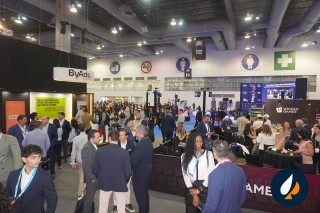





SiGMA North America 2026
01 de September 2026
Manuel Jiménez, CEO of SoluestBet: "Mexico is a priority market for us"
(Mexico City, SoloAzar Exclusive).- Manuel Jiménez, CEO of SoluestBet, analyzed his visit to SiGMA North America and highlighted the priority role of Mexico as a gateway between Latin America and North America. The executive also pointed out the opportunities for suppliers that manage to combine technology, commercial structure and solid relationships with operators in the region.
Monday 21 Sep 2026 / 12:00
Rocío Moitino of Ready Play Gaming looks back on her visit to SiGMA North America
(Mexico City, SoloAzar Exclusive).- After visiting SiGMA North America, Rocío Moitino Head of Sales, Latin America at Ready Play Gaming, analyzed the opportunities of the Mexican market and the new demands of operators. The executive highlighted the importance of combining product, distribution and commercial strategy, in addition to the potential of alternative formats to traditional slots.
Monday 21 Sep 2026 / 12:00
"Technology can be global, but execution in LATAM must be local": Borut Leban on Timeless Tech's Regional Expansion
(Mexico City, SoloAzar Exclusive).- Following a highly successful showing and a 'Best Aggregator 2026' award at SiGMA North America, Timeless Tech CEO Borut Leban reflects on the company's strategic growth across LatAm. In this interview, Leban discusses the necessity of deep market localization, concrete new business opportunities, and the upcoming launch of their unified retention ecosystem, Timeless Arena.
Friday 18 Sep 2026 / 12:00
SUSCRIBIRSE
Para suscribirse a nuestro newsletter, complete sus datos
Reciba todo el contenido más reciente en su correo electrónico varias veces al mes.