Oklahoma Panel Moves Forward with Three Sports Betting Bills Amid Tribal Exclusivity Concerns
Friday 14 de February 2025 / 12:00
⏱ 3 min read
(Oklahoma City).- Bills that would legalize sports betting, including one that would allow the Oklahoma City Thunder to obtain a gaming license, advanced Thursday from a Senate committee despite concerns that at least one measure could violate existing compacts with the state’s tribes.
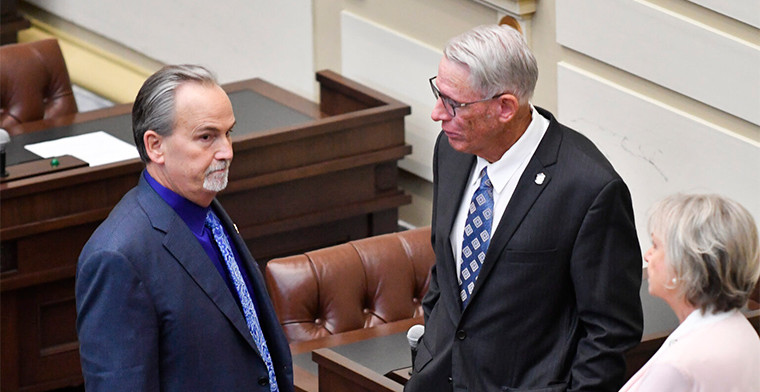
The three measures will likely look very different following negotiations between tribes and other interested players, but show the state is very serious about adding sports betting, said Sen. Bill Coleman, R-Ponca City, Senate Business and Insurance Committee chairman.
“They are tools that we are using for negotiations that are going on between a professional sports franchise here in Oklahoma and the tribes,” Coleman said.
Senate Bill 125, by Sen. Dave Rader, R-Tulsa, would allow tribes with Oklahoma gaming compacts to offer sports pools. Sports pools are any wagers, including mobile betting, on the outcome of sports or other events, except horse and animal races.
It would require the tribes to execute supplements to their existing compacts. Exclusivity fees would be 5% to 7%.
It passed by a vote of 9-2 and heads to the Senate Appropriations Committee.
Through the compacts, the state receives exclusivity fees in exchange for giving tribes the sole right to conduct certain types of Class III gaming, including slots, roulette and craps.
In fiscal year 2024, tribes paid the state $210 million in exclusivity fees, a nearly 4% increase over the prior year, according to the Oklahoma Gaming Compliance Unit Annual Report for fiscal year 2024.
‘Way behind the curve’
Over three dozen states have already legalized sports betting, but prior efforts to allow it in Oklahoma have failed to garner enough legislative support.
“We’re way behind the curve on sport betting as compared to some of our fellow regional states and that’s always concerning to us in a competitive market,” said Matthew Morgan, chairman of the Oklahoma Indian Gaming Association.
He said the association has not talked with the authors of the bills, but is willing to have discussions.
But Morgan said any legislation on the subject cannot violate the existing compacts, must utilize the gaming supplemental process set forth in the compacts and has to make economic sense.
Buy-in from Gov. Kevin Stitt will also be important because he plays a role in the process, Morgan said.
“At the end of the day, you know, the tribes are the ones that have negotiated this substantial exclusivity under the gaming compacts,” Morgan said. “We are the ones that take the financial risk on any gaming extensions.”
Sen. Mark Mann, D-Oklahoma City, said he fears Senate Bill 164, which narrowly advanced out of committee Thursday, violates the exclusivity provisions of the compacts. As a result, the state would lose money because it would have breached the terms, he said.
SB 164 would authorize the Oklahoma Lottery Commission to regulate sports betting. It would create an annual license fee of $100,000, an initial license fee of $500,000 and require 15% of the adjusted gross revenue each year in sports pools to be paid to the Lottery Commission.
The bill would repeal the prohibition on other Class III Gaming and the exception for the tribes, opening the door for other games and entities to be involved.
Sen. Casey Murdock, R-Felt, the author, said the measure would help in the negotiations process with the tribes. The bill is a “work in progress,” he said, adding that there will be many changes to it.
The measure passed by a vote of 6-5 and heads to the Senate Appropriations Committee.
Giving the Thunder a gaming license
Senate Bill 585 would allow the Oklahoma City Thunder to receive a gaming license for sports betting in the state, said Coleman, the author
“Today, this is the best bet I have seen,” he said.
The bill would allow the tribes to take in-person bets at casinos and mobile sports betting on tribal land, Coleman said.
The Thunder would be in charge of mobile sports betting on non-tribal land, he said.
The state would receive 10% of the net sportsbook revenues, which is estimated to be $20 million annually, he said.
The income generated will help the team, Coleman said.
The starting salary cap for the team was $55 million when the team came to the city, he said. It is now $140 million, Coleman said.
He said the measure will further solidify the team staying in Oklahoma City. But the tribes and the Thunder would need an agreement before the bill moves forward, Coleman said. The Oklahoma Indian Gaming Association and the Oklahoma City Thunder have a meeting next week, he said.“So, we have accomplished getting them to the table,” Coleman said. Senate Bill 585 passed by a vote of 8-2 and heads to the Senate floor.
Categoría:Legislation
Tags: Sin tags
País: United States
Región: North America




Event
iGaming tech leader Cristina Turbatu commends ICE Barcelona's vision for Hall 7
Tuesday 20 Oct 2026 / 12:00
CGA Showcases Canada’s Competitive Edge at ICE Barcelona
Tuesday 13 Oct 2026 / 12:00
ICE Barcelona Hosts WorldGaming-Backed Nineball Championship in 2027
Tuesday 06 Oct 2026 / 12:00
SUSCRIBIRSE
Para suscribirse a nuestro newsletter, complete sus datos
Reciba todo el contenido más reciente en su correo electrónico varias veces al mes.