The amendment of the gaming law comes into effect to reinforce betting fraud
Monday 07 de November 2022 / 11:07
⏱ 4 min read
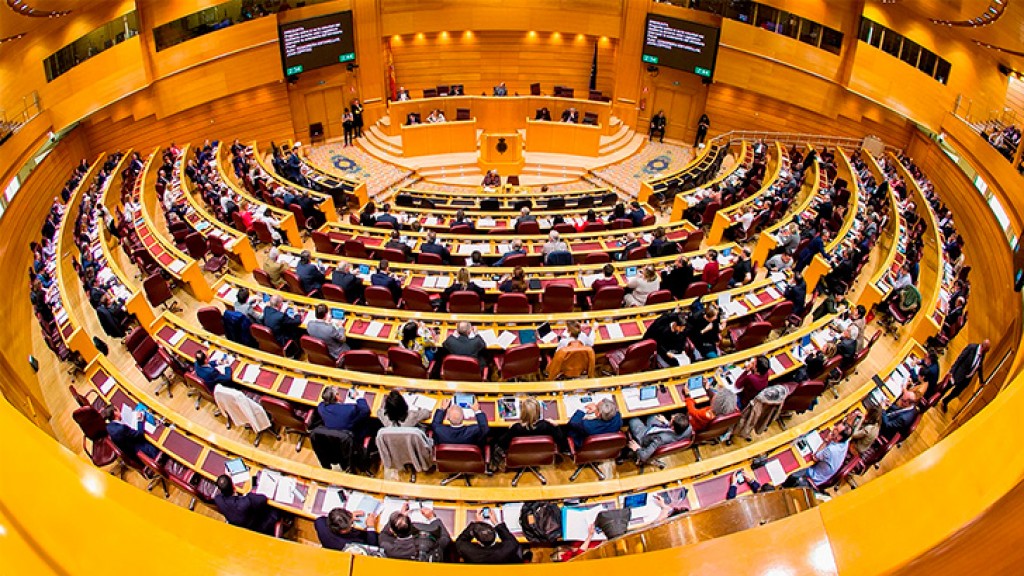
(Madrid).- On November 4, Law 23/2022, of November 2, which was approved on October 26 by the Plenary of the Senate, came into force. This law makes certain amendments to Law 13/2011, of May 27, on the regulation of gambling and to the revised text of the General Law for the Defense of Consumers and Users. The new legislation modifies the regulatory framework of gambling, to protect participants and to fight against fraud and manipulation of sports competitions and the regulations protecting consumers and users in matters of jurisdiction and penalties.
Law regulating gambling
A new article is introduced containing the general principles for the advertising, promotion and sponsorship of gambling activities, and the Government is required to set up a General Registry of Gambling Access Prohibitions.
A new function is attributed to the General Directorate for the Regulation of Gaming, which assumes the object, functions and competences of the National Gaming Commission, with the purpose of reinforcing the evaluation capacity of the regulatory authority when contrasting the effectiveness of the measures on responsible or safe gaming required from the operators as a consequence of the different regulatory developments aimed at strengthening the protection of the groups at risk.
Likewise, an express reference to the technical instrument in which the different actors interested in the eradication of fraud and manipulation of sports competitions share information, called Global Betting Market Investigation Service, is introduced. Managed by the General Directorate for the Regulation of Gambling, which will be responsible for the processing of personal data. Its purpose is to prevent and fight against fraud in the sports betting market and manipulation in this type of competitions, by means of the appropriate exchange of information among its participants.
Revised text of the General Law for the Defense of Consumers and Users.
In the first place, legal certainty is given to the consideration of consumer associations as interested parties in the procedure and the competences in consumer matters of the autonomous communities that have assumed the same by statute are guaranteed, within the framework of the basic nature of the recast text.
On the other hand, and with the aim of guaranteeing the proportionality of the sanctions imposed in consumer sanctioning procedures, introducing in the text the possibility that, after applying the ranges relating to each qualification, the fine imposed may be disproportionate in relation to the economic capacity of the offending company, in which case the competent authority may apply the ranges corresponding to the infringements of a lesser degree of seriousness, always ensuring that the sanction finally imposed is proportionate, effective and dissuasive.
In the same sense, a new accessory sanction is also introduced, to guarantee the effective protection of the rights of consumers, making it possible to impose on the offender the obligation to rectify the sanctioned breaches, and the principles of the sanctioning procedure are adapted to the specific field of consumption, in such a way that it must be the businessman who proves that he has actually carried out the action, since otherwise it would be a diabolical proof for the consumer authority.
In addition, and in order to avoid the impunity of the infringer, it is established that an infringement may be prosecuted by the competent authority as long as the statute of limitations has not expired, and legal certainty is given to the cases of suspension of the processing periods.
Otherwise, the scope of competence of the administration is modified, attributing competence to the consumer administrations to act in the face of those consumer offenses typified in sectorial regulations whose competence is not expressly conferred to other authorities, and the place of manifestation of the injury or risk in offenses committed through the Internet is specified. This is based on the place of conclusion of the contract (within the meaning of Law 34/2002, of July 11, 2002, on information society services and electronic commerce). However, given that not all consumer infringements take place within the framework of a contractual relationship, the infringement will also be deemed to have been committed, in addition to the places where the actions or omissions take place, in those other places where consumers or users reside, to whom the entrepreneur has actively addressed, for example, by sending e-mails or through Internet advertising specifically aimed at such consumers or users.
Regarding consumer infringements whose effects are greater than those of each autonomous community or which affect protected legal assets in addition to the defense of consumers, it is provided that the competent bodies in consumer matters of the General State Administration will be responsible for the application of the infringements and penalties provided for in the Law. The General State Administration will also be competent to act in the case of national consumer infringements when they also affect the structure of the market itself.
In short, in a novelty way and respecting the non bis in idem principle, certain infringements of consumer regulations may be sanctioned both by the consumer authorities of the autonomous communities, from the perspective of the protection of consumers in their territorial scope, and by the General State Administration, but always guaranteeing the final proportionality of the sanctions imposed.
Finally, Annex I is amended to ensure full transposition of Directive (EU) 2019/2161 of the European Parliament and of the Council of 27 November 2019 amending Council Directive 93/13/EEC and Directives 98/6/EC, 2005/29/EC and 2011/83/EU of the European Parliament and of the Council, with regard to improving the application and modernizing the Union's consumer protection rules.
Categoría:Legislation
Tags: Sin tags
País: Spain




Event









SiGMA North America 2026
01 de September 2026
Jordi Sendra, CEO of Alea: "Latin America is one of our most important regions"
(Mexico City, SoloAzar Exclusive).- The CEO of Alea analyzes the company's participation in SiGMA North America, the potential of Mexico and Brazil and the growth opportunities in North America and Latin America. It also reviews the new features presented during the event, including the new sportsbook vertical and Alea Jackpot.
Wednesday 23 Sep 2026 / 12:00
CP Games at SiGMA North America: Localization, Integration, and Regional Growth
(Mexico City, SoloAzar Exclusive).- Following a successful showcase at SiGMA North America, Caio Ruiz, Head of Growth and Strategic Partnership at CP Games, reflects on the event's key takeaways. He discusses the critical need for localized strategies across the Americas, the importance of flexible technical integrations, and the company's next steps in navigating the diverse gaming landscapes of LatAm and North America.
Tuesday 22 Sep 2026 / 12:00
"Our focus for growth is in Mexico and the rest of LatAm", Alberto Alfieri, Co-Founder of Blokotech
(Mexico City, SoloAzar Exclusive).- Following their success at SiGMA North America—where they secured the Best Casino Platform 2026 award—Blokotech's co-founder discusses growth opportunities in Mexico and the broader region. He also highlights the platform's latest AI-driven innovations and outlines the next phases of the company's expansion strategy.
Tuesday 22 Sep 2026 / 12:00
SUSCRIBIRSE
Para suscribirse a nuestro newsletter, complete sus datos
Reciba todo el contenido más reciente en su correo electrónico varias veces al mes.