Alabama Lottery, online sports betting bills close to Senate approval
Wednesday 16 de March 2022 / 08:04
⏱ 3 min read
(Alabama).- In November, Alabama voters may finally get a second chance to vote on whether they want a state lottery. Online sports betting legalization and retail casino expansion could make their way onto the ballot as well.

SB 293 and SB 294 are almost ready for their third readings in the Senate Tourism and Marketing Committee. Legislators added bill amendments as recently as Monday. After the third reading, procedure calls for lawmakers to vote on the bills.
However, considering the Alabama Legislature is slated to adjourn on April 7, the bills need Senate and House approval soon.
Similar legislation failed last year for that reason because time ran out. Short legislative sessions are a problem for online gambling legalization efforts. Online Poker Report has previously found that states with short legislative sessions are less likely to see gambling expansion efforts succeed.
The task is all the more difficult in Alabama because it has a constitutional prohibition on gambling. If legislators approve this year’s proposals, they will head to the ballot for voter approval on the necessary amendments.
The state of Alabama gaming
Alabama’s 5 million residents do have some legal gambling options, just not very many. Three tribal casinos, run by the Poarch Band of Creek Indians’ Wind Creek Hospitality, operate in the state. These are Class II casinos, meaning they can only offer certain types of games, including slots-like “electronic bingo” machines.
In terms of online options, the only legal ones are parimutuel wagering and daily fantasy sports.
In 2020, Gov. Kay Ivey commissioned a study that showed expanded gambling would benefit the state.
It gave the following revenue estimates for a few key product types:
- Lottery (including iLottery): $300 million
- Casino gaming: $400 million
- Sports betting (including mobile): $10 million
Negotiating with Alabama’s tribe
If approved, SB 293 authorizes Ivey to negotiate with Poarch representatives to amend the state’s gambling compact with the tribe. The governor said she would support the measures if they reach her, according to Play USA.
The state’s online sports betting and retail casino expansion would be solely through the Poarch tribe. In many ways, the market would be similar to what Connecticut Gov. Ned Lamont did with the Nutmeg State‘s two tribes, except a monopoly rather than a duopoly.
In March, Lamont worked with the Mashantucket Pequot and Mohegan tribes in order to offer online casino, online sports betting, online poker and iLottery in the state. The tribes partnered with DraftKings and FanDuel respectively.
Tribal representatives agreed to allow the Connecticut Lottery Corporation (CLC) to run online and retail sportsbooks in return for the tribes retaining Connecticut online casino rights. For its partner, the lottery chose Rush Street Interactive, operating under its PlaySugarHouse brand.
State lawmakers then approved legislation to enact the agreement and the federal Bureau of Indian Affairs (BIA) signed off on the compact amendment.
Expanding gambling in Alabama
The bills introduced on March 3 by Sen. Greg Albritton, R-Atmore, would introduce “the Alabama Education Lottery, casino-style games, sports betting, bingo and raffles.”
He also outlined creating oversight via what the bills call the Alabama Education Lottery and Gambling Commission, which would house a Gaming Enforcement Division.
Albritton, chairman of the Senate Finance and Taxation General Fund, included language to tax operators at 20% on their online sports betting revenue. That’s about average for US online sportsbook taxation – but far below Pennsylvania’s 34% and New York’s 51%.
The proposed legislation said “to limit the play of casino-style games to five licensed casinos.” Those casino-style games include poker, roulette and “all table games and electronic representations of such games.”
Retail and online sports betting operators would need to be licensed by those retail casinos, the bill said.
SB 293 outlines that the approved law would provide that:
- Four of the licensed casinos may be located, by competitive process, at Greenetrack in Greene County, the Birmingham Race Course in Jefferson County, VictoryLand in Macon County and the Mobile County Greyhound Racing facility in Mobile County
- A fifth licensed casino may be operated by the Poarch Band of Creek Indians at a location in either DeKalb County or Jackson County, to be determined in a compact negotiated by Gov. Ivey
- Satellite casinos may operate electronic gaming machines
- Satellite casinos may be located, by competitive process, in Houston County and Lowndes County
Categoría:Lottery
Tags: Sin tags
País: United States




Event

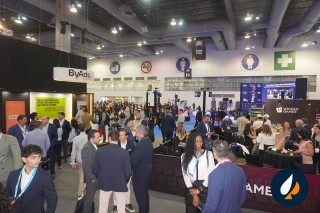

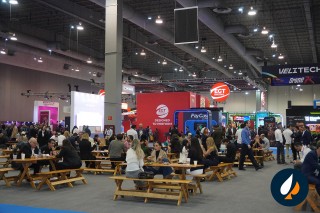
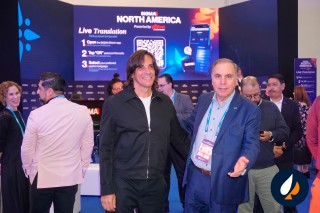


SiGMA North America 2026
01 de September 2026
LatAm Regulators Discussed Illegal Gambling and Innovation at SiGMA North America
(Mexico City, SoloAzar Exclusive).- The panel "The Red Pen Forum: Regulators Respond to the Industry," held during SiGMA North America 2026, brought together representatives from Uruguay, Argentina, Puerto Rico, and Honduras to analyze regulatory challenges, digital transformation, illegal gambling, and the need to adapt lotteries for new generations. The conference was moderated by Rodrigo Cigliutti, Executive Director of CIBELAE (Ibero-American Corporation of State Lotteries and Betting), and featured the participation of Marcelo Visconti, National Director of Lotteries and Quinielas of Uruguay; Carlos Moyano, President of IAFAS Entre Ríos, Argentina; Heidi Hernández Olivo, Deputy Secretary of the Puerto Rico Lottery; and Lissa Mencía, General Director of Lottery Operations and Games at Loto Honduras.
Monday 28 Sep 2026 / 12:00
SiGMA North America Addressed Crisis Management in iGaming
(Mexico, SoloAzar Exclusive).- During SiGMA North America 2026, Rosa Ochoa, founder of the Blue Global Gaming platform and strategic advisor for gaming operators; Iliana María Pineda Echeverri, Chief Legal & Compliance Officer at Wplay.co; Iraid Rosales, Country Manager Mexico at Amusnet; and Elizabeth Maya Cano, Executive President of CORNAZAR, analyzed the key factors in managing crisis situations within the iGaming industry, with a special focus on transparency, communication, technology, and preparation.
Friday 25 Sep 2026 / 12:00
Affiliates and Acquisition: Keys to Regulated Markets in North America
(Mexico City, SoloAzar Exclusive).- During SiGMA North America 2026, Cristopher Guzmán Reyes, Head of Affiliates at Logrand Entertainment Group; Guga Júnior, influencer and slots expert at Scalar Partners; Andrés Gómez, Head of Latin America Go-to-Market Strategy at Admattic; Yambot Aguilera, Gaming and Finance Sales Director at Google; and Paula Gabriel Jiménez, Advertising Client Growth Director for Microsoft at Aleph, analyzed the state and provincial affiliate ecosystem in North America, as well as the acquisition challenges in regulated markets.
Thursday 24 Sep 2026 / 12:00
SUSCRIBIRSE
Para suscribirse a nuestro newsletter, complete sus datos
Reciba todo el contenido más reciente en su correo electrónico varias veces al mes.