Southeast Asia moves to cool lucrative online gambling industries amid China clampdown
Wednesday 21 de August 2019 / 10:13
⏱ 2 min read
(Philippines).- Southeast Asian countries are moving against their lucrative online gambling industries as Beijing clamps down on a practice that has ballooned due to demand from its own citizens.

Weeks after China lashed out at the Philippines for encouraging offshore gambling – which it said targets Chinese customers and causes the illegal outflow of hundreds of millions of yuan – the Philippine gaming regulator said on Monday it would stop accepting applications for new online gaming operations at least until the end of the year, to review concerns about the burgeoning sector.
Separately, Chinese state news agency Xinhua said on Sunday that Cambodia’s Prime Minister Hun Sen has ordered a stop to new licences for online gambling operations.
Existing licenses also will not be renewed upon expiry, said the report. The about-turn in gambling policy in these Southeast Asian nations comes as China steps up efforts against what its minister for public security called “the cross-border online gambling problem”.
Online and phone betting in Southeast Asian countries by Chinese punters many miles away has exploded in the last few years, and there are signs that the offshore services are penetrating more deeply into China’s population than expected.
Some online gaming websites offer punters wagers as low as 10 yuan (US$1.45) and have round-the-clock live streams. That makes them easily accessible by lower-income Chinese in rural areas, who do not have the means to go to Macau, the only place in China where casinos are legal, to scratch the gambling itch.
The burgeoning industry has also transformed Southeast Asian countries and the abrupt pullback is likely to hurt their economies.
In the Philippines alone, more than 50 offshore gambling companies had received permits to operate, over a hundred thousand Chinese workers had surged into Manila to staff the industry, and property prices near gaming sites were booming.
Revenue from online gaming operations is projected to reach up to 10 billion pesos (US$191 million) next year, according to the Philippine gaming regulator.
The Xinhua report said Cambodia ordered authorities to stamp out illegal online gambling businesses to uphold social security and public order.
The Philippines’ gaming agency chair, Andrea Domingo, while announcing the pause in new licenses, emphasised that the practice is legal in the country, but that gaming revenue growth may be flat to slow this year due to China’s campaign.
Categoría:Online Games
Tags: Sin tags
País: Philippines




Event




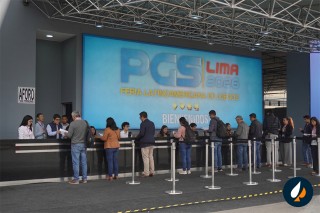





PERU GAMING SHOW – PGS 2026
17 de June 2026
ProntoPaga Consolidates Its Position at Peru Gaming Show 2026
(Lima, SoloAzar Exclusive).- Juan Carlos Loza, Head of Sales Latam at ProntoPaga, spoke exclusively after the company's participation in Peru Gaming Show 2026, highlighting the agreements reached, the interest in their payment solutions, and the expansion plans that will drive their growth across Latin America.
Monday 03 Aug 2026 / 12:00
Enhancing Responsible Gaming Through Effective Training at PGS 2026
(Lima, SoloAzar Exclusive) – Training, prevention, and technology took center stage at the "Value of Responsible Gaming in Gambling Operations" conference during the 2026 Perú Gaming Show (PGS). Presented by Fernando Calderón Castro, President of the National Gaming Society (SONAJA), the session brought industry leaders together to tackle current challenges and explore strategies for safer, more transparent, and sustainable operations.
Wednesday 22 Jul 2026 / 12:00
LSports at the Peru Gaming Show: Building Presence, Opening Doors
(Lima, SoloAzar Exclusive).- The Peru Gaming Show was never just about the booth. For LSports, it was about showing up in a market where showing up still matters — and leaving with more than a contact list. Federico Brancato, Sales Manager for the LATAM Region, came to Lima with a clear sense of what operators in this part of Latin America need most right now. What he found confirmed it.
Friday 17 Jul 2026 / 12:00
SUSCRIBIRSE
Para suscribirse a nuestro newsletter, complete sus datos
Reciba todo el contenido más reciente en su correo electrónico varias veces al mes.