European Parliament Approves New Crypto Regulations to Combat Money Laundering
Monday 10 de June 2024 / 12:00
⏱ 3 min read
(France).-The European Parliament has approved new regulations for cryptocurrency agencies, requiring them to conduct due diligence to combat money laundering.
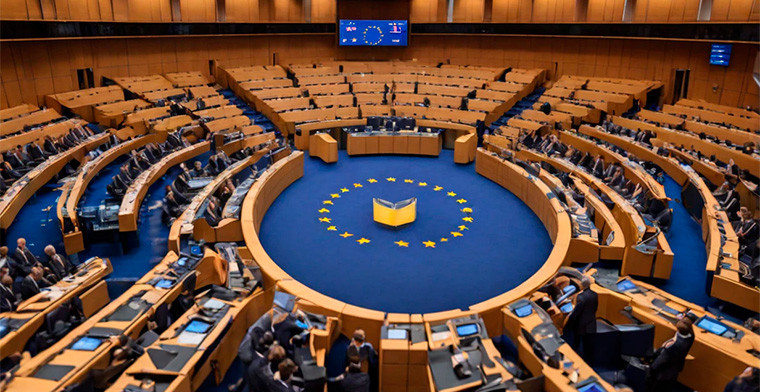
These new rules apply to all crypto-asset service providers (CASPs) under the new Markets in Crypto-Assets (MiCA) law
Cryptocurrency exchanges in the European Union must adhere to the new rules, which contain due diligence standards. Services like exchanging crypto for fiat and providing custody wallets will now take a new approach due to rapid technological developments and advancements in FATF (Financial Action Task Force) standards. Interestingly, the new rules also affect gambling service providers. All operators in the region, including casinos accepting UK players not connected to GamStop, which often use crypto, must now enforce new due diligence measures to be on the right side of the law.
An image posted on X (formerly Twitter) by Patrick Hansen, Circle’s EU Strategy and Policy Director, contains a screenshot with details of the new law. In a thread, Hansen explains that CASPs will not be allowed to offer services to anonymous accounts, a rule already enforced by existing anti-money laundering (AML) laws. MiCA also prohibits cryptocurrencies that are inherently anonymous.
The new rules for due diligence will be enforced under a new agency called the Anti-Money Laundering and Countering the Financing of Terrorism Authority (AMLA), headquartered in Frankfurt, Germany. Although the law has not yet been formally adopted, the AMLA will be fully responsible for enforcement and supervision.
The new rules governing the use of digital assets in the European Union are essential to sanitize the sector and provide clarity to the industry. Interestingly, these laws are generally becoming bullish for the crypto sector and attracting traditional institutions. In a recent interview, the Deputy Chief Executive Officer of the crypto exchange and trading app Bitpanda highlighted the gradual entrance of traditional financial institutions into the crypto industry. According to Lukas Enzersdorfer-Konrad, the upcoming MiCA regulation provides a lot of clarity for these institutions interested in crypto. Enzersdorfer-Konrad also noted that the companies want to partner with crypto service providers that already have the required technical knowledge.
The Bitpanda CEO noted that Raiffeisen, the largest community banking group in Austria, announced retail crypto services for customers last year. Collaborating with Bitpanda, Raiffeisen will allow customers to enjoy services tied to commodities, exchange-traded funds (ETFs), stocks, and precious metals.
Bitpanda has also partnered with Landesbank Baden-Württemberg (LBBW), Germany’s largest federal bank, to create crypto custody offerings for institutional clients sometime in the second half of 2024, due to increasing demand from customers. According to the Bitpanda CEO, banks of all sizes across Europe are now looking into crypto use cases and trying to partner with established service providers.
The newfound interest in crypto has spread to schools. Binance Academy, the crypto learning arm of major crypto exchange Binance, recently announced a partnership with educational institutions in Europe. The aim is to introduce accredited university courses into these schools and teach students about blockchain technology, digital assets, and Web3 in general.
Institutions already partnered with Binance Academy include the European Business Institute (EBI) in Luxembourg, ESCP Business School, and Prague University of Economics and Business (VŠE). The course will range from the basics of cryptocurrencies, such as Bitcoin (BTC) and Ether (ETH), to advanced topics like blockchain application in finance, healthcare, supply chain, and other industries. The teachings are geared at exposing students to the diverse world of cryptocurrencies and blockchain technology and possibly expanding adoption to more niche sectors like online gambling, voting, and blockchain gaming.
Categoría:Others
Tags: Sin tags
País: France
Región: EMEA




Event
iGaming tech leader Cristina Turbatu commends ICE Barcelona's vision for Hall 7
Tuesday 20 Oct 2026 / 12:00
CGA Showcases Canada’s Competitive Edge at ICE Barcelona
Tuesday 13 Oct 2026 / 12:00
ICE Barcelona Hosts WorldGaming-Backed Nineball Championship in 2027
Tuesday 06 Oct 2026 / 12:00
SUSCRIBIRSE
Para suscribirse a nuestro newsletter, complete sus datos
Reciba todo el contenido más reciente en su correo electrónico varias veces al mes.