UNLV Report Finds Gaming Industry Cautious About AI Adoption but Continuing to Advance
Thursday 16 de April 2026 / 12:00
⏱ 4 min read
(Las Vegas).- As companies accelerate their adoption of artificial intelligence, its use within the tightly regulated gaming industry is only beginning to take shape. A new UNLV study, “The State of AI in Gaming 2026,” released Thursday, sets benchmarks for this emerging trend.

“The State of AI in Gaming 2026” was released Thursday. It provides a snapshot of current levels of adoption and points to gaps that need to be addressed. The 113-page report was released by the UNLV International Gaming Institute (IGI) in collaboration with KPMG LLP, a U.S. audit, tax and advisory firm. The report focuses on the responsible use of AI.
“Society is at an inflection point with AI, and until now there has been no rigorous, independent baseline for understanding where the gambling industry stands,” Kasra Ghaharian, IGI’s director of research and editor-in-chief of the report, said.
“The State of AI in Gaming is designed to fill that gap, serving as an essential resource for operators, regulators, researchers, and every stakeholder navigating the adoption, return on investment, and responsible integration of AI within the gambling industry,” Ghaharian said.
Industry’s worries about AI
Recent cyberattacks on Las Vegas casino companies could be shaping the industry’s view of AI. A survey asked companies, “What keeps you up at night?”
“Cybersecurity concerns may be front of mind due to recent high-profile incidents across the industry, including cyberattacks affecting MGM Resorts, Caesars Entertainment, Boyd Gaming, and Wynn Resorts,” the report said. The companies participating in the survey of AI use represented a global industry, with 38% having a presence in North America.
Companies are more concerned with vulnerability in AI systems than they are about effects on players
Key takeaways
Key takeaways from the report include:
- Ambitions/strategy: Most gambling companies have strategic ambitions for AI, but infrastructure and expertise need to catch up to scale it.
- Governance gap: Just one in five companies have dedicated AI governance roles, only a few plan to hire for these roles, and most organizations have no established governance practices or are in early stages of development.
- Generative AI, not agentic: Over 80% of companies use Generative AI, yet adoption of AI agents lags far behind broader enterprise trends. The sensitivity of gambling operations warrants a measured approach.
- Misaligned regulation: Regulators and operators disagree on where AI is being used, regulators lack confidence in their oversight capabilities, and they do not believe the industry is capable of self-regulating AI.
- Innovation growing: Academic research, patent filings, product development, and conference discourse are all growing — signaling building momentum even as adoption within companies remains uneven.
The report found that cost reduction is the primary driver of AI adoption, but companies are finding it hard to achieve ROI. Many companies aren’t even prepared to evaluate the savings. “The majority of respondents reported minimal or no cost savings attributable to AI,” the report said.
Online gambling operations are ahead of their counterparts in adopting AI.
The governance gap and the disconnect between regulators and companies were identified as problems.
Limited growth of positions specifically for overseeing AI use will make development of responsible strategies difficult.
“Many companies are moving faster on AI adoption than on the controls needed to manage it,” according to Rick Arpin, the report’s executive editor and KPMG U.S. Gaming Lead. “Those that address this now will be better positioned to realize value and avoid unnecessary risk.”
The report also described an attitude among regulators, who are treating AI as just another technology to monitor. Expertise is lacking among regulators.
Simo Dragicevic, executive editor and AiR Hub co-founder, noted, “The regulator-industry disconnect we uncovered is one of the most consequential findings in this report. Regulators believe they lack the capacity to properly oversee how AI is being used by licensees, and the data confirms they often have an incomplete picture. Meanwhile, Responsible AI practices across the industry are nascent at best. As AI becomes more deeply embedded in operations, this oversight gap will only become more urgent to address.”
Harms connected to AI use
A section of the report dedicated to responsible AI looks at harms attributed in whole or in part to artificial intelligence.
“Responsible AI is about using AI in a way that is lawful, risk-aware, transparent, and accountable across its lifecycle, with particular attention to harm prevention and human oversight. Responsible AI principles are increasingly building out from good practice to regulatory requirements,” a preface to the section says.
A table within the section lists 31 incidents worldwide connected to AI in the gambling industry. Within that list, some occurred in the U.S., but most were in other countries.
Report authors acknowledged that proof of harm and fault may remain uncertain in the incidents they list, and they are continuing to develop methods to report on AI harms.
The cyberattacks on MGM, Caesars and other Las Vegas casino operators are not on that list. But it does include a Reno incident when a mistake in facial recognition software resulted in an arrest.
And a lawsuit against hotel-casino operators using a shared pricing algorithm is also listed. That lawsuit involved price-fixing accusations surrounding the platform known as Rainmaker. Las Vegas hotels were using the technology, which subverted supply and demand to fix prices for hotel rooms.
AI use to study gambling topics
The report also includes some interesting information on gambling topics, and the use of AI to analyze each of them. The number of AI publications on each topic is the subject of a graphic in the study.
Early AI was used to study poker most often, but in 2017, sports betting took over as the topic. Within sports betting, soccer was the most common topic. Only in 2023 did problem gambling become a more common topic.
Examples of publication titles about AI and soccer included, “A Systematic Review of Machine Learning in Soccer Betting: Techniques, Challenges, and Future Directions,” and “Real-Time Football Match Prediction Platform.”
One of the titles cited on problem gaming was “Online Problem Gambling: A Comparison of Casino Players and Sports Bettors via Predictive Modeling Using Behavioral Tracking Data.”
Categoría:Reports
Tags: Sin tags
País: United States
Región: North America




Event









SiGMA North America 2026
01 de September 2026
PopOK Gaming's Yo Dragon Wins Best Slot Game at SiGMA America 2026
(Douglas).- PopOK Gaming wins Best Slot Game 2026 for "Yo Dragon" at SiGMA North America Awards.
Tuesday 08 Sep 2026 / 12:00
Amusnet Reinforces LATAM Strategy with Best Live Casino Game Award
(Sofia).- Amusnet took home the prestigious Best Live Casino Game Provider 2026 award at the SiGMA North America Awards, cementing its technological excellence and growing footprint in the Latin American iGaming market. During the event, the company reaffirmed its commitment to delivering highly localized solutions and building long-term, sustainable partnerships with operators across the region.
Monday 07 Sep 2026 / 12:00
SiGMA North America 2026 Concludes with a Spotlight on AI and iGaming
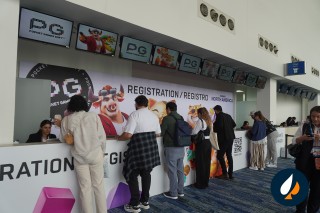
(Mexico City, SoloAzar Exclusive).- SiGMA North America 2026 concluded yesterday in Mexico City after bringing together nearly 2,250 delegates at Centro Banamex. The summit, held from September 1st to 3rd, focused on artificial intelligence (AI), innovation, collaboration between the public and private sectors, and the adaptation of global strategies to the particularities of local markets.
Friday 04 Sep 2026 / 12:00
SUSCRIBIRSE
Para suscribirse a nuestro newsletter, complete sus datos
Reciba todo el contenido más reciente en su correo electrónico varias veces al mes.