Sports Betting in Ecuador: A Million-Dollar Industry Growing Without Rules
Wednesday 15 de April 2026 / 12:00
⏱ 3 min read
(Quito).- Sports betting has evolved from a niche activity into a booming multimillion-dollar industry. Driven by digitalization, widespread smartphone access, and a strong football culture, the sector now involves millions of dollars and around 1.5 million active accounts, expanding faster than regulation can keep up.
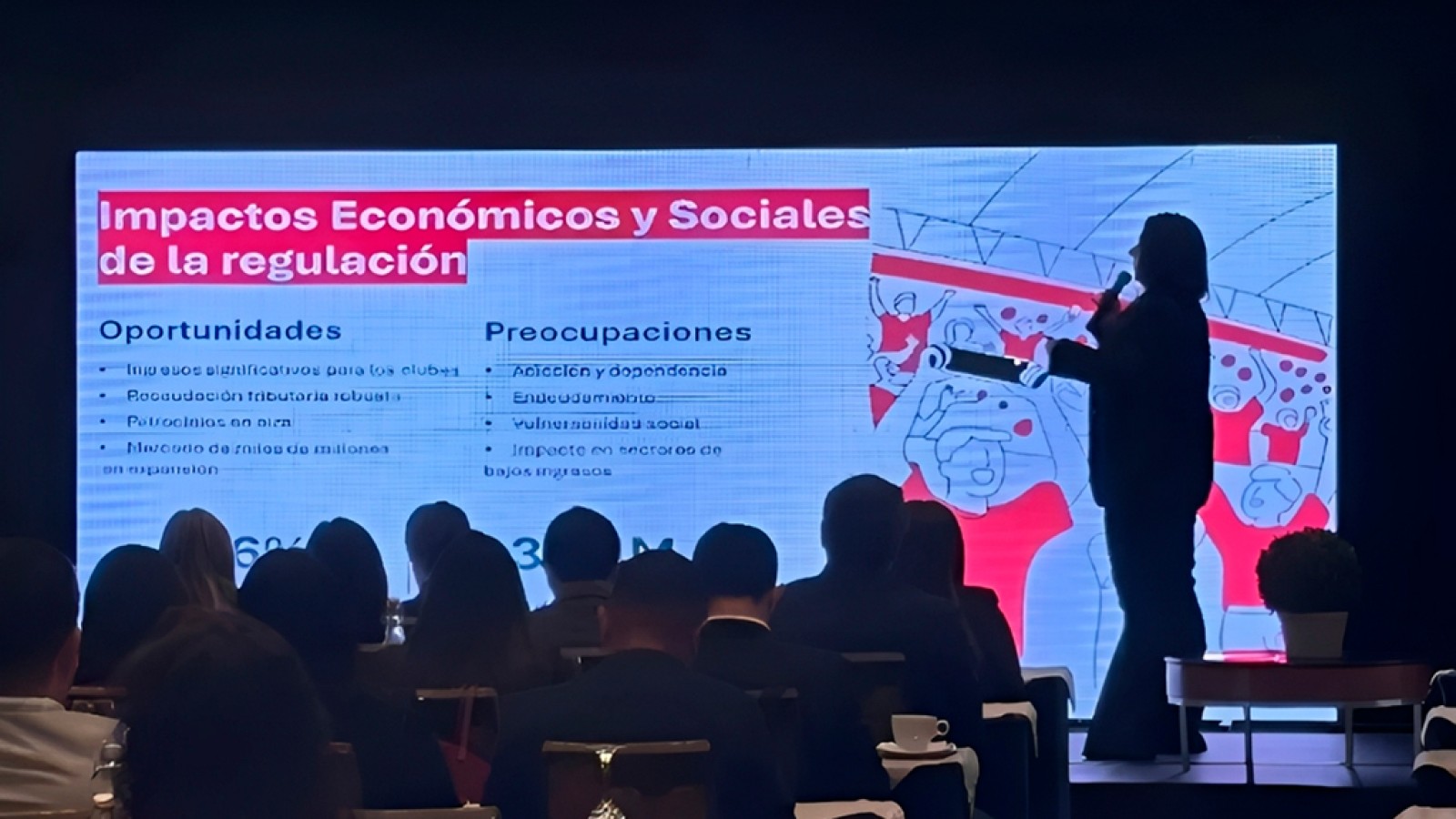
Sports Betting in Ecuador: Millions at Stake, Beyond Regulation
In Ecuador, sports predictions—driven by digitalization, widespread smartphone access, and a strong football culture—are no longer a niche but a booming industry moving millions and expanding faster than regulation can keep up.
The numbers speak for themselves. It is estimated that there are around 1.5 million active accounts on sports betting platforms, with millions of Ecuadorians participating regularly. Annual turnover already exceeds $70 million, consolidating a market with a direct impact on the country’s digital economy.
Yet this growth unfolds in uncertain territory: there is still no comprehensive regulatory framework to organize, oversee, and strengthen the activity.
Coastal Cities Lead the Betting Boom
The rise of sports betting is not uniform. It has a clear map. Coastal cities such as Guayaquil, Manta, and Machala concentrate much of the activity, driven by high connectivity, intensive mobile use, and a deep cultural bond with football.
But the phenomenon has crossed regional borders. Quito and Cuenca show that expansion is also advancing in the Sierra, confirming this is not a localized trend but a structural shift in Ecuadorians’ digital consumption habits.
Millions in Play, Off the Radar
The issue is not growth itself, but the conditions under which it occurs. A significant portion of the market operates without standardized rules, robust user protections, or strong state oversight.
The impact is twofold. On one hand, consumers are exposed to risks from unregulated platforms. On the other, the state loses potential tax revenues estimated at $22 million annually. In practice, millions of dollars circulate in a system with partial control and limited traceability.
International experience is clear: markets that grow without regulation tend to generate deep distortions.
“When there is no regulation, there is no control. And when there is no control, the entire ecosystem weakens: users are exposed, the state loses revenue, and sports face integrity risks,” warns Mariana Chamelette, a sports integrity specialist.
This is not an abstract warning but a reflection of countries where unregulated expansion opened the door to fraud, match-fixing, and loss of trust.
The impact goes beyond economics. Sports, especially football, are also part of the equation. Former Ecuadorian national team player Carlos Tenorio summed it up during a panel discussion: “We are facing a reality that already exists and moves millions. Not regulating doesn’t stop it; it only pushes it into informality.”
Similarly, Isaac Álvarez, president of Liga Deportiva Universitaria, stressed that sports integrity is not protected only through sanctions, but through systems of control, traceability, and education.
At this point, the debate is no longer about whether to allow the activity, but how to regulate it effectively.
“Countries that have moved forward have managed to strengthen the market and make it sustainable,” explains Cristina Romero, a regulation specialist. Successful models share key elements: operator licensing, balanced taxation, openness to foreign investment, and strong anti-fraud systems.
The results are consistent: reduced illegality, increased tax collection, and greater user confidence.
Ecuador now faces a turning point. Allowing this industry to continue growing without regulation means accepting higher levels of informality, weaker oversight, and sustained loss of fiscal revenue.
Moving toward a regulatory framework, on the other hand, opens the door to formalizing an existing market, effectively protecting consumers, and ensuring transparency in the sports ecosystem.
Categoría:Sportsbook
Tags: Sin tags
País: Ecuador
Región: South America




Event









SiGMA North America 2026
01 de September 2026
Beyond the Games: EGT Digital’s Vision for Sustainable Growth in the Americas
(Mexico City, SoloAzar Exclusive).- At SiGMA North America, EGT Digital proved it is far more than just a premium content provider. Andres Troelsen, Regional Sales Director LATAM, discusses the industry's shift towards comprehensive tech ecosystems, the importance of tailoring strategies for the diverse Latin American market, and the company's latest innovations. Discover what’s next for EGT Digital’s expansion across the Americas.
Thursday 17 Sep 2026 / 12:00
SiGMA North America celebrates Football, LATAM growth and brings the iGaming community together in Mexico City
(Mexico City).- For its first edition, SiGMA North America marked a successful debut in Mexico City, bringing together the international and regional iGaming community while highlighting the continued growth and strategic importance of the Latin American market.
Thursday 17 Sep 2026 / 12:00
Eman Pulis Assesses Success of SiGMA North America in Mexico
(Mexico City, SoloAzar Exclusive).- SiGMA Group founder Eman Pulis assesses the success of SiGMA North America in Mexico following its September 1–3 edition at Centro Banamex, where around 2,250 delegates gathered to connect the North and Latin American gaming markets and explore opportunities across the region.
Wednesday 16 Sep 2026 / 12:00
SUSCRIBIRSE
Para suscribirse a nuestro newsletter, complete sus datos
Reciba todo el contenido más reciente en su correo electrónico varias veces al mes.