1. Nature Identity: The predictive market is, in essence, a bet
From a strictly legal and financial perspective, predictive markets share the same structure as traditional betting or contracts of chance.
- There is an initial financial outlay (the purchase of a share or contract).
- There is a future and uncertain event that determines the outcome.
- There is a profit or loss based solely on the success or failure of the prediction, where the house (or the platform's protocol) acts as an intermediary for the flow of capital.
Attempting to disguise this activity exclusively under the cloak of "financial hedging instruments" or "tools of collective wisdom" is a conceptual error. Like a sports bet, the user risks capital on an outcome that they cannot control. Therefore, by analogy and substance, it should fall under the jurisdiction of the laws of games and sweepstakes.
2. Consumer Protection and Mitigation of Problem Gambling
The lack of clear regulation on gaming and betting leaves users of predictive markets unprotected. Unlike regulated financial markets (which require risk profiles, suitability, and loss alerts) or licensed casinos (which implement responsible gambling policies), many of these platforms operate in loopholes or through decentralized finance (DeFi).
- Risk of addiction: The immediacy, the gamification of the interface and the possibility of betting in real time on geopolitical or pop culture events generate the same patterns of addiction (gambling) as traditional betting.
- Lack of guarantees: Without regulation of games and sweepstakes, there are no mandatory audits on user funds, and no clear dispute resolution mechanisms when "market resolution" is ambiguous or manipulated.
3. Preservation of Public Integrity and Conflict of Interest
Unlike a football match, where altering the result (match-fixing) is a monitored sports and criminal offence, predictive markets operate on real-life events of very high impact, such as political elections or court rulings. This opens the door to perverse incentives:
- Manipulation of reality: Actors with great economic power can inject capital into a predictive market to distort the public perception of a candidate or a public policy (creating a false narrative of consensus or imminent victory).
- Insider Trading: Public officials, judges or corporate employees who know the outcome of an event before it is public can bet and profit with total impunity if the activity is not regulated or supervised under betting integrity standards.
4. National Security, Oversight and Prevention of Money Laundering (AML)
By frequently operating with cryptocurrencies and under pseudonymous schemes, unregulated predictive markets become ideal vehicles for the laundering of illicit capital or the financing of criminal activities. Strict regulation under the framework of games and sweepstakes would force these platforms to:
- Implement strict Know Your Customer (KYC) and Anti-Money Laundering (AML) policies.
- Have tax and legal residence in the country where they operate, allowing the State to collect the corresponding taxes for gambling and betting products, resources that can be allocated to public health and the prevention of addictions.
Conclusion
The regulation of predictive markets within the legal framework of games and sweepstakes does not seek to stifle technological innovation or prohibit free citizen participation. On the contrary, it seeks to provide legal certainty to an activity that today operates on the border of legality.
Ignoring their growth or pretending that they are simply "opinion forums with economic incentives" is regulatory negligence. To protect the mental health of citizens, ensure the transparency of democratic processes, prevent the manipulation of information, and ensure fair tax collection, the State must intervene. Predictive markets risk money on uncertainty; By definition, they are bets, and as such, they must be regulated in a strict, fair and transparent manner.
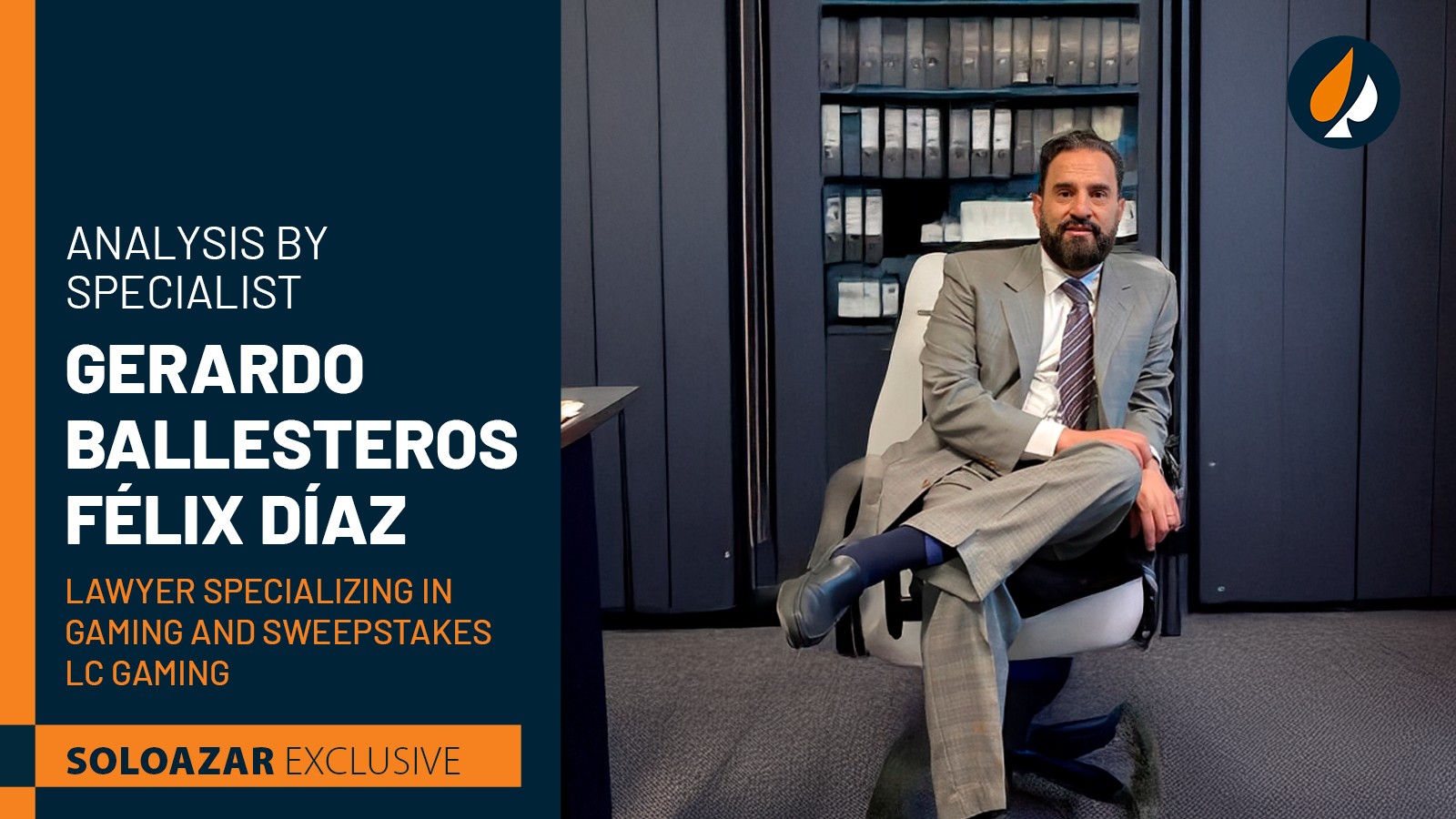
*Gerardo Ballesteros Félix Díaz, is a Lawyer Specializing in Games and Sweepstakes and senior partner of the law firm LC Gaming.