Online Gambling: Institutions, Regulation, and Partnerships as Key Factors in Ukraine’s Financial Stability
Friday 05 de December 2025 / 12:00
⏱ 3 min read
(Kyev).- Ukraine’s gambling industry reflects the traits of a young market — full of promise yet hindered by uneven institutional effectiveness. Government agencies frequently postpone decisions, creating uncertainty: licensing processes, regulations, sanctions, and fines often appear more like ad‑hoc responses than coherent policy. For investors, this unpredictability signals risk, as rules may shift abruptly without clear rationale or transitional measures.
Against this backdrop, the figure of ₴14.5 billion in revenues from legal operators in 2025 looks like a success — but a success “on thin ice.” Without high-quality regulation, strong institutions, and normal cooperation between the state and the white market, these revenues remain fragile and unstable.
A Young Market and “Uneven” Institutions
The Ukrainian gambling market is a typical young market with high expectations and uneven institutional performance.
State agencies delay decisions and create unpredictability: licensing procedures, by-laws, sanctions, and fines often look less like systematic policy and more like fragmented reactions. For investors, this signals risk: tomorrow the rules may change without a transition period or clear logic.
At the same time, the state is pushing limits and other restrictions that European practice has shown to have the opposite effect: overly rigid frameworks do not reduce addiction but instead encourage players to move to offshore operators. There, there are no limits, no responsible-gaming tools, and no mechanisms to help problem gamblers.
For years, the Verkhovna Rada has failed to advance tax-law harmonization. As a result, the legal market operates under triple pressure: licensing fees, a GGR tax, and a tax on any payout to the player — even when there is no net win. This creates a paradox: the more honestly an operator works and the harder it tries to bring a player out of the “grey zone,” the more expensive it becomes.
Add to this the practice of baseless searches, account freezes, and criminal proceedings against those who formally operate within the legal field. Under such conditions, legal businesses receive a clear message: you pay taxes and invest in compliance, but the guarantees of protection are minimal.
SOMS as a Tool, Not a “Magic Wand”
The State Online Monitoring System (SOMS) was conceived as a key element of digital oversight: a single “window” through which the state sees real turnover, bets, payouts, suspicious transactions, and risky player behavior. This is absolutely the right direction — without online monitoring, talking about modern gambling regulation is simply unserious.
The problem lies elsewhere: SOMS simply cannot see those who are entirely outside Ukraine’s legal framework. No matter how many alerts come in or how many sites are blocked, offshore operators simply switch to new mirrors, payment gateways, and “drop” schemes.
Thus, if the institutional logic does not change, SOMS risks becoming yet another tool for pressuring white-market operators. Legal operators become maximally transparent, fully “under the microscope,” while competing with those who remain invisible to the system and bear no compliance costs.
As a result, the risks for the budget and for players do not decrease, while the legal segment gradually loses motivation to invest in Ukraine.
What a “Mature” Regulatory Model Gives Ukraine
Leading European jurisdictions have long shown that when the state offers a transparent, competitive, and digital regulatory model, online gambling stops being a “grey zone” and becomes a stable source of budget revenue. Players gain protection, the market gains investment, and the state gains oversight tools.
For Ukraine, this is not just another reform. It is an element of financial security in a country that is fighting a war, rebuilding, and simultaneously striving to earn the trust of international partners and investors.
If we want to preserve and increase the ₴14.5 billion from the legal segment — rather than watch this money flow to offshore islands and crypto wallets — we need not new bans, but a mature regulatory architecture. One with strong institutions, digital monitoring, a fair tax model, and partnership with the white market.
Categoría:Analysis
Tags: Sin tags
País: Ukraine
Región: EMEA




Event


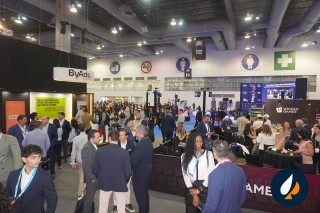



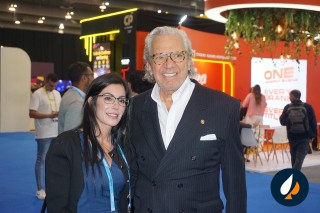
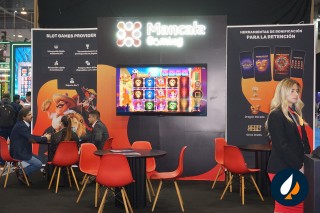
SiGMA North America 2026
01 de September 2026
LatAm Regulators Discussed Illegal Gambling and Innovation at SiGMA North America
(Mexico City, SoloAzar Exclusive).- The panel "The Red Pen Forum: Regulators Respond to the Industry," held during SiGMA North America 2026, brought together representatives from Uruguay, Argentina, Puerto Rico, and Honduras to analyze regulatory challenges, digital transformation, illegal gambling, and the need to adapt lotteries for new generations. The conference was moderated by Rodrigo Cigliutti, Executive Director of CIBELAE (Ibero-American Corporation of State Lotteries and Betting), and featured the participation of Marcelo Visconti, National Director of Lotteries and Quinielas of Uruguay; Carlos Moyano, President of IAFAS Entre Ríos, Argentina; Heidi Hernández Olivo, Deputy Secretary of the Puerto Rico Lottery; and Lissa Mencía, General Director of Lottery Operations and Games at Loto Honduras.
Monday 28 Sep 2026 / 12:00
SiGMA North America Addressed Crisis Management in iGaming
(Mexico, SoloAzar Exclusive).- During SiGMA North America 2026, Rosa Ochoa, founder of the Blue Global Gaming platform and strategic advisor for gaming operators; Iliana María Pineda Echeverri, Chief Legal & Compliance Officer at Wplay.co; Iraid Rosales, Country Manager Mexico at Amusnet; and Elizabeth Maya Cano, Executive President of CORNAZAR, analyzed the key factors in managing crisis situations within the iGaming industry, with a special focus on transparency, communication, technology, and preparation.
Friday 25 Sep 2026 / 12:00
Affiliates and Acquisition: Keys to Regulated Markets in North America
(Mexico City, SoloAzar Exclusive).- During SiGMA North America 2026, Cristopher Guzmán Reyes, Head of Affiliates at Logrand Entertainment Group; Guga Júnior, influencer and slots expert at Scalar Partners; Andrés Gómez, Head of Latin America Go-to-Market Strategy at Admattic; Yambot Aguilera, Gaming and Finance Sales Director at Google; and Paula Gabriel Jiménez, Advertising Client Growth Director for Microsoft at Aleph, analyzed the state and provincial affiliate ecosystem in North America, as well as the acquisition challenges in regulated markets.
Thursday 24 Sep 2026 / 12:00
SUSCRIBIRSE
Para suscribirse a nuestro newsletter, complete sus datos
Reciba todo el contenido más reciente en su correo electrónico varias veces al mes.