Playing by New Rules: What iGaming Operators Need to Know in 2026
Monday 19 de January 2026 / 12:00
⏱ 7 min read
(Malta).- In 2026, the iGaming industry is facing a familiar paradox: rapid growth against a backdrop of ever-tightening regulation. Every country’s making new laws: some making it easier to get in, others making it harder. For operators, affiliates, and suppliers, the real challenge isn’t just breaking into new markets. It’s figuring out how to actually stay profitable when regulation moves this fast.
At EvenBet Gaming, our legal team — Dmitry Smirnov, Lawyer, and Darya Korshunova, Junior Legal Counsel — has made it their mission to track these shifts in real time. They map how new regulations move margins, twist competitive dynamics, and decide which markets are sustainable for the long haul.
This article is a way to put all that into plain view. We break down the latest regulatory updates worldwide, highlight the practical implications for operators, and offer cross-market comparisons that reveal where opportunity lies and where risks are set to multiply.
Brazil: The Market Everyone Wants, But Few Can Survive
Brazil came into 2024 on a high after legalizing online betting. But operators quickly learned the fine print: in Brazil, “regulated” doesn’t mean “friendly.” The Ministry of Finance has stacked taxes and compliance hurdles into a cocktail that’s squeezing margins and reshaping the market faster than anyone expected.
The headline figure is the 18% GGR tax — survivable on paper, but in practice it drains promotional budgets. Add the 15% withholding tax on player winnings, plus Brazil’s dual VAT (municipal and federal), and suddenly every decimal point matters. The much-discussed R$30 million licensing fee is the final gatekeeper, which pushes serious operators to commit to the long game while forcing weaker players to rethink survival.
Why Mid-Sized Brands Are in Trouble
That giant R$30 license fee is basically a wall. Smaller operators without deep pockets are either quitting or teaming up with bigger companies. By 2026, expect a lot of mid-sized brands to vanish or resurface as white-label skins under bigger players.
Compliance as a Selling Point
With the new rules, licensed operators are starting to benefit. Regulators are cracking down harder on the grey market, and big players are flipping compliance into a trust badge. Even if ads cost more, they’re selling “safe and local”, and players seem to like it.
Market Outlook
Brazil is still the crown jewel of LatAm iGaming, but only the bold can play here. Taxes, fees, and compliance are forcing the market into the hands of fewer, bigger, tougher operators. Winners will master financial discipline and local integration.
USA: Offline Giants vs. Digital Upstarts
If Brazil’s problem is taxes, America’s problem is politics. On one hand, land-based casinos protect their turf. On the other hand, digital-first platforms are hungry for expansion. The latest battleground: Black Hawk, Colorado, where local officials warned that legalizing iGaming could devastate the town’s economy — fewer tourists, fewer jobs, a collapsing tax base. The picture they paint is glum indeed: 2,050 jobs lost, $129 million in lost revenue, $520 million cut to local economic activity, and $830 million in expenses to treat problematic gamblers. In their view, every hand dealt online is one less foot through the casino door. So much so that Black Hawk became the first municipality that joined the National Association Against iGaming (NAAiG). And this isn’t just small-town noise, it’s a strategic play in the national legalization debate. Offline casinos are calling iGaming a “job killer” to slow down new bills across the U.S.
State-by-State Momentum Shifts
Black Hawk’s resistance is already echoing beyond Colorado. In Illinois and Indiana, lawmakers—under the sway of casino lobbies — are using the same talking points. Even in Colorado, with a booming sports betting scene, online gambling legislation is stalling thanks to traditional operators leaning hard on lawmakers.
Reality Check
The fear narrative, however, doesn’t always match reality. In New Jersey and Pennsylvania, casinos didn’t lose money when iGaming came in. Retail levelled off, but online opened new streams, especially from younger players who never set foot in a casino. The evidence suggests complementary growth, not destructive overlap.
Market Outlook
The U.S. iGaming map is bending under pressure from entrenched offline giants. The fight is no longer about whether iGaming works; the data proves it does. The debate isn’t about whether iGaming works (the numbers prove it). It’s about who lawmakers listen to: local casinos or online platforms waving around giant tax revenue promises.
Malta’s New Rules
Malta used to be the place for iGaming licenses. Now, the Malta Gaming Authority (MGA) has introduced a risk-based regulatory strategy and said “no more just ticking boxes.” Translation: more focus on who’s risky, less wasted time on who isn’t. The aim? Keep growth alive while proving the island can still run a tight ship. And it’s not just for show: bigger spotlight on new, volatile, or crypto-facing brands, lighter touch on veterans with spotless records. Basically: prove you’re not the weak link.
Market Perception
Confidence is at the heart of this strategy — Malta wants trust back. Its reputation as an iGaming hub got bruised with money laundering scandals, hungry rivals like Gibraltar and Estonia nipping at its heels. This new setup is their way of saying: “we’re still the main licensing hub, we’ve got our act together.”
Market Outlook
Risk-based oversight demands better tools — real-time monitoring, data crunching, proper risk management engines. If you treat compliance like a chore, regulators will catch you. If you make it part of your strategy, it could actually help you.
New Zealand: Player Protection and Revenue
After years of operating in regulatory limbo, New Zealand is finally ditching the grey zone. A new bill lays down the law: 15 licenses, auctioned off, locked into tight oversight, and backed by consumer protections straight out of Europe’s mature playbook. Basically, no more Wild West, they want structure.
The plan is pretty clear: limit licenses, so the market doesn’t get overcrowded, strict harm-reduction rules, and a crackdown on rogue offshore sites. Regulators get accountability, operators get one shot at locking down a golden ticket before the gates slam shut. Enforcement will lean on international cooperation, with penalties for unlicensed operators, banks and ISPs forced to cut ties. It’s a model that borrows heavily from Europe while layering consumer protection and responsible play priorities.
Auction Dynamics Modeling
The real fight will be at the auction. With only 15 licenses, expect sharks like Entain, Flutter, and Crown to circle aggressively. They’ve got the money and the infrastructure to win. Local brands like SkyCity and Christchurch are boxed in. They’re good at land-based, but they don’t have the online tech or liquidity to compete. They risk being steamrolled by global operators who can leverage economies of scale and ready-made ecosystems.
Market Outlook
With only 15 golden tickets, New Zealand’s online casino scene will be a tight, high-stakes arena. Regulators are betting on a balanced, exportable model. Operators get a blunt choice: grab a license or get locked out of the Pacific’s hottest new market.
Belarus: Tighter Controls on Players and Operators
Belarus isn’t loosening its grip, but tightening it. The latest regulatory package piles on stricter ID rules, restrictions on foreign transactions, and new operator obligations. For players, that means less anonymity. For operators, it means heavier compliance costs and fewer workarounds.
The big change is KYC: no more playing fast and loose with multiple accounts, no more vague identification. On top of that, moving money in or out of the country is restricted, and operators have new reporting rules stacked on top.
Foreign Operators Leave
Many offshore brands are heading for the exits. Payment rules are too strict, compliance costs too high, and the math no longer works. Every new rule makes the Belarus market less worth the effort. As foreigners exit, domestic operators and Hi-Tech Park firms move in. They’ll gain market share, but players pay the price: less variety and less innovation.
Market Outlook
For Belarus, the strategy is about control, not expansion. The market shrinks, foreign competition retreats, and local operators tighten their grip. For players, expect fewer choices and more hoops to jump through. For operators, the question isn’t how to win in Belarus—it’s whether staying in the game is worth it at all.
Other Countries: The Regulatory Pulse
Not every country is shaking up headlines, but the subtle tweaks add up. Canada, Mexico, Colombia, Kazakhstan, India — they’re all playing regulatory games, adjusting rules, tightening screws, or slamming doors. If you’re operating internationally, you need to know where the walls are moving.
Canada is banning celebrity ads, so companies like theScore and BetMGM have to rethink how they get customers. Expect budgets to shift to content, affiliates, and loyalty campaigns. The golden age of flashy billboards and hockey star endorsements seems to be over.
Mexico is stepping up AML enforcement with tougher reporting and heavier penalties. Small operators will struggle, some will leave, and consolidation is probably coming.
Colombia has a 19% VAT on gaming, and it bites. Operators either take the hit or pass costs to players. Colombia still leads LatAm, but margins are shrinking under tax pressure.
Kazakhstan charges a 1% tax on each bet to support sports. Operators eat some cost, but odds and fees may shift as they rebalance the books.
India has banned online gambling outright. International operators had to leave, Asia-Pacific plans are disrupted, and revenue projections are tanking. What used to be a hot market is now locked down.
Conclusion
2025 is a storm of regulatory changes. Brazil slaps taxes and compliance on steroids, New Zealand steps carefully into online casino licensing, Malta gets smart with risk-based oversight, and Belarus plus Mexico tighten KYC, payment flows, and financial controls. The game isn’t just about growth anymore, it’s about playing by rules that move fast, even too fast sometimes. The message is consistent: everywhere, regulators want tighter rules, operators to carry more responsibility, and closer eyes on money and player safety. That means higher costs and more compliance headaches, but also a market that’s steadier and less chaotic if you can handle it.
At EvenBet Gaming, we track these changes to keep our partners informed and ready for what comes next. The market is heating up, but adaptability and preparation separate the winners from the burned. In our latest free-to-download iGaming industry research, EvenBet and industry experts shared their insights on how regulatory and compliance changes will affect the operators’ and providers’ strategies in 2026.
Categoría:Analysis
Tags: EvenBet,
País: Malta
Región: EMEA




Event








SiGMA North America 2026
01 de September 2026
Manuel Jiménez, CEO of SoluestBet: "Mexico is a priority market for us"
(Mexico City, SoloAzar Exclusive).- Manuel Jiménez, CEO of SoluestBet, analyzed his visit to SiGMA North America and highlighted the priority role of Mexico as a gateway between Latin America and North America. The executive also pointed out the opportunities for suppliers that manage to combine technology, commercial structure and solid relationships with operators in the region.
Monday 21 Sep 2026 / 12:00
Rocío Moitino of Ready Play Gaming looks back on her visit to SiGMA North America
(Mexico City, SoloAzar Exclusive).- After visiting SiGMA North America, Rocío Moitino Head of Sales, Latin America at Ready Play Gaming, analyzed the opportunities of the Mexican market and the new demands of operators. The executive highlighted the importance of combining product, distribution and commercial strategy, in addition to the potential of alternative formats to traditional slots.
Monday 21 Sep 2026 / 12:00
"Technology can be global, but execution in LATAM must be local": Borut Leban on Timeless Tech's Regional Expansion
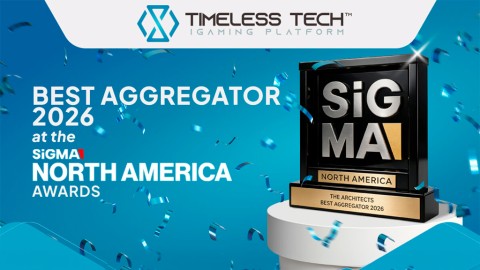
(Mexico City, SoloAzar Exclusive).- Following a highly successful showing and a 'Best Aggregator 2026' award at SiGMA North America, Timeless Tech CEO Borut Leban reflects on the company's strategic growth across LatAm. In this interview, Leban discusses the necessity of deep market localization, concrete new business opportunities, and the upcoming launch of their unified retention ecosystem, Timeless Arena.
Friday 18 Sep 2026 / 12:00
SUSCRIBIRSE
Para suscribirse a nuestro newsletter, complete sus datos
Reciba todo el contenido más reciente en su correo electrónico varias veces al mes.