APADELA and the Future of Sports Betting in Peru Following Regulation
⏱ 5 min read
(Lima, SoloAzar Exclusive).- During the Peru Gaming Show 2026, Gonzalo Rosell, President of the Peruvian Association of Online Sports Betting and Related Activities (APADELA), analyzed the current state of the Peruvian remote gaming and sports betting market following the implementation of the regulatory framework. In his presentation, “Current Situation of the Remote Gaming and Sports Betting Industry Post-Regulation in Peru,” the executive highlighted the tax challenges facing the formal industry and called for a review of the selective consumption tax.
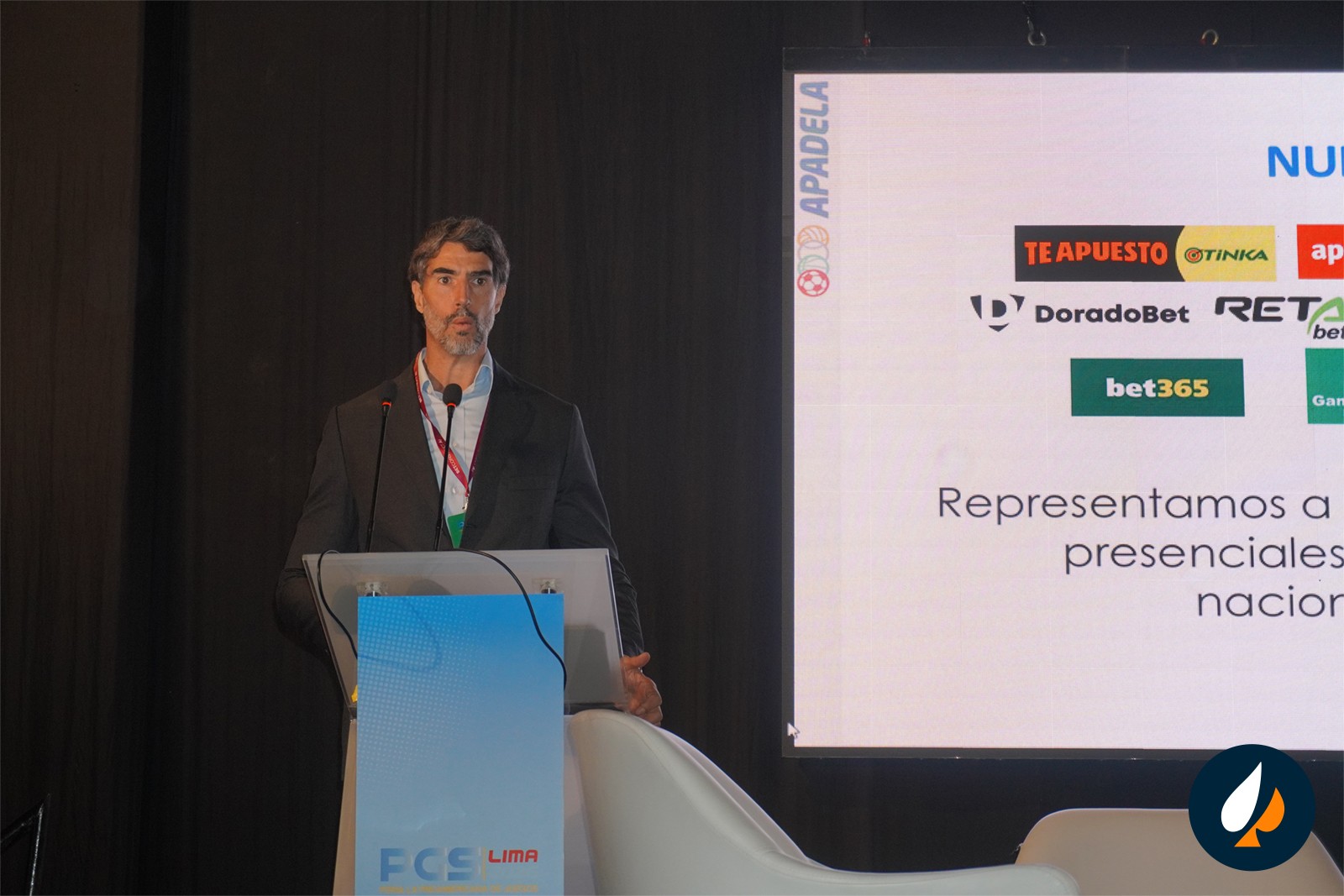
APADELA Highlighted the Growth of the Formal Market Following Peruvian Regulation
Within the 23rd edition of the Peru Gaming Show (PGS), one of the most important gatherings of the gaming industry in Latin America, the conference "Current Situation of the Remote Gaming and Sports Betting Industry Post-Regulation in Peru" took place, led by Gonzalo Rosell, president of the Peruvian Association of Online Sports Betting and Related Activities (APADELA).
During his presentation, Rosell explained the association's role within the Peruvian ecosystem and reviewed the sector's evolution since the approval of Law 31557, which established the regulatory framework for remote sports betting and gaming in the country.
“I am Gonzalo Rosell, I am the general manager of La Tinka, which operates two sports betting brands, Apuesto and Olimpo Bet, but today I am here representing APADELA, which is the Peruvian Association of Online Sports Betting and Related Activities,” the entity's president noted at the beginning of his speech.
The executive explained that APADELA is composed of operators with different profiles, including domestic and international companies, multichannel operators with a physical presence, and exclusively digital firms.
“We represent the industry in all available formats, but despite the variety in the profiles of the different operators that make up the association, we all share the same values: a commitment to responsible gaming and the same operational standards that can be found in the most mature and developed gaming jurisdictions in the world,” he stated.
Rosell highlighted that the organization aims to promote a formal and responsible sports betting and online gaming market in Peru, recalling that the association has historically supported the creation of a regulatory framework for the sector.
“We have always been in favor of regulation, even long before Peru had a regulation for the remote sports betting and gaming industry. Even then, as APADELA, we encouraged the discussion of a regulation that would generate a framework so that formal operators could compete on a level playing field,” he maintained.
Operators' Adaptation to the New Regulatory Scenario
During his speech, the head of APADELA reviewed the changes that operators had to make to adapt to the new regulatory provisions.
Among the modifications mentioned, he highlighted the withdrawal of certain products from retail networks and the alignment of the digital offering with the categories permitted by Peruvian regulations.
“In the context of regulation, we have had to make certain adjustments. For example, we withdrew roulettes from the retail market and we also had to withdraw betting on non-sports events and markets, such as proposals related to politics or elections,” he explained.
However, he warned about the emergence of new business models which, as he indicated, require a regulatory discussion to avoid competitive distortions.
“Today we are seeing threats from certain new competitors in the industry, such as prediction markets, which have acquired significant relevance in betting on non-sports events, but are also growing in sports events,” he expressed.
In that sense, Rosell considered it necessary to move toward specific regulation for these modalities with the aim of avoiding unequal competition against formally established operators.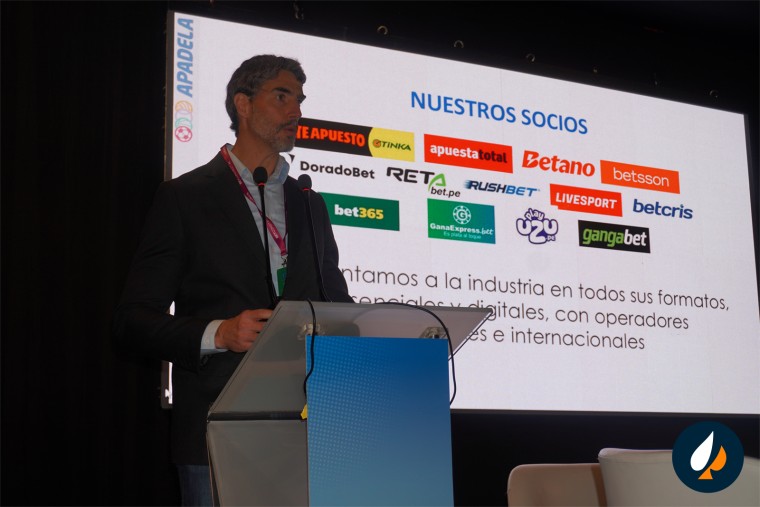
Criticism of the Selective Consumption Tax
One of the main axes of the presentation focused on the impact of the tax scheme applied to the industry since 2025, especially the selective consumption tax (ISC).
Rosell clarified that the industry does not oppose paying taxes, but questioned the current structure of the levy.
“We have always been in favor of the industry being taxed with additional levies to those we local operators were already paying. We pay income tax, IGV (VAT), and the other taxes that any business pays in Peru,” he explained.
However, he maintained that the selective consumption tax exerts excessive pressure on formal companies because it is applied to the turnover (amount wagered) and not to the actual profitability of the business.
“The selective consumption tax is a tax applied to the top line of the business, to the amount wagered, in an industry where the margins of the different product categories we offer are very low,” he indicated.
According to the president of APADELA, this situation could lead to tax levels that are difficult to sustain for regulated operators.
“The selective consumption tax can represent tax levels of between 35% and 50% of the GGR across different product offering categories, which ends up being confiscatory for a business of this nature,” he stated.
Likewise, he questioned the range established for this tax, which can vary between 0.3% and 50%.
“The range defined for the selective consumption tax is an outrageous thing that generates neither legal predictability nor peace of mind for formal operators to invest in the medium and long term,” he expressed.
Closure of Points of Sale and Reduction of Support for Sports
During his presentation, Rosell assured that the tax burden is already having visible consequences on the formal market, with the closure of establishments and a reduction in the employment generated by the industry.
As an example, he mentioned the situation of his own company and stated that the new taxes significantly impacted its financial results.
“The taxes paid during 2025 have been equivalent to the entire operating income before interest, taxes, depreciation, and amortization of the whole year 2024, so you can see how dramatic the impact of these new taxes has been,” he noted.
The executive also made reference to the closure of physical points of sale recorded since the new tax scheme entered into force.
“During 2024 and 2025, more than 1,500 physical points of sale have closed nationwide, around half of them in the provinces, and this has generated a significant loss of both direct and indirect employment,” he stated.
Furthermore, he warned about the impact that the reduction of formal activity could have on other linked sectors, especially sports.
“In 2023, 95% of professional football clubs had sponsorships from betting houses, and now in 2026 only 28% have them. There is a significant decrease that threatens the sustainability of national sports,” he maintained.
Request for Dialogue with Authorities and Strengthening of Enforcement
In the final part of his presentation, Rosell highlighted the work done alongside the regulatory body and requested greater openness from the Ministry of Economy and Finance (MEF) to review the tax impact.
“The regulatory process has been very positive from an operational and technical standpoint, with a very open and transparent dialogue with the regulatory body. However, the tax aspect is throwing away everything positive that this process has achieved over the last four years,” he stated.
The president of APADELA called for the establishment of working groups with the authorities to analyze alternatives that would allow the growth of the formal market to be sustained.
“We imperatively request that the tax issue specifically associated with the selective consumption tax be reviewed, because otherwise, we will continue on the path of shrinking the size of formal operators to the benefit of illegal operators,” he concluded.
Finally, Rosell reiterated the industry's willingness to collaborate with the State in building a sustainable market, focusing on responsible gaming, player protection, and the prevention of money laundering.
“We believe that there is still room to correct the tax aspect and achieve a modern, competitive regulation for remote gaming and sports betting, one that puts the country at the forefront of the global industry and makes the market attractive for both domestic and foreign investment,” he concluded.
Categoría:Events
Tags: PGS, Peru Gaming Show,
País: Peru
Región: South America




Event










SBC Summit 2026
29 de September 2026
Ready Play Gaming Highlights New Opportunities After SBC Summit 2026
Tuesday 13 Oct 2026 / 12:00
Uplatform Brought "Your Dreams. Our Platform" to Life at SBC Summit Lisbon 2026
Friday 09 Oct 2026 / 12:00
Kambi Highlights Network and LatAm Growth at SBC Summit
Friday 09 Oct 2026 / 12:00
SUSCRIBIRSE
Para suscribirse a nuestro newsletter, complete sus datos
Reciba todo el contenido más reciente en su correo electrónico varias veces al mes.