Situation of imports in Argentina, by Cristian Galarza
⏱ 5 min read
(Buenos Aires, Exclusive SoloAzar).- Consulted by SoloAzar, Cristian Galarza, Director of ASAP, a company that provides comprehensive assistance and personalized operations in import and export situations for exhibitors at various international trade events, provides in this article an overview of imports in Argentina.
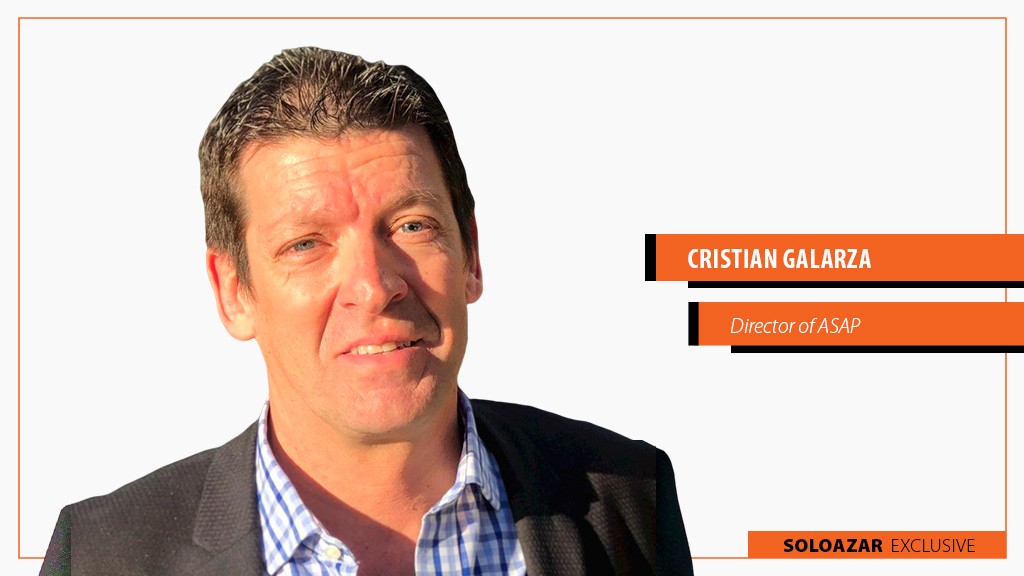
Situation of Imports in Argentina
In the last two years, the situation of imports in Argentina has been getting more and more complicated. Both with regard to authorizations to import and with regard to payments abroad.
In the following lines I will give a general overview of the situation, taking into account the operations that are usually carried out by the players in the gaming industry.
Currently, import restrictions are based on three pillars, which are described below:
CEF – Financial Economic Capacity
The CEF is an index determined monthly by the AFIP for each taxpayer, which constitutes a limit for the capacity of a company to make SIMI's (import licenses) official: above the CEF it is not possible to manage a SIMI. Although the system was created in 2019 with the aim of avoiding (or at least reducing) the issuance of false invoices, the AFIP has been using it for approximately a year to limit imports.
The rule that instituted the CEF mentions some of the components of the algorithm that calculates it, but now the amount of SIMIs in force that are pending dispatch has been incorporated into the formula. And since the SIMI is essential to make a payment abroad (and to dispatch the merchandise), the system has become a deadly trap for importers.
LNA – Non-Automatic Import Licenses
The foreign trade nomenclature is currently divided into two large groups: those that must manage Automatic Licenses (LA), and those that are subject to the Non-Automatic Licenses (LNA) regime.
The LA, as its name indicates, works simply for statistical purposes since its authorization is automatic (usually within 24 business hours). However, keep in mind that the authorization can be affected by the CEF, among other things.
The LNA is a world apart, completely different and uncertain. There are no deadlines for authorization, there are no rules, there is no "road map" to follow for the process, and there is practically no one to talk to in the regulatory body. Importers must complete a projection form and it is assumed that based on that, the Ministry of Production grants a "theoretical quota" for the approval of LNA's. And I say "theoretical" because even if it is verbally communicated by the Secretariat (in the fewcases in which the importer obtains a hearing), these quotas are not necessarily respected.
Regarding the gaming sector, we can say, in general terms, that what has to do with live gaming is subject to the LNA regime, while slots and electromechanical games are processed by LA. Despite this, the importers of slots, electromechanical roulettes, etc., also suffer from the LNA, since in all cases they must import parts and pieces of the machines, which in some cases are responsible for managing these licenses.
BCRA – Central Bank of the Argentine Republic
Just as between 2012 and 2015 import restrictions passed 100% through the Secretary of Commerce with the sadly remembered DJAI, since the end of 2019 the body in charge of regulating the outflow of foreign currency is the Central bank.
The BCRA regulations are a great tangle of Communications (as its regulations are called) that affect each other and are permanently modified, sometimes drastically. It is not possible to understand a Communication from the BCRA from its simple reading, since it refers to the Organized Text of Foreign Trade regulations, which, as has been said, is constantly modified.
In principle, it can be said that "almost" any merchandise can be imported if it is paid more than 180 days from the date of shipment in Argentina. But to be able to pay in shorter installments, they mainly apply two quotas:
The dynamic quota
This quota is calculated by adding all dispatches registered since 1/1/20, subtracting all payments in the same period, and adding USD 250,000.00. To the extent that payments are made abroad, these are deducted from the quota, while official dispatches increase the quota. That's why we call it "dynamic quota".
The static quota
Actually this is not a quota, but there are several: the BCRA has created a system of categories (A, B, and C) that applied to the SIMI's allow payment abroad in different terms:
• Category A: payments as agreed between buyer and seller
• Category B: payments over 180 days
• Category C: applicable to inputs (very unlikely in this industry)
The composition of these quotas is extremely complex, and its explanation would require a very extensive report. But in general terms, we can say that the quotas for Categories A and C are formed taking into account the company's import history in the years 2020 and 2021, and that everything that exceeds these quotas receives a SIMI with Category B. (Note that the calculation base includes two years in which the activity of the sector was practically paralyzed).
The regulations provide for a few exceptions (both for the dynamic quota and for the static one), but it is very difficult for any of these to reach imports from the gaming sector. Just for information, some of the exceptions are: medicines, fertilizers, energy sector, public works, capital goods, etc.
Regarding Capital Goods, it is worth noting that Capital Goods and Fixed Assets are not the same thing. The condition of Capital Good falls on the merchandise, and is indicated in its tariff position. A Capital Good does not change its condition depending on its destination. The nature of Fixed Assets corresponds to the operation depending on its destination: if it is for sale, or if it is for use in a production process.
Finally, in addition to the restrictions mentioned, which are of a general nature, there are additional foreign exchange restrictions for related companies, a situation that affects many players in the sector.
In such a restrictive context, only in-depth knowledge of the regulations and of the available options, added to the creativity of the companies, will allow the development of the import activity and ensure the supply of merchandise.
By Cristian Galarza
ASAP Director
Customs Broker
Specialist in Foreign Trade and Exchange
Categoría:Exclusive
Tags: Sin tags
País: Argentina



Event
SiGMA North America 2026
01 de September 2026
Jordi Sendra, CEO of Alea: "Latin America is one of our most important regions"
(Mexico City, SoloAzar Exclusive).- The CEO of Alea analyzes the company's participation in SiGMA North America, the potential of Mexico and Brazil and the growth opportunities in North America and Latin America. It also reviews the new features presented during the event, including the new sportsbook vertical and Alea Jackpot.
Wednesday 23 Sep 2026 / 12:00
CP Games at SiGMA North America: Localization, Integration, and Regional Growth
(Mexico City, SoloAzar Exclusive).- Following a successful showcase at SiGMA North America, Caio Ruiz, Head of Growth and Strategic Partnership at CP Games, reflects on the event's key takeaways. He discusses the critical need for localized strategies across the Americas, the importance of flexible technical integrations, and the company's next steps in navigating the diverse gaming landscapes of LatAm and North America.
Tuesday 22 Sep 2026 / 12:00
"Our focus for growth is in Mexico and the rest of LatAm", Alberto Alfieri, Co-Founder of Blokotech
(Mexico City, SoloAzar Exclusive).- Following their success at SiGMA North America—where they secured the Best Casino Platform 2026 award—Blokotech's co-founder discusses growth opportunities in Mexico and the broader region. He also highlights the platform's latest AI-driven innovations and outlines the next phases of the company's expansion strategy.
Tuesday 22 Sep 2026 / 12:00
SUSCRIBIRSE
Para suscribirse a nuestro newsletter, complete sus datos
Reciba todo el contenido más reciente en su correo electrónico varias veces al mes.