Online gambling could bring $210M in revenue. Why is Rhode Island Lottery pushing back?
Tuesday 16 de May 2023 / 12:00
⏱ 4 min read
(Providence).- While Rhode Island's exclusive casino operator dangled a potential $210 million in new revenue before legislators' eyes this week, others raised warning flags about the "cannibalization" of gambling dollars from other games that are more lucrative for the state — and the potential expansion of alleged teen-run gambling rings in high school.

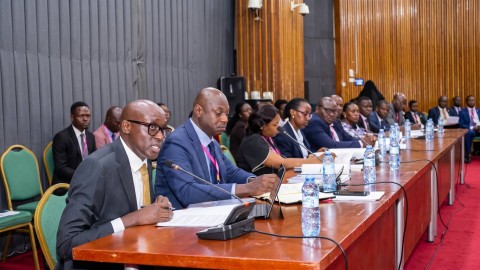
While 18-year-olds are banned by law from smoking and drinking in Rhode Island, they can place online sports wagers, which has made them kingpins of sorts in high school gambling operations, former Sen. John Tassoni, speaking as a board member of the Rhode Island Council on Problem Gambling, told a Senate committee on Wednesday night. "They were called '10 percenters' on Federal Hill," he said.
Rhode Island Lottery says iGaming bill would be 'unconstitutional'
And he was not the only one raising concerns about the legislation introduced by Senate President Dominick Ruggerio and Senate Majority Leader Ryan Pearson that doesn't just allow iGaming, but also names Bally's as the host for the new online platform and IGT as the exclusive provider.
From Mark Furcolo, the director of the Rhode Island Lottery, came warning that the legislation (S948) crafted by the Bally's Corporation and IGT is "likely unconstitutional" as written, and even if that legal hurdle is cleared, iGaming is likely to "cannibalize" state revenue from existing Lottery offerings.
Online sports betting companies warn that Rhode Islanders will just go to Connecticut or Massachusetts for iGaming
Jon Mandel of the Sports Betting Alliance — which describes itself as a coalition of mobile gaming operators including DraftKings, FanDuel and BetMGM — raised questions about why Rhode Island would want to be the only state in the nation, with the exception of Delaware, "whose residents would be limited to a single choice when it comes to iGaming."
"The result will be no different than mobile sports betting," he said of the exclusive online sports gaming contract the state gave IGT and recently renewed.
"Residents will (1) continue to use the illegal market; (2) drive into Connecticut; or (3) wait until Massachusetts legalizes iGaming to then cross the border, to the benefit of that state, not Rhode Island," he predicted.
He cited, as evidence, what happened during the first month Massachusetts offered mobile sports betting (March 10 to April 9): “GeoComply identified 1,761 instances of a Rhode Island resident first attempting to access a Massachusetts sports betting app in Rhode Island and then traveling to Massachusetts and successfully logging into an app. ”
His main argument is that having “multiple iGaming operators will generate significantly more tax revenue for the state than if the state grants one company a monopoly.”
Bally's: $210 million in new gaming revenue possible over next five years
Bally's lobbyist Elizabeth Suever sought to reassure the lawmakers there would be "little switching of play from retail casinos to iGaming," as stated in a market study that Spectrum Gaming Group conducted for the Bally's Corp.
Spectrum's projection: the state would net $210 million in new gaming tax revenue over five years.
What does the Rhode Island Constitution say?
With respect to the constitutionality of the new method of gambling that Bally's and IGT are proposing, Suever said she had not seen the letter of concern from the head of the Rhode Island Lottery, which oversees all state-sanctioned gambling in Rhode Island.
But she asserted that the last time a proposed expansion of gambling made the ballot, voters gave their OK to casino gambling without any requirement that there be “a live dealer.”
She suggested the simple addition of the word "online" before slot games and "online" before table games in the definition section of the legislation “that addresses the concern.”
It remains to be seen if her arguments satisfy the concerns that Furcolo raised and the provision within the Rhode Island Constitution that says:
“No act expanding the types or locations of gambling which are permitted within the state or within any city or town ... shall take effect until it has been approved by the majority of those electors voting in a statewide referendum and by the majority of those electors voting in said referendum in the municipality in which the proposed gambling would be allowed.”
"While the Rhode Island Lottery believes there is a legislative path for authorizing iGaming, and is supportive of iGaming, it is the ... Lottery's position that the bill — as drafted — is likely unconstitutional and must be revised to conform with the authorization under the 2012 and 2016 Voter Referendums related to casino gaming," Furcolo said.
He also disputed the contention that there would no cannibalization and urged the lawmakers to give the state a larger slice of the revenue than what was proposed, up to 50% from "online slot gaming" and 18% from “online table gaming.”
He pinned his request to several assumptions, among them — “significantly lower vendor operating costs associated with iGaming products versus traditional casino product offerings and the expected impact on in-person patronage at the casinos where the State's revenue allocation is higher for VLTs, i.e., approximately 61%.”
"Likewise, the Rhode Island Lottery anticipates a significant cannibalization of the Rhode Island Lottery's mobile instant ticket(s) ... which have a higher profit margin for the state than the proposed iGaming 'online slot gaming,'" he wrote.
As written, he said the legislation also "appears to curtail certain traditional lottery products purchased online in an effort to disadvantage such traditional products against iGaming products," and it more or less elbows the Lottery aside by defining "the roles of certain [named] vendors" without an “underlying master contract with the Rhode Island Lottery.”
Other concerns on his long list: no "additional funding for educational and treatment resources: for problem gamblers, and an implicit need for more Lottery staff."
Categoría:Lottery
Tags: Sin tags
País: United States
Región: North America




Event










SiGMA North America 2026
01 de September 2026
LatAm Regulators Discussed Illegal Gambling and Innovation at SiGMA North America
(Mexico City, SoloAzar Exclusive).- The panel "The Red Pen Forum: Regulators Respond to the Industry," held during SiGMA North America 2026, brought together representatives from Uruguay, Argentina, Puerto Rico, and Honduras to analyze regulatory challenges, digital transformation, illegal gambling, and the need to adapt lotteries for new generations. The conference was moderated by Rodrigo Cigliutti, Executive Director of CIBELAE (Ibero-American Corporation of State Lotteries and Betting), and featured the participation of Marcelo Visconti, National Director of Lotteries and Quinielas of Uruguay; Carlos Moyano, President of IAFAS Entre Ríos, Argentina; Heidi Hernández Olivo, Deputy Secretary of the Puerto Rico Lottery; and Lissa Mencía, General Director of Lottery Operations and Games at Loto Honduras.
Monday 28 Sep 2026 / 12:00
SiGMA North America Addressed Crisis Management in iGaming
(Mexico, SoloAzar Exclusive).- During SiGMA North America 2026, Rosa Ochoa, founder of the Blue Global Gaming platform and strategic advisor for gaming operators; Iliana María Pineda Echeverri, Chief Legal & Compliance Officer at Wplay.co; Iraid Rosales, Country Manager Mexico at Amusnet; and Elizabeth Maya Cano, Executive President of CORNAZAR, analyzed the key factors in managing crisis situations within the iGaming industry, with a special focus on transparency, communication, technology, and preparation.
Friday 25 Sep 2026 / 12:00
Affiliates and Acquisition: Keys to Regulated Markets in North America
(Mexico City, SoloAzar Exclusive).- During SiGMA North America 2026, Cristopher Guzmán Reyes, Head of Affiliates at Logrand Entertainment Group; Guga Júnior, influencer and slots expert at Scalar Partners; Andrés Gómez, Head of Latin America Go-to-Market Strategy at Admattic; Yambot Aguilera, Gaming and Finance Sales Director at Google; and Paula Gabriel Jiménez, Advertising Client Growth Director for Microsoft at Aleph, analyzed the state and provincial affiliate ecosystem in North America, as well as the acquisition challenges in regulated markets.
Thursday 24 Sep 2026 / 12:00
SUSCRIBIRSE
Para suscribirse a nuestro newsletter, complete sus datos
Reciba todo el contenido más reciente en su correo electrónico varias veces al mes.