Interviews
Bolivia’s Gambling Regulation: From a Longtime Legal Gray Zone to Potential Reform in 2026
2 minutos de lectura
(Buenos Aires, SoloAzar Exclusive).- Bolivia’s gambling industry is still regulated under Law No. 060 of 2010, yet the absence of specific licenses for the digital sphere leaves online betting stuck in legal limbo. Meanwhile, President Rodrigo Paz’s administration is pushing forward with a proposal to modernize the system and bring the country in line with regional standards. The question remains: will he succeed?
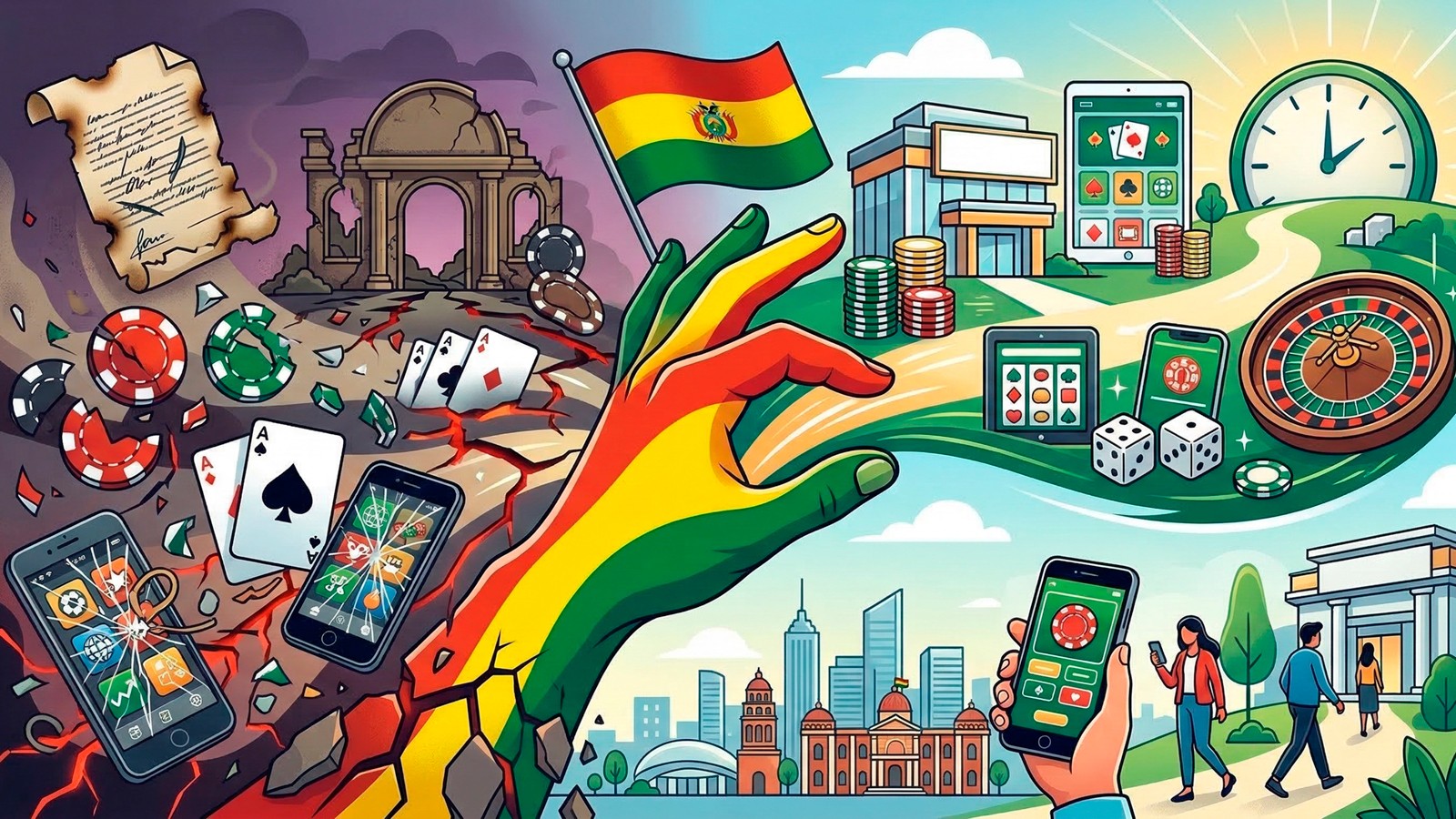
The gambling market in Bolivia is going through a moment of transition marked by regulatory uncertainty. While thousands of users access international online betting platforms, the country continues to operate under a legal framework designed before the digital boom, which has generated a persistent "gray area" that affects both players and operators.
Law No. 060: the beginning of the road
Law No. 060, enacted on November 25, 2010, constitutes the pillar of gambling regulation in Bolivia. This regulation established for the first time a comprehensive framework for lottery and gambling activities, in addition to creating a regulatory body and setting tax obligations for the sector.
Subsequently, Supreme Decree No. 0782 of 2011 and Law No. 717 of 2015 reinforced the current institutional structure. One of the most relevant points of the law is that it contemplates the possibility of making games through "digital or technological" means, a clause that has been key in the modern interpretation of online gambling.
The role of the Gaming Authority (AJ)
The Authority for the Supervision and Social Control of Gambling (AJ) is the entity in charge of supervising, authorizing and sanctioning all activities related to gambling in the country. Under the Ministry of Economy and Public Finance, the AJ has national competence and performs functions of control, issuance of licenses and consumer protection.
However, their capacity to act against international digital operators is limited, since they are not based in Bolivia and do not have local licenses.
Online gambling: a persistent legal vacuum
Despite the fact that Law 060 mentions digital media, Bolivia does not have a specific licensing system for online operators. This implies that no international platform has formal authorization to operate in the country.
In practice, sites licensed in jurisdictions such as Curacao, Malta or Gibraltar continue to offer services to Bolivian users from abroad. This situation raises frequent doubts among players, especially about the legality of betting and possible penalties, although the regulatory focus is usually on operators and not on individual users.
Trends and pressure for reform
In recent years, the growth of online gambling in Latin America has driven the regulatory debate in Bolivia. Since 2020, different initiatives have sought to update the regulations to include digital licenses, strengthen oversight and capture tax revenues from the sector.
In this sense; The government of Rodrigo Paz, who took office on November 8, 2025 as part of his campaign slogan "capitalism for all", is driving a historic shift in the gambling industry with the elimination of key taxes, the digitization of the regulator and a new framework for online betting that seeks to formalize the market and attract investment.
Requirements to operate in the new scenario
Companies interested in entering the Bolivian market must meet key conditions:
Legal constitution within the country.
Certification of fiscal solvency by state agencies.
Auditable systems certified by international laboratories.
Operation in authorized areas in coordination with municipal governments.
This approach seeks to ensure transparency without discouraging investment.
Perspectives for 2026
In short, analysts in the sector agree that Bolivia could move towards a clearer regulatory system in the short term. A licensing scheme for online gambling would formalize the activity, improve player protection and generate new sources of revenue for the State.
However, in the meantime, the market will continue to operate in a gray area, where demand grows faster than regulatory capacity, consolidating the urgency of a reform that modernizes the gambling ecosystem in the country.
Categories: Analysis
Tags: No Tags
Region: Europa
Sign Up
To subscribe to our newsletter, please fill in your details
Receive all the latest content in your email several times a month.