Interviews
Rosa Ochoa: technology, innovation and the future of the Mexican online gaming market
2 minutos de lectura
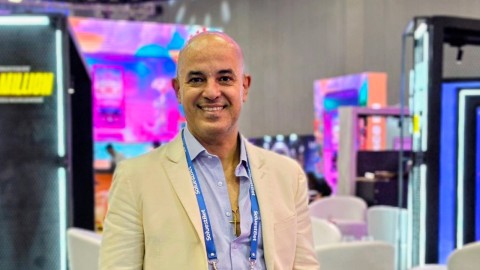
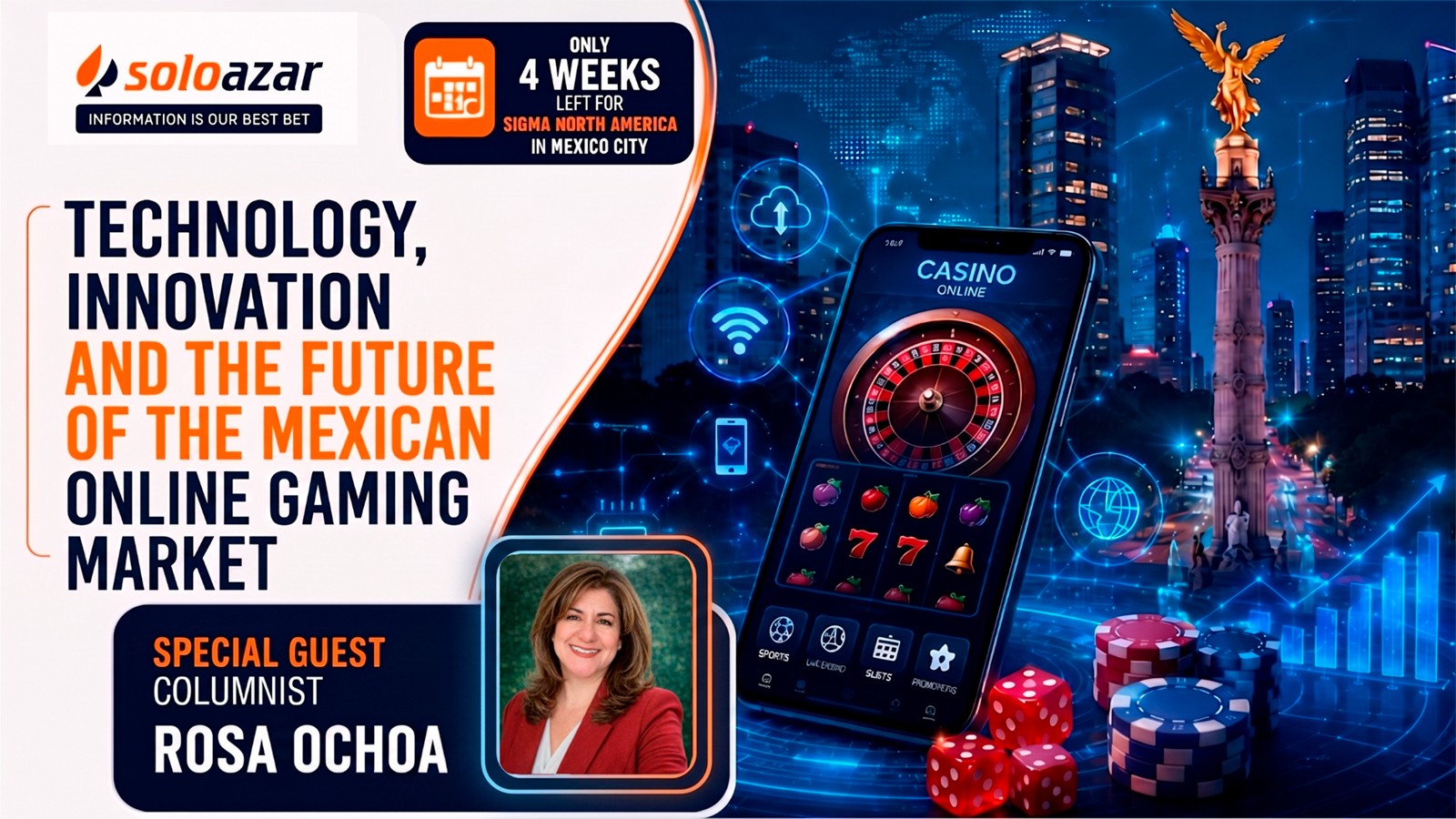
(México City, SoloAzar Exclusive).- Just four weeks before a new edition of SiGMA North America, SoloAzar presents the third installment of the special series "Mexico in 6 keys". On this occasion, Rosa Ochoa, founder of the platform Blue Global Gaming, strategic advisor to gaming operators and technology companies that promote their expansion in Mexico and Latin America, analyzes in depth how thinking about the future, intelligent adoption of technology and innovation can become decisive factors for operators to strengthen their competitiveness in the increasingly dynamic Mexican market. At the end of the article, readers will also find an exclusive benefit available to the SoloAzar community.
Thinking Ahead as a Competitive Advantage
You talk about "thinking into the future" as a strategic capability. How would you define this concept and how can a gaming operator apply it in practice?
"Thinking about the future is not about predicting what is going to happen, but about exploring different possible scenarios to make better decisions today. It is a strategic capability that helps us question assumptions, identify signs of change, and prepare for different futures before those changes become a reality.
In practice, a gambling operator can apply it by ceasing to focus solely on day-to-day challenges and wondering what would happen if regulation changes, if player expectations evolve, if new payment methods appear, or if artificial intelligence transforms the way it operates. The goal is not to predict what the future will be, but to develop the ability to adapt to different scenarios more quickly and confidently.
It also involves looking beyond the sector itself. Operators don't just compete with each other; they compete for people's time and attention. Analysing how consumer habits, forms of entertainment, the use of technology or the way people make decisions change can offer early signs that help anticipate opportunities and risks.
In my opinion, the future is not predicted; is designed. And that design starts with a better understanding of the present and a willingness to ask better questions."
You point out that many operators already have technological tools that they do not take full advantage of. Why is this happening and how can this situation be reversed?
"Many times the problem is not the technology, but the expectation with which it is purchased. There's this idea that incorporating a new platform will automatically solve business problems, when in reality a much more basic question needs to be answered first: what do I need to solve?
I've seen traders with very sophisticated tools that use only a small portion of their capabilities. Not because technology is bad, but because they never clearly defined what objective they were pursuing, who was going to use it or how it fit into their growth strategy.
Reversing this situation implies changing the conversation. Before evaluating functionalities, it is necessary to understand the business, its priorities and where it wants to evolve. The technology must be adapted to the needs of the operator and not the other way around. It also requires training, a culture of adoption, and a vendor committed to accompanying the customer to get value from the tool, not just to sell a license.
Technology alone does not generate a competitive advantage. The advantage comes when people know how to use it to make better decisions, improve the player experience and prepare the company for the challenges of the future."
Innovating with limited resources: opportunities for small and medium-sized operators
"Innovation does not depend exclusively on the budget. On many occasions it depends on how clearly a company understands its priorities. Before investing in technology or new projects, an operator should answer three questions: where am I, where do I want to go? And what do I need to get there?
Medium and small operators have an important advantage over large organizations: they are usually more agile in making decisions and adapting their processes. That flexibility allows them to test new solutions, measure results, and adjust course faster, without having to transform the entire operation at once.
In addition, today many technological solutions are modular and scalable, which allows capabilities to be incorporated as business needs evolve. This makes it easier to innovate gradually, with investments according to the size of the operation and with less financial risk.
Innovation doesn't start with buying technology; It starts with understanding the problem we want to solve. Technology is a means to generate value, not the starting point. To innovate is to make better decisions with the resources available to create greater value for people and for the business."
The Future of iGaming in Mexico: AI, Fintech and New Gaming Communities
How do you think the Mexican online gaming market will evolve over the next five years in terms of technological innovation and competition?
"In the next five years, the Mexican online gaming market will continue to grow, but the competition will no longer focus solely on the offer of games or bonuses. Differentiation will increasingly come from the user experience, trust, and ability of each operator to adapt to technological and regulatory changes.
One of the most relevant changes will be the convergence between iGaming and financial technologies. Digital identity, KYC processes, fraud prevention, and security will no longer be seen solely as compliance obligations but as elements that strengthen player confidence and the efficiency of operations.
Artificial intelligence will also play an increasingly important role, but not as an end in itself. Its true value will depend on each operator's ability to use it for a clear purpose: to better understand their players, make better decisions, and deliver more relevant experiences.
However, I think the most interesting transformation will be the evolution of player communities. For many years, the market has been segmented primarily by age or demographics. In the future, we will see the growth of what I call "digital tribes": communities that form around shared interests, affinities, and forms of entertainment, rather than by a specific generation.
This will open the door to much more immersive experiences, where technologies such as virtual reality, social interaction and participation in communities will become increasingly important. Retention will no longer depend solely on the individual experience of the player and will be increasingly linked to the sense of belonging that platforms manage to generate.
In my opinion, the future of iGaming will not depend solely on technology, but on understanding how people and communities evolve. The operators that are able to anticipate these changes and design experiences for these new digital tribes will be the ones who develop stronger and more sustainable competitive advantages."
In this context, SiGMA North America 2026 will bring together the main leaders of the industry in Mexico City. SoloAzar will closely cover the event with interviews, analysis and news for its readers. Those who plan to attend can still get a 30% discount on their registration by using the code Soloazar30SIGMA, an exclusive benefit for the SoloAzar community.
Categories: Exclusive
Tags: No Tags
Region: Europa
Sign Up
To subscribe to our newsletter, please fill in your details
Receive all the latest content in your email several times a month.