Soft2Bet explains How Behavioural Analytics Supports Responsible Gambling Through Early Intervention and Risk Detection
Monday 02 de February 2026 / 12:00
⏱ 4 min read
(Malta).- This article shows why real-time player behaviour monitoring is becoming essential for responsible gambling, anti-fraud controls, and AML compliance.
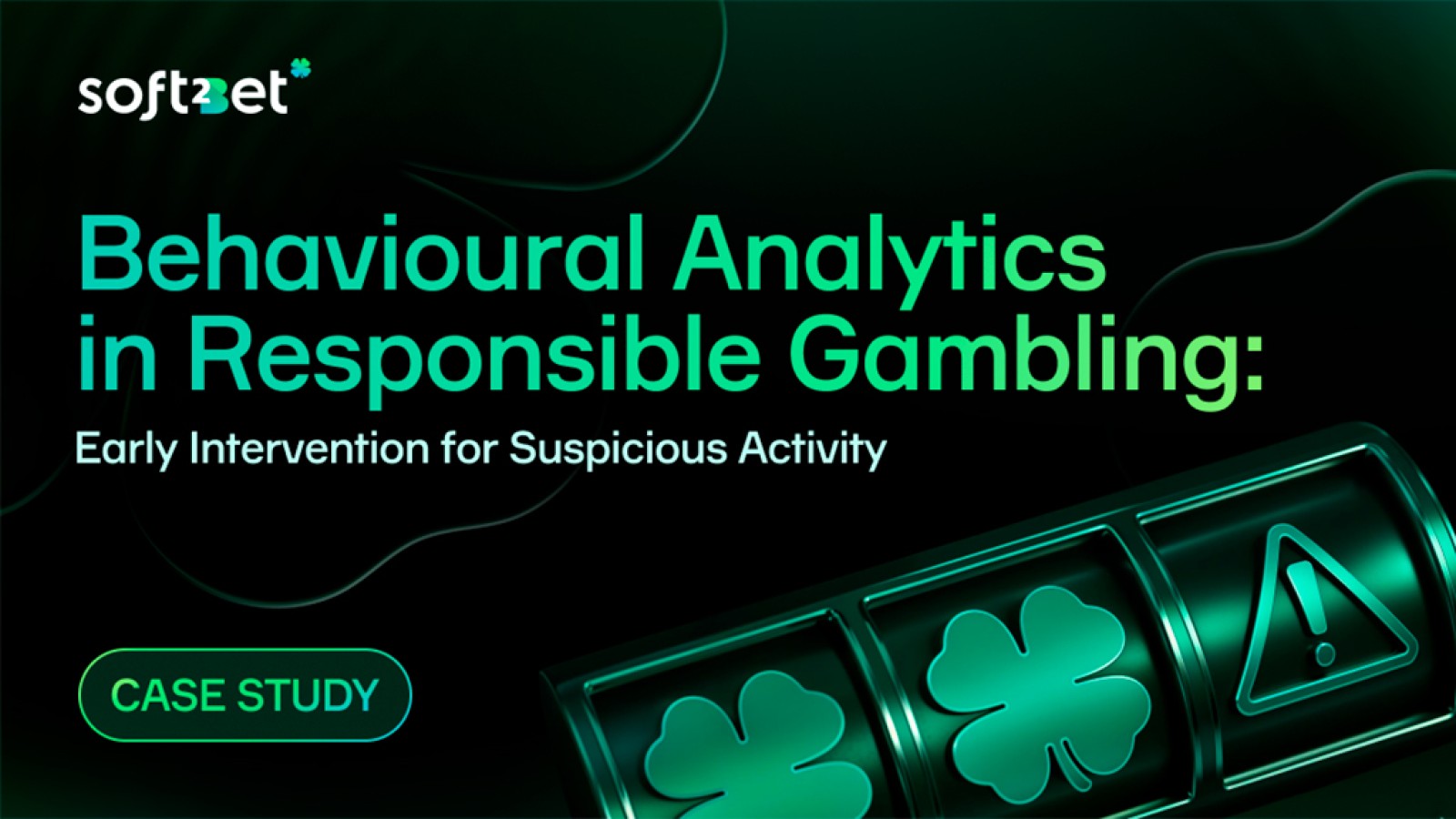
Bonus abuse, so-called “easy money” schemes, and identity theft have become persistent operational risks for iGaming operators. These threats are also increasingly difficult to detect using traditional controls alone. While cybersecurity protocols and transaction monitoring remain essential, they often fail to identify early warning signs before an issue escalates into a reportable incident.
Rapid changes in how a player registers, deposits, plays, and withdraws funds are often the first indicators of underlying risk. As a result, the industry has shifted towards real-time behavioural analytics. By monitoring player behaviour as it develops—and, critically, identifying deviations from an established baseline—operators can flag suspicious activity earlier and respond faster, addressing minor anomalies before they evolve into serious compliance or reputational risks.
The connection between security and responsible gambling
Responsible gambling and player security are closely linked. Many of the same behavioural signals that point to bonus abuse, multi-accounting, or account takeover can also indicate gambling-related harm, financial vulnerability, or coercion. This overlap has driven operators to adopt integrated monitoring strategies that assess risk holistically at the individual player level.
This approach combines behavioural analytics with KYC, transaction monitoring, anti-fraud controls, and AML measures for each player. The goal is early, proportionate intervention that protects players, meets regulatory expectations, and produces audit-ready decision trails.
The evolution of player monitoring in iGaming
Player monitoring has moved far beyond manual reviews, spreadsheets, and retrospective reporting. In today’s always-on gambling environment, risk can escalate within minutes. Instant payments, faster game cycles, and continuous access significantly reduce response windows, while regulators increasingly expect evidence of early detection rather than post-incident explanations.
Automated behavioural analytics is now a baseline requirement. It enables operators to balance player protection with a seamless gaming experience, ensuring that vulnerable players receive support without disrupting legitimate play.
Modern iGaming analytics consolidates signals that were once siloed across teams, including gameplay behaviour, payment activity, identity and device data, customer support interactions, and safer gambling tool usage. When processed in real time, this data allows operators to detect emerging risks sooner and act before issues become reportable incidents.
Identifying red flags through behavioural deviation
High spending alone is not inherently risky. Many high-value players demonstrate stable, predictable behaviour over time. Risk becomes clearer when behaviour shows volatility or sudden deviation from a player’s normal pattern.
Stable VIP play is typically consistent in stake size, session length, play timing, and payment behaviour. Higher-risk behaviour, by contrast, often includes rapid stake escalation, loss-chasing, irregular betting rhythms, late-night play with increasing spend, repeated deposits in short periods, and abrupt changes in game or market selection.
Why real-time data enables earlier intervention
The earlier a behavioural shift is detected, the broader the range of proportionate responses available. Real-time analytics allows operators to intervene at lower intensity, using prompts and stabilisation tools before a player reaches a crisis point.
Sudden increases in deposit frequency, radically different betting styles, repeat deposits shortly after losses, or withdrawals requested immediately after bonus wagering are all indicators that warrant attention. Addressing these signals early reduces harm and supports clear, defensible compliance outcomes.
Behavioural patterns linked to money fraud
Fraud-related activity often emerges in behavioural data well before it appears in financial reports. Common indicators include multi-accounting clusters, unnatural bonus wagering speed, bot-like betting cadence, synthetic identity behaviour, account takeover signals, deposit testing patterns, chargeback-prone activity, high-risk withdrawal routing, coordinated referral abuse, and attempts to pressure customer support into bypassing controls.
Behavioural patterns linked to money laundering
Money laundering in iGaming typically involves placing funds, disguising their origin, and extracting value under the appearance of legitimate play. Indicators include large deposits into new accounts, multiple rapid deposits, frequent payment method changes, unstable IP behaviour, abrupt stake shifts, oversized bets immediately after funding, accumulator patterns used to mask value transfer, and withdrawal-led activity with minimal gameplay.
These risks are addressed through player-level AML controls supported by transaction monitoring and real-time behavioural scoring.
The role of managed anti-fraud services
Responsible gambling cannot operate in isolation. Unchecked fraud distorts risk signals, increases operational friction, and diverts resources away from genuine player harm. Managed anti-fraud services help maintain clarity by validating behavioural alerts against identity and payment data before action is taken.
Multi-accounting and bonus abuse often emerge early and can signal deeper compliance issues, including identity misuse, payment fraud, and AML exposure. Addressing these behaviours promptly protects both players and operators.
Distinguishing coordinated abuse from vulnerable players
Coordinated abuse typically follows repeatable, scalable patterns aimed at consistent value extraction. Vulnerable players are more likely to exhibit unstable behaviour, loss-chasing, longer sessions, and emotionally driven betting.
Behavioural analytics separates these paths by analysing stability versus escalation, coordination versus isolation, incentive extraction versus loss-driven persistence, and device consistency versus network clustering. This ensures proportionate responses, even when the same initial alert is triggered.
AML measures for each player and regulatory expectations
Regulators expect operators to clearly explain what actions were taken and why. AML measures for each player must therefore run continuously across the player journey, supported by transaction monitoring and detailed audit records.
These measures apply at registration, login, deposit, gameplay, and withdrawal stages. Source of Funds checks now play a dual role, supporting both crime prevention and player protection, particularly when inconsistent funding behaviour overlaps with behavioural risk indicators.
Early intervention and audit-ready controls
Effective responsible gambling depends on timely action. Intervention thresholds are based on severity and confidence in risk signals, ranging from automated nudges and reality checks to deposit limits, cooling-off periods, manual outreach, and account restrictions aligned with AML escalation.
All interventions are documented with time-stamped triggers, observed indicators, actions taken, and outcomes. This structured approach ensures player safety, regulatory compliance, and operational clarity—while preserving a fair and enjoyable gaming environment for the wider player base.
Categoría:Analysis
Tags: Soft2Bet,
País: Malta
Región: EMEA




Event








SiGMA North America 2026
01 de September 2026
CP Games at SiGMA North America: Localization, Integration, and Regional Growth
(Mexico City, SoloAzar Exclusive).- Following a successful showcase at SiGMA North America, Caio Ruiz, Head of Growth and Strategic Partnership at CP Games, reflects on the event's key takeaways. He discusses the critical need for localized strategies across the Americas, the importance of flexible technical integrations, and the company's next steps in navigating the diverse gaming landscapes of LatAm and North America.
Tuesday 22 Sep 2026 / 12:00
"Our focus for growth is in Mexico and the rest of LatAm", Alberto Alfieri, Co-Founder of Blokotech
(Mexico City, SoloAzar Exclusive).- Following their success at SiGMA North America—where they secured the Best Casino Platform 2026 award—Blokotech's co-founder discusses growth opportunities in Mexico and the broader region. He also highlights the platform's latest AI-driven innovations and outlines the next phases of the company's expansion strategy.
Tuesday 22 Sep 2026 / 12:00
SiGMA North America Examines the VIP Revenue Paradox
(Mexico City, SoloAzar Exclusive).- At SiGMA North America 2026 in Mexico City, the conference “The VIP Paradox: Emotional Intelligence vs. Revenue Pressure” brought together Beatriz Melges, Regional Director at BetConstruct AI; Rodrigo Ripol, Business Development Officer at AHIS; Erick Sapien, Country Manager at BC.GAME; and Thomas Carvalhaes, Founder and CEO of TC iGaming Advisors LATAM, to examine the balance between VIP management, revenue generation, player protection and emotional intelligence.
Tuesday 22 Sep 2026 / 12:00
SUSCRIBIRSE
Para suscribirse a nuestro newsletter, complete sus datos
Reciba todo el contenido más reciente en su correo electrónico varias veces al mes.