Maryland's Legislative Efforts for Online Casinos Face New Setbacks
Thursday 09 de July 2026 / 12:00
⏱ 4 min read
(Annapolis).- Maryland will not legalize real-money online casino gaming in 2026 after lawmakers failed to advance the legislation required to bring the issue before voters. While the state continues to offer retail casinos and legal mobile sports betting, online casino products such as slots, blackjack, roulette and poker remain prohibited, extending Maryland’s cautious approach to iGaming.
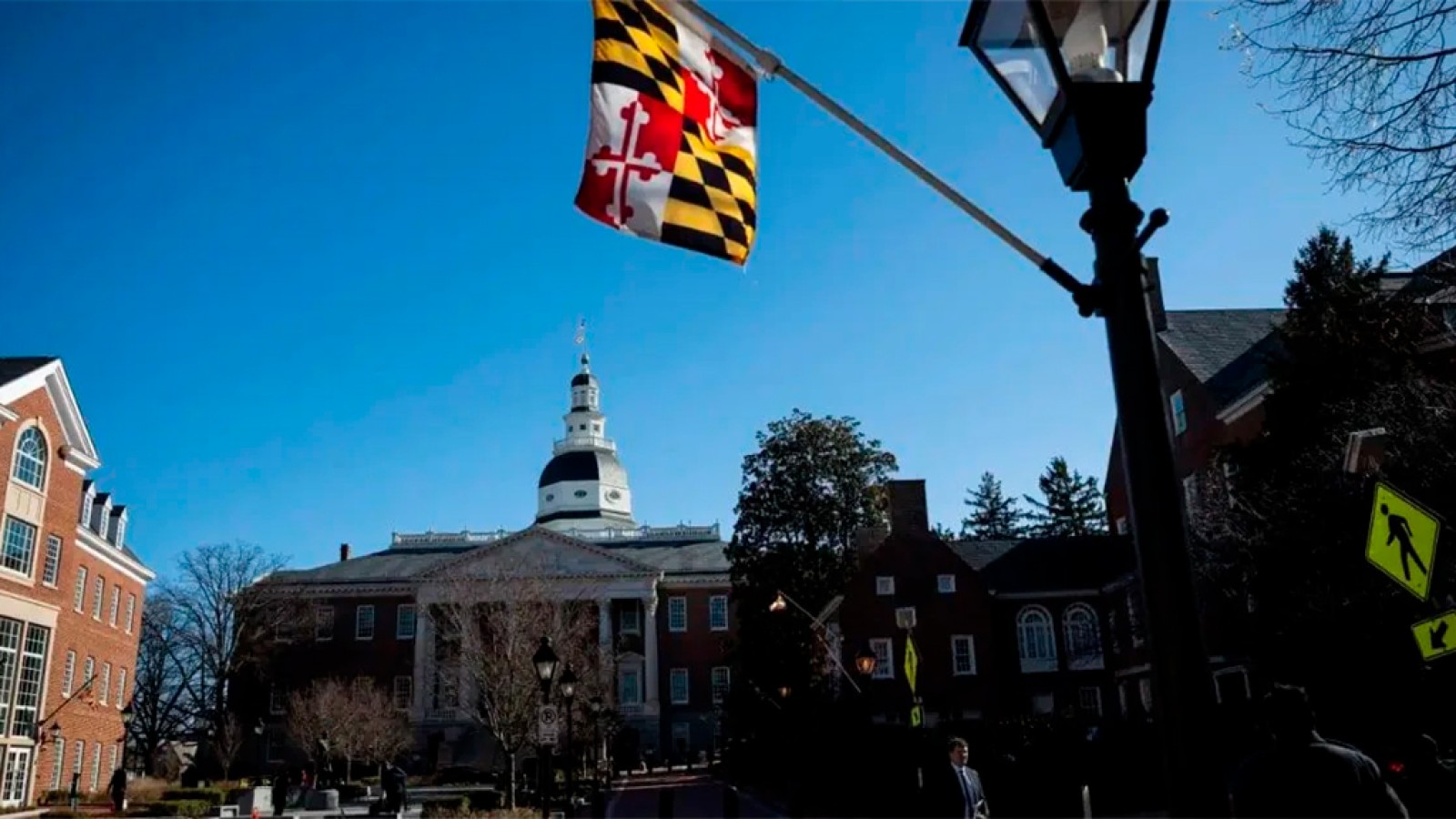
Maryland’s iGaming Bills Fail to Reach the Finish Line
The latest attempt to legalize online casino gaming was led by State Senator Ron Watson, who introduced two complementary bills designed to expand Maryland’s regulated gambling market.
Senate Bill 761 proposed placing online casino legalization before voters through a statewide referendum during the November 2026 general election, while Senate Bill 885 established the regulatory framework that would have governed internet casino gaming and online bingo if the referendum had been approved.
Because Maryland law requires voter approval for any significant gambling expansion, both measures needed to progress together during the legislative session.
That process came to a halt when the Senate Budget and Taxation Committee canceled the scheduled hearing for SB 761 on March 10. Watson officially withdrew the proposal three days later, leaving SB 885 without a viable legislative path. The implementation bill subsequently failed to advance before Crossover Day, effectively ending the initiative before the General Assembly concluded its session on April 13.
The outcome represents another unsuccessful effort for Watson, whose previous online casino proposals introduced between 2023 and 2025 also failed to gain legislative approval.
Proposed Regulatory Model Focused on Responsible Gambling and Revenue Distribution
Had the legislation been enacted, Maryland’s online casino market would have been supervised by the State Lottery and Gaming Control Commission.
Unlike proposals limited exclusively to existing casino operators, the framework envisioned licensing opportunities for video lottery operators, selected sports wagering license holders, Maryland-based applicants, social equity partnerships and online bingo operators.
Instead of imposing a standard tax on gross gaming revenue, SB 885 proposed a revenue-sharing model. License holders would have retained 80% of proceeds generated by live dealer games and 60% from other online casino products and internet bingo. The remaining revenue would have supported regulatory operations, responsible gambling initiatives, county education programs, workforce transition assistance and the Blueprint for Maryland’s Future Fund.
Labor Protections and Consumer Safeguards
The legislation also included several measures aimed at protecting both employees and consumers.
Applicants would have been required to maintain collective bargaining or labor peace agreements, while up to US$10 million from first-year proceeds was earmarked to assist casino workers potentially affected by the expansion.
From a responsible gaming perspective, licensed operators would have been required to implement player protection tools, promote responsible gambling resources and prohibit credit card deposits for online casino play.
Industry Opposition Influenced the Legislative Debate
The proposal encountered opposition from several sectors, including land-based casino stakeholders, labor organizations and responsible gambling advocates.
Critics argued that legalizing online casino gaming could reduce visitation to physical casinos, negatively impact employment and increase gambling-related harm by making casino games continuously accessible through mobile devices.
A survey commissioned by the National Association Against iGaming and conducted by Lake Research Partners in October 2025 reported that opposition to online casino legalization reached 71% after respondents received information regarding potential social risks. Because the research was commissioned by an organization opposing iGaming, its findings have been interpreted within that specific advocacy context.
Supporters Pointed to Consumer Protection and Market Modernization
Backers of the legislation maintained that many Maryland residents already access offshore or unregulated gambling websites, arguing that a regulated market would improve consumer protection through age verification, responsible gambling tools and regulatory oversight while generating additional public revenue.
Supporters also emphasized that Maryland already operates an established gambling ecosystem through commercial casinos and mobile sports betting, suggesting that regulated iGaming would represent a natural evolution of the state's gaming industry.
Opponents, however, maintained that online casino gaming presents unique risks due to its continuous availability and faster gameplay compared to traditional retail casino experiences.
Maryland Remains Behind Other Regulated U.S. iGaming Markets
Maryland continues to be among the majority of U.S. jurisdictions that have legalized sports betting but not real-money online casino gaming.
As of 2026, eight states have authorized regulated iGaming markets: Connecticut, Delaware, Maine, Michigan, New Jersey, Pennsylvania, Rhode Island and West Virginia. Maine became the latest addition after legislation authorizing online gambling for the Wabanaki Nations became law in January 2026, although the approval does not automatically mean a fully operational public market.
Industry observers also note increasing regional pressure as neighboring jurisdictions continue generating tax revenue through regulated online casino gaming. States including New Jersey, Pennsylvania, Delaware and West Virginia already operate legal iGaming markets, placing Maryland among the remaining Mid-Atlantic jurisdictions without online casino legalization.
Attention Turns to 2027
With the 2026 legislative session concluded, any effort to legalize online casino gaming in Maryland has effectively been postponed until at least 2027.
Other gambling-related proposals also failed to become law this year, including House Bill 295 addressing sweepstakes-style gambling and House Bill 518 concerning responsible gambling measures, college athlete proposition bets and credit card use for online sports wagering.
For the foreseeable future, Maryland’s legal gambling market will continue to consist of retail casinos, licensed retail and mobile sports betting, the state lottery, authorized fantasy sports contests, charitable gaming and pari-mutuel wagering. Any future expansion into regulated online casino gaming will once again require both legislative approval and a successful statewide referendum.
Categoría:Legislation
Tags: Sin tags
País: United States
Región: North America




Event










SBC Summit 2026
29 de September 2026
The Future of Sports Engagement Beyond the Court
Friday 16 Oct 2026 / 12:00
Ninja Gaming Focuses on Innovation and Global Growth After SBC Summit
Friday 16 Oct 2026 / 12:00
SBC Summit 2026 Wraps Up Record-Breaking Lisbon Edition
Thursday 15 Oct 2026 / 12:00
SUSCRIBIRSE
Para suscribirse a nuestro newsletter, complete sus datos
Reciba todo el contenido más reciente en su correo electrónico varias veces al mes.